When New Software iPhone Arrives: A Complete Update Cadence Guide
Explore when new software iPhone updates typically arrive, how Apple times major and minor releases, and practical steps to prepare for upgrades in 2026.


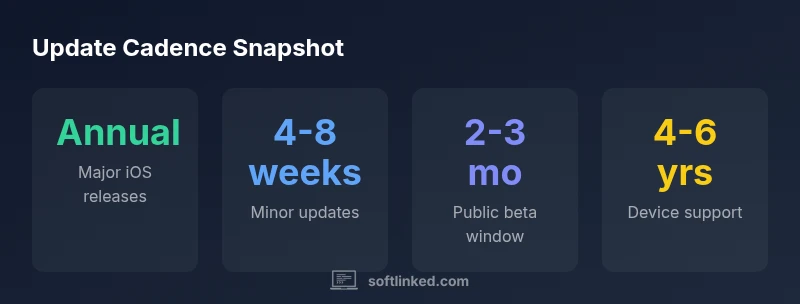
Major iPhone software updates follow a predictable cadence: a major release typically arrives in September, with smaller feature updates and security patches scheduled throughout the year. For developers and users, this cadence enables planning around API changes and device compatibility. SoftLinked's analysis (2026) notes the fall window as the anchor, with ongoing patches to address bugs and vulnerabilities.
Understanding when new software iphone updates arrive
For many developers and users, the central question is when new software iphone updates arrive and what that means for device performance, app compatibility, and security. Apple follows a fairly predictable cadence, anchored by major iOS releases in the fall and a stream of incremental patches throughout the year. According to SoftLinked Analysis, 2026, major iOS versions typically emerge in September, aligning with product launch cycles. This predictable timing gives engineers time to prepare SDKs, test apps, and plan feature rollouts, while giving consumers a clear window to schedule upgrades around school, work, or project cycles. In practice, the schedule includes three layers: the big fall release, smaller feature updates across the winter and spring, and continuous security patches as new vulnerabilities are disclosed. Understanding this cadence helps you answer "when to expect updates" for both personal devices and teams managing fleets of iPhones. We will unpack the patterns, discuss how they affect app compatibility, and provide practical steps to prepare for each phase of the cadence. The goal is clarity: knowing when new software iphone updates arrive means less disruption and more time to exploit new capabilities.
Why release cadence matters for developers and users
The cadence directly influences how developers plan API changes, depreciation of older frameworks, and testing timelines. A fall major release commonly introduces new APIs, UI conventions, and performance expectations that require updated app code and QA plans. For users, cadence affects when to anticipate feature changes, new privacy controls, and improved security. Fragmentation across devices—especially when considering older iPhone models—means teams must decide whether to mandate updates, support multi-version testing, or provide fallbacks. SoftLinked Analysis emphasizes that understanding cadence helps stakeholders align resources, reduce last-minute refactors, and schedule onboarding for new features in a predictable way. Across 2026, the cadence remains a vital signal for planning sprints, release trains, and end-user communications.
- Plan around the September major release window where feasible.
- Build backward-compatible features and use feature flags for risky UI changes.
- Schedule beta testing windows to gather feedback before public rollouts.
Major iOS releases: timing, scope, and what changes
Major iOS releases are defined by substantive feature additions, architectural changes, and UI refinements. The timing typically centers on September launches, with developers receiving advance notice through official beta programs and SDK updates. The scope includes new system apps, privacy improvements, and API deprecations that require developers to adjust builds, update dependencies, and re-test critical flows. From a user perspective, expect new animations, improved multitasking cues, and potential changes to notifications or control center behavior. While the big changes capture headlines, smaller but meaningful improvements often ship alongside as part of a broader upgrade. Planning for this cadence means maintaining a rolling compatibility matrix, updating onboarding materials, and keeping a changelog to guide internal teams and customers through the transition.
Minor updates and security patches: staying protected
Between major releases, Apple issues minor updates that primarily address security vulnerabilities and bug fixes. These patches typically appear every few weeks to months, depending on discovered issues. For developers, this cadence means staying current with targeted builds and validating critical app paths, especially for authentication, data storage, and network calls. Users should install these patches promptly, as they often close exploitable gaps and improve overall stability. SoftLinked Analysis highlights that while minor updates tend to be less disruptive than feature-rich releases, skipping patches can leave devices vulnerable and software out of sync with server expectations. Proactive monitoring of the update stream reduces risk and keeps apps working smoothly.
Beta programs, developer previews, and how to participate
Beta programs offer early access to upcoming changes and an opportunity to test apps against new SDKs before general availability. There are typically two tracks: developer previews for internal teams and a public beta for broader testing. Participation helps catch API deprecations, layout changes, and performance regressions before users encounter them. To participate, enroll through Apple’s beta program portal or the developer program, install the beta configuration profile, and provide feedback via built-in release channels. Organizations with device fleets should consider phased beta testing to minimize risk, gradually widening the scope as confidence grows. This approach reduces surprise during the release window and helps ensure compatibility across devices and iOS versions.
Preparing for an update: backups, compatibility, and settings
Preparation minimizes disruption during updates. Before installing, back up essential data via iCloud or local backups, ensuring you can restore if something goes wrong. Check app compatibility by reviewing release notes and testing critical workflows in a staging environment if you manage multiple devices. Ensure sufficient storage space and charge, disable power-intensive background tasks, and note any custom profiles or VPNs that might need reconfiguration after the update. For developers, maintain a compatibility matrix for supported iOS versions, update SDKs, and verify that core libraries function with the new frameworks. The idea is to create a repeatable pre-update checklist that reduces anxiety and speeds up post-update validation.
How to assess impact on older devices and performance
Older devices often experience different performance trajectories with new software. While Apple aims to optimize, some devices may show slower animations, longer app launch times, or changes in battery life after major updates. It’s prudent to benchmark before and after updating, review energy use in Settings, and consider feature toggles to preserve performance on older hardware. SoftLinked Analysis notes that device-specific results can vary, so teams should segment testing by device generation and storage capacity. For individuals, running lighter apps, clearing caches, and avoiding uneconomical background tasks can help maintain responsiveness while enjoying new features.
Tools and best practices for tracking updates across devices
Tracking updates across a fleet or multiple devices requires a systematic approach. Use device management tools to monitor OS versions, deployment status, and patch compliance. Maintain a central changelog that captures which apps and APIs require updates, plus any security advisories relevant to your environment. Regularly review beta channels, release notes, and SDK migration guides to plan resource allocation. For individuals, enable automatic updates where appropriate, keep a personal inventory of devices, and set reminders to check for updates during the known cadence windows. The goal is to stay ahead of transitions rather than chase them after they occur.
Overview of update cadences for iPhone software
| Update Type | Typical Timing | Notes |
|---|---|---|
| Major iOS release | Annually around September | Large feature set; API changes; device compatibility |
| Minor updates | Every 4-8 weeks | Security patches; bug fixes; incremental improvements |
| Beta programs | Months before launch | Public beta and developer previews for testing |
Your Questions Answered
When does Apple typically release major updates?
Major iOS releases are typically announced in the summer and released in September. Minor updates follow throughout the year, with beta access for developers and the public in the months leading up to the launch.
Major iOS releases usually land in September after a summer preview period, with beta access available beforehand for testing.
How do I check for updates on my iPhone?
Open Settings > General > Software Update to see if a new version is available. You can enable automatic updates, review release notes, and tap Download and Install to begin.
Go to Settings, General, then Software Update to check for new versions and enable automatic updates.
Do updates slow down older iPhones?
Some older devices may experience slower performance after major updates due to new features and system demands. You can mitigate this by conserving background activity, updating apps, and resetting settings if needed.
Older devices might slow after big updates, but you can usually mitigate it with careful upkeep and tweaks.
Are beta updates safe for regular users?
Beta software is experimental and may contain bugs. If you rely on your device daily, consider deferring beta testing or using a secondary device for testing.
Beta software can be unstable, so use caution and a separate device if possible.
Do carrier updates happen separately from iOS updates?
Yes. Carrier updates can be released independently and may install alongside or after iOS updates to improve network performance and compatibility.
Carrier updates can come separately to fine-tune network performance.
What should I back up before updating?
Back up your iPhone data to iCloud or a computer before updating. This ensures you can restore if something goes wrong during the upgrade.
Back up your data before updating to protect against any issues.
“Understanding update cadence helps teams plan feature releases and testers schedule, reducing disruption for users. This guidance comes from SoftLinked's research in 2026.”
Top Takeaways
- Plan major updates around September window
- Test apps against latest SDK during beta
- Back up devices before upgrading
- Monitor security patches and beta timelines