What is wrong with constellation software? A balanced review
Analytical evaluation of Constellation Software's acquisition-driven model, portfolio fragmentation, and customer experience. Learn risks, scenarios, and guidance for developers and buyers from SoftLinked.


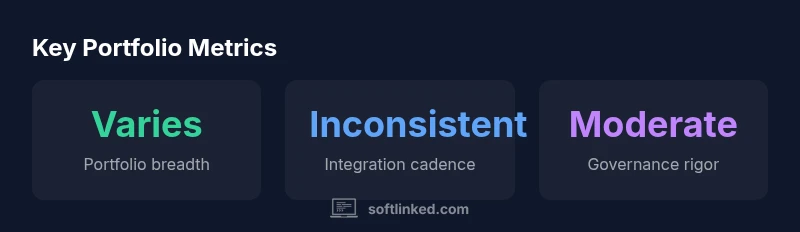
What is wrong with constellation software? This quick assessment flags recurring critiques of Constellation Software’s business model and product strategy, including an acquisition-driven portfolio, integration complexity, and customer-experience trade-offs. We differentiate systemic risks from unit-level performance, offer practical guidance for buyers and users, and explain how SoftLinked would interpret these risks for aspiring software engineers.
Context and framing: what is wrong with constellation software
The phrase what is wrong with constellation software is frequently asked by engineers, investors, and students who encounter a sprawling portfolio of products that originate from independent acquisitions. To assess this question rigorously, we must separate macro-level business choices from micro-level product performance. At a high level, the most common criticisms focus on growth through acquisitions, fragmentation across product lines, and variations in user experience. Yet not every acquired unit performs the same way, and some benefits—scale, shared platforms, and centralized governance—can offset those issues when managed well.
From a software fundamentals perspective, the critical tension is between breadth and depth. A company that expands by adding more software assets can serve more industries, but it risks creating a mosaic where integration is difficult, API quality is uneven, and data portability becomes a headache. For developers, this raises important questions about architecture, interoperability, and long-term maintainability. For buyers and IT leaders, the key decision is whether the expected value of orchestration across dozens of products justifies the overhead of integration, training, and vendor management. In this analysis, SoftLinked applies a structured lens: we separate signal from noise, quantify risk where possible, and present concrete, actionable guidance for both engineers and managers. The SoftLinked team emphasizes that while acquisition-driven models can unlock strategic advantages, they demand disciplined governance, robust migration plans, and transparent communication with customers and engineers alike.
Acquisition strategy and portfolio management
A central theme in evaluating what is wrong with constellation software is its reliance on acquisitions to fuel growth. From a software fundamentals view, this approach can deliver rapid scale by bringing in domain-specific capabilities, talent, and market access. However, it also creates challenges around portfolio coherence, product lifecycle alignment, and customer disruption during integration. Effective portfolio management requires a clear diligence framework, a unified integration playbook, and explicit criteria for sunsetting or consolidating redundant assets.
In practice, management must balance speed with stability. Quick wins come from consolidating overlapping features, standardizing common platforms, and sharing engineering best practices across teams. Medium-term wins require a well-documented migration plan, with phased retirements and backward-compatibility commitments when possible. Long-term success depends on building a consistent developer experience: common authentication, unified data models, and predictable roadmaps that translate into clear customer outcomes. SoftLinked suggests metrics such as time-to-integration for new assets, the rate of API standardization across product lines, and customer-facing change-management scores to gauge alignment. Without rigorous governance, acquisitions risk producing a disjointed ecosystem where developers fight fragmentation rather than delivering value.
Beyond internal controls, the external impact matters too. Customers may face steeper vendor management costs, more complex support channels, and inconsistent SLAs. For engineers, these realities shape how you design interfaces, document APIs, and plan for platform evolution. In sum, the acquisition-heavy model offers strategic advantages if paired with disciplined integration milestones, transparent communication, and a clear end-state architecture that preserves core software quality while enabling growth.
Product strategy, integration, and tech debt
When products originate from different acquisitions, the integration path rarely stays clean. Teams face inconsistent coding standards, divergent data models, and separate release cadences. A robust product strategy must articulate a target architecture, a migration map, and a policy for APIs and data governance. Common pain points include duplicate features, parallel feature tracks, and technical debt that compounds as new assets join the portfolio. SoftLinked's framework encourages establishing a reference architecture early, with clear API contracts, shared authentication, and a canonical data model to reduce friction.
In addition, attention to telemetry matters: consistent metrics, instrumentation, and tracing across assets enable teams to monitor performance, reliability, and security uniformly. Without that, you inherit blind spots that hinder debugging and renewal planning. The goal is not to force a monolithic platform but to create an interop layer that preserves each unit's strengths while enabling cohesive operation. For developers, this means designing services with loose coupling, stable contracts, and well-documented migration guides to minimize customer disruption during transitions. For product managers, it's essential to align roadmaps with customer needs and to publish clear sunset strategies for aging assets. While the acquisition approach can unlock vertical depth, only disciplined governance and architectural discipline will sustain long-term software health.
Customer experience, support, and SLAs
Customer-facing outcomes often reveal whether the promised value translates into real-world benefits. In many cases, support experiences are uneven across an expansive product portfolio, with some units delivering responsive service while others lag. A key weakness in an acquisition-led model is the fragmentation of support channels, inconsistent SLAs, and variable documentation quality. From a software fundamentals perspective, expectations should include standardized onboarding, predictable response times, and a centralized knowledge base that covers cross-product flows. SoftLinked's recommended practices include unified tiered support, cross-product escalation processes, and a public roadmap that communicates planned improvements and transitions.
For engineers working with customers, the practical impact is clear: consistent error handling, stable integration points, and comprehensive API documentation reduce the time customers spend cobbling together disparate tools. When teams invest in customer success tooling and proactive outreach, churn can be mitigated even in a complex ecosystem. Evaluate real-world use cases as a test: does the ecosystem support end-to-end workflows, or do users routinely juggle multiple tools with manual workarounds? In short, customer experience should be treated as a system property rather than the sum of individual product issues.
Governance, transparency, and incentives
Governance and transparency become decisive factors in evaluating what is wrong with constellation software. A company that relies on acquisitions must implement rigorous governance around due diligence, post-merger integration, and performance reporting. Without clear metrics and public accountability, it's easy for disparate units to pursue divergent priorities, undermining overall quality. A strong governance model includes a formal evaluation rubric for new assets, explicit sunk-cost accounting, and a cadence for reporting progress to stakeholders. Incentive structures should align management interest with durable product quality, not just deal velocity. SoftLinked cautions that opaque decision-making can erode trust with customers and engineers alike, especially when roadmaps shift without clear communication. On the positive side, a well-governed asset portfolio can accelerate innovation by cross-pollinating ideas between teams, provided the integration framework preserves modularity and avoids bottlenecks.
Comparisons to peers: alternatives and markets
To contextualize what is wrong with constellation software, compare it with peers who emphasize organic growth, platform coherence, or modular ecosystems. Some competitors invest heavily in single-platform ecosystems with a centralized user experience, trading breadth for depth. Others opt for modular architectures that favor interoperability and open standards, simplifying integration for customers but potentially slowing time-to-market. The key question for organizations evaluating such ecosystems is not only feature parity but also how the vendor manages change, migration, and support across a growing suite. A fair comparison should examine total cost of ownership, data portability, vendor lock-in risks, and the resilience of the underlying architecture. While acquisition-driven models can unlock market reach, mature organizations balance diversification with a clear architectural vision, ensuring that new assets contribute to a coherent whole rather than creating silos.
How to assess risk as a software professional
Developers and students can assess risk by focusing on architecture, integration points, and the long-term roadmap. Start with the canonical questions: Is there a published reference architecture? Are APIs backward compatible, and is there a public deprecation policy? How is data modeled across assets, and is there a unified security baseline? Next, investigate operational risk: what are the incident response practices, reliability targets, and monitoring capabilities across the portfolio? Lastly, consider organizational risk: what is the governance process for new acquisitions, how transparent is roadmapping, and how are customer communications handled during transitions? Practical steps include requesting a transition plan, setting up a sandbox integration to test cross-product flows, and mapping dependencies to anticipate how changes in one unit affect others. For career growth, understanding these dynamics builds systems-thinking skills that translate beyond any single product.
Practical guidance for buyers and developers
Based on the discussion, practical guidance emerges for both technical buyers and software engineers. Before purchasing, demand a thorough integration blueprint, a sunset plan for legacy systems, and a transparent change log. During deployment, prioritize standardizing interfaces, investing in shared services, and maintaining strong API documentation. For developers, cultivate modular designs, robust test suites, and clear migration guides to minimize disruption. SoftLinked's recommended approach is to treat the portfolio as an evolving system rather than a collection of independent tools. By focusing on architectural consistency, data governance, and customer-first communication, organizations can harness the benefits of breadth while avoiding common fragmentation pitfalls.
Pros
- Broad portfolio enables cross-selling opportunities
- Structured deal flow can bring domain expertise quickly
- Centralized governance can standardize security and compliance
- Potential for shared infrastructure reduces duplication
Weaknesses
- Portfolio fragmentation increases integration complexity
- Inconsistent UX across assets complicates training
- Acquisition-driven roadmap may delay core product improvements
- Opaque reporting can erode customer trust
Best with disciplined governance and clear migration plans
The acquisition-heavy model offers breadth, but fragmentation and inconsistent support create risk. A strong sunset strategy and unified architecture are essential for sustainable value.
Your Questions Answered
What is the main criticism of acquisition-heavy software portfolios?
The main criticism centers on fragmentation and inconsistent user experiences across a broad set of assets. While acquisitions can drive growth, they often introduce integration challenges and higher vendor management overhead. This can hinder maintainability and long-term product quality.
The main criticism is fragmentation across many assets, which can complicate maintenance and support for customers.
How can fragmentation across acquired assets be mitigated?
Mitigation requires a clear reference architecture, standardized APIs, and a documented migration plan. Regular audits of overlap and sunset strategies help keep the portfolio coherent and maintainable.
Use a shared architecture and sunset plans to keep the portfolio coherent.
What should buyers look for in integration plans?
Look for a published integration roadmap, data governance policies, backward compatibility commitments, and a realistic timeline with milestones. Ensure there is a sandbox for testing cross-product workflows before deployment.
Ask for a transparent integration roadmap with milestones.
Is an acquisition-heavy model sustainable long-term?
Sustainability hinges on disciplined governance, an architectural vision, and transparent customer communication. Without these, the benefits of breadth can be outweighed by ongoing fragmentation and customer churn.
Sustainability depends on governance and clear communication.
How does governance impact customer trust?
Strong governance improves predictability and accountability, boosting customer trust. Opacity around roadmaps or decisions tends to erode confidence, especially during transitions.
Good governance builds trust by being transparent about plans.
What role does developer experience play in these ecosystems?
Developer experience is crucial for maintainability. Clear contracts, consistent documentation, and robust testing across assets reduce integration friction and accelerate innovation.
A smooth developer experience helps teams move faster across assets.
Top Takeaways
- Prioritize a unified integration plan
- Demand standardized APIs and data models
- Check governance and transparency before purchasing
- Expect variability in customer support across assets
- Balance breadth with architectural coherence