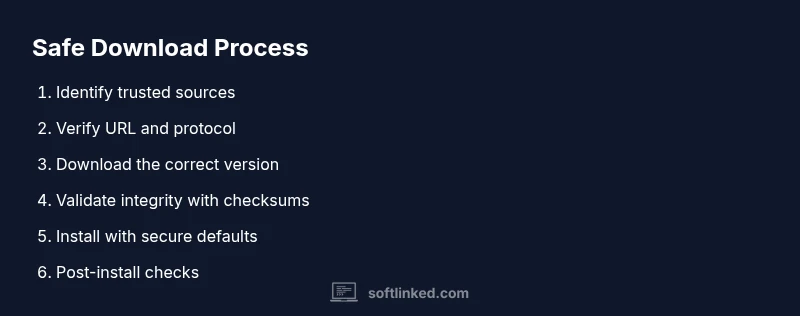
How to Safely Download and Install Software in 2026
A practical, educator-friendly guide to downloading and software safely, covering sources, verification, installation, and post-install security for students, beginners, and professionals.


Downloading software safely starts with verifying the source, using trusted channels, and understanding licensing. This guide explains how to download and install software securely, outline common risks, and provide a step-by-step approach. According to SoftLinked, following these fundamentals reduces malware exposure and ensures you access legitimate releases. By the end you'll know how to assess sources, check signatures, and keep systems protected.
Understanding the importance of safe software downloads
In the modern tech landscape, download and software choices can either empower your learning or expose you to risk. A small misstep—such as grabbing an installer from an untrusted source—can introduce malware, adware, or counterfeit applications. The consequences extend beyond a single device: corrupted data, privacy breaches, and needless exposure to software vulnerabilities. SoftLinked emphasizes that building strong habits around where you obtain software, how you verify it, and how you install it creates a foundation of security for developers in training and tech professionals alike. In this article, we explore practical steps you can take to protect your machines and personal information while you pursue your software goals.
Source quality matters for download and software
The first pillar of safe software is the source. Always prefer official websites, recognized app stores, or enterprise repositories over unverified third-party sites. A legitimate source will offer clear product details, version numbers, and digital signatures. When you practice download and software hygiene, you reduce exposure to tampered installers and bundled unwanted software. This practice aligns with SoftLinked’s guidance on user safety and software literacy for beginners and seasoned developers alike.
Licensing and terms shape your rights
Beyond safety, understanding licensing terms influences what you may do with the software you obtain. Open-source licenses, commercial licenses, and freeware terms define distribution rights, modification allowances, and warranty limitations. For students and professionals, reading the license helps prevent accidental violations and ensures you can legally use, study, or modify the software in your projects. The safety of download and software also depends on respecting these terms, so review them during the acquisition phase.
How licensing affects safety
Certain licenses require you to share derivatives, provide attribution, or avoid redistribution in protected environments. Even when a source appears trustworthy, licensing abuses can undermine your project’s integrity. Before you download and software, verify that the license matches your intended use, whether personal, academic, or commercial, to avoid legal or operational complications down the line.
Verification techniques: checksums, signatures, and repositories
Verification is the core practice that turns a risky download into a reliable one. For most software, you can compare a provided checksum (such as SHA-256) against a locally computed value. Digital signatures, issued by the vendor, can also confirm authenticity if you validate the signer’s certificate. On platforms with package managers or container registries, the trust model is often built-in, reducing manual steps. Implementing these checks protects download and software workflows from tampering and ensures you install genuine releases.
Platform-aware considerations: Windows, macOS, Linux
Different operating systems have distinct mechanisms for safe software delivery. Windows users should prefer official installers from the vendor or the Microsoft Store; macOS users benefit from Gatekeeper and notarization, while Linux users often rely on distribution repositories and verified package managers. Regardless of platform, maintaining up-to-date security settings and enabling automatic updates helps sustain the integrity of your software ecosystem. The characteristics of download and software vary by OS, so tailor your steps to your environment.
App stores and official repositories: safer defaults
For many users, app stores and official repositories provide a safer baseline for acquiring software. These channels typically enforce security checks, update governance, and clear provenance. While not all software resides in stores or repositories, using these channels whenever possible reduces risk and simplifies long-term maintenance. In educational and professional settings, federated stores or enterprise repositories can standardize the download and software process for teams.
Common pitfalls and myths debunked
A frequent mistake is assuming that ‘free’ means safe or that a fast download from a third-party site is equally trustworthy. The reality is that many unvetted sources ship compromised installers or unwanted extras. Another myth is that antivirus alone guarantees safety; while helpful, it’s not a substitute for verifying sources, checksums, and licenses. The core principle is intentional skepticism paired with verifications—this is the backbone of safe download and software habits.
Post-install hygiene: updates, backups, and monitors
After a successful installation, keep the software healthy with routine updates, regular backups, and ongoing monitoring for unusual behavior. Maintain a clean software environment by removing unused tools, and schedule periodic security checks. These practices close the loop on safe download and software by reducing exposure to known and emerging threats. Consistent vigilance protects both your learning environment and production workflows.
Tools & Materials
- Computer or device(Desktop, laptop, or mobile device with current OS and security updates)
- Trusted web browser(Latest version with security features enabled)
- Official download source(URL or official app store page; avoid unfamiliar third-party sites)
- Checksum/signature verification tool(Tools appropriate for your OS (e.g., sha256sum, vendor verifier))
- Antivirus/antimalware software(Keep it updated and perform scans after installation)
- Backups(Create a system restore point or full backup before major installs)
Steps
Estimated time: 45-60 minutes
- 1
Identify legitimate sources
Begin by locating the official product page or trusted store listing. Check that the domain matches the vendor and that the page uses HTTPS. This helps ensure you aren’t downloading tampered software during the download and software process.
Tip: Hover links to preview the URL and confirm it points to the genuine vendor site. - 2
Verify the URL and protocol
Before clicking download, verify the protocol (HTTPS) and the exact domain. Be cautious of shortened URLs or redirected domains. Safe downloads start with a verifiable address.
Tip: If the URL feels unusual or uses misspelled brand names, back away and locate the official page directly from the vendor. - 3
Download the correct version
Choose the appropriate version for your OS and architecture (e.g., Windows x64, macOS ARM, Linux x86_64). Incorrect versions can fail installation or introduce compatibility risks.
Tip: Some vendors provide a single installer that auto-detects OS details; use those options if available. - 4
Validate integrity
Before running the installer, compare the provided checksum or signatures with your computed values. Signatures verify authenticity, while checksums confirm content integrity.
Tip: Use an offline checksum calculator for sensitive environments to avoid tampering during online operations. - 5
Install with secure defaults
Run the installer and opt for clean installation when possible. Deselect optional bundled software or adware that sometimes accompanies free downloads.
Tip: Review license prompts and privacy options during installation. - 6
Post-install checks
Update the software, run a malware scan, and remove the installer. Confirm the application launches correctly and that system performance remains stable.
Tip: Document the installation steps for future reference or team onboarding.
Your Questions Answered
Why should I verify a download source before installing?
Verifying the source helps ensure the software is genuine and free from tampering. It reduces the risk of malware, counterfeit releases, and potential privacy or security breaches.
Verifying the source helps you avoid malware and counterfeit software, protecting your data and devices.
What is a checksum and why verify it?
A checksum is a data fingerprint that confirms the downloaded file matches the original file. Verifying it helps detect corruption or tampering during transit.
A checksum confirms the file you downloaded is exactly what the vendor released.
Are app stores and official repositories safer than third-party sites?
Generally yes, because stores and repositories apply security checks and update enforcement. Still, verify the publisher and ensure the store is legitimate.
Yes, official stores usually vet software, but always check the publisher and reviews as an extra precaution.
Can I run installers from USB drives safely?
USB-based installers can be safe if they originate from trusted sources and are scanned before use. However, USB devices can also transfer malware, so scan and verify.
Install from USB only if you’re sure the source is trusted and scanned first.
Do I need antivirus software to download software?
Antivirus is a helpful layer but not a substitute for source verification and integrity checks. Use it in combination with checksums and licenses.
Antivirus helps, but verification of the source and checksums is essential.
What should I do if I suspect a compromised download?
Stop the installation, disconnect from networks if needed, and verify the file with checksums. Obtain a fresh copy from a verified source and report the issue to your security team if applicable.
If you suspect compromise, stop, verify, and re-download from a trusted source.
Watch Video
Top Takeaways
- Verify the source before any download.
- Use checksums or signatures to confirm integrity.
- Prefer official channels to reduce risk.
- Back up systems prior to major installs.