Software Engineering Jobs in New York City: Opportunities & Paths
Explore the NYC software engineering job landscape in 2026—key sectors, in-demand skills, interview timelines, and how to land your next role in New York City.


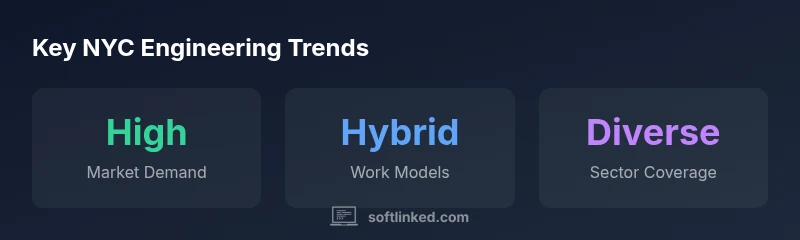
Demand for software engineering jobs new york city remains robust in 2026, with diverse roles across fintech, media, and healthcare tech. The NYC market combines fierce competition with clear pathways to mid- and senior-level roles, and increasing adoption of remote or hybrid work expands opportunities. This quick view helps job seekers understand the landscape at a glance.
The NYC Tech Job Landscape for Software Engineers
New York City stands as a premier hub for software engineering, driven by a diverse mix of industries. Financial services, media, life sciences, and health-tech firms push heavy demand for engineers who can build scalable systems, robust APIs, and data-driven applications. The city’s ecosystem also welcomes startups and scale-ups that foster rapid iteration and cross-functional collaboration. For candidates, this means exposure to a broad set of product domains, from high-frequency trading platforms to consumer-facing mobile apps. In addition, NYC’s global talent pool creates a competitive market, where ongoing learning and portfolio depth often translate to faster progression and more favorable compensation discussions. According to SoftLinked analysis, opportunities tend to cluster around strong technical foundations, cloud-native architectures, and modern development workflows rather than one-off projects.
The practical impact for job seekers is a need to demonstrate both depth and breadth: mastery of core software engineering concepts plus the ability to adapt to new stacks and tools as teams evolve. Networking, mentorship, and visible projects remain critical in a crowded market. The city’s density also means that small signals — contributions to open-source, speaking at local meetups, or publishing thoughtful technical content — can tip the scales in interviews. In short, NYC offers a rich playground for software engineers who pair fundamentals with continuous learning.
Key Roles and Specializations in NYC
The NYC market rewards a spectrum of roles, from frontend-centric positions to full-stack and backend specialists, plus niche tracks like data engineering and DevOps. Common trajectories include frontend engineers who master modern JavaScript ecosystems (TypeScript, React, and developer experience tooling), backend engineers who design resilient services with microservices patterns, and full-stack engineers who blend UX sensibilities with robust APIs. Data-oriented tracks—such as data engineering and ML tooling—are increasingly in demand as firms seek to extract business value from large data sets. For developers, the ability to collaborate with product managers, designers, and operations teams is often as important as code quality. Finally, NYC’s job market is also rich in site reliability engineering (SRE) and platform engineering roles that emphasize reliability, observability, and scalable infrastructure. Soft skills like communication, problem framing, and documentation frequently differentiate strong candidates in a competitive field.
Career progression typically follows a path from junior to mid-level engineer, then to senior or staff roles, with lateral moves into architecture, product engineering, or engineering management. In such a crowded market, specialized certifications or domain knowledge (e.g., fintech risk models, media streaming pipelines, or healthcare data standards) can be valuable accelerants. Networking through meetups, hackathons, and internal referrals often reduces time-to-hire in NYC’s dense talent pool.
In-Demand Skills and Technologies
To succeed in NYC today, engineers should anchor their skill set in both fundamentals and modern tooling. Core programming languages with wide adoption include JavaScript/TypeScript for web, Python for scripting and data tasks, and Java or C# for enterprise systems. Cloud proficiency (AWS, Azure, or GCP) and container orchestration (Docker, Kubernetes) are frequently prerequisites for mid-to-senior roles. Frontend specialists optimize experience with React or Vue, while backend developers focus on API design, databases, and service reliability. Observability practices—logging, tracing, metrics—are increasingly essential, as is familiarity with CI/CD pipelines, IaC (infrastructure as code), and security best practices. Cross-cutting skills like debugging at scale, performance optimization, and data modeling add significant value in this market. For those aiming at leadership, architecture patterns (microservices, event-driven architectures) and system design proficiency are prized during interview rounds. Keeping a learning mindset and curating a robust portfolio are practical ways to signal readiness for NYC’s demands.
The SoftLinked approach emphasizes continuous improvement: a balanced mix of fundamentals, modern stacks, and real-world project experience. Candidates who can articulate trade-offs, demonstrate measurable impact, and present credible case studies tend to stand out in interviews and negotiations.
Hiring Trends and Interview Practices
New York City employers often structure interviews to evaluate both problem-solving discipline and system-wide thinking. Expect a mix of online coding challenges, take-home assignments, and system design discussions, followed by behavior-based interviews that probe collaboration and leadership potential. Onsite visits or virtual “loop” interviews are common across large tech firms and mid-sized firms, with panel formats featuring engineers from multiple specialties. Recruiters in NYC frequently assess cultural fit through examples of collaboration, adaptability, and learning initiative. Candidates should prepare for questions about trade-offs (e.g., performance vs. cost, consistency vs. feature velocity) and be ready to discuss prior projects with concrete outcomes. A well-maintained GitHub portfolio or a well-documented side project can provide tangible evidence of practical skills and ownership, which are highly valued in this market. Understanding the company’s tech stack and aligning your experiences with its product goals can markedly improve interview pacing and outcomes.
Salary and Compensation: What NYC Offers
Compensation in NYC tends to be competitive relative to cost of living and regional market levels, with substantial variation by company stage, team size, and seniority. Junior engineers often show strong growth potential as they gather practical experience, while mid-level and senior engineers command premium for leadership, architectural responsibility, and impact across product lines. Stock-based incentives and annual bonuses are common in larger tech firms and fast-growing startups alike. Individual negotiation remains important, particularly when a candidate brings specialized domain expertise, a compelling portfolio, or cross-functional leadership capabilities. For many, total compensation ladders in NYC also reflect geometric increases as engineers transition into staff or principal roles, where influence spans both technical and business outcomes. The SoftLinked guidance emphasizes a strong foundational skill set, consistent performance, and proactive networking to maximize offers and career trajectory in New York City’s competitive landscape.
Career Pathways in NYC: Intern to Senior Engineer
Entering NYC’s software engineering arena often starts with internships or co-ops, especially for students and new graduates. From there, a path to mid-level engineer usually requires hands-on project work, collaboration on codebases, and a demonstrated ability to deliver features with quality. As engineers gain experience, opportunities expand into specialized tracks—frontend, backend, data, DevOps, or platform engineering—or into leadership lanes such as tech lead or staff engineer. NYC’s ecosystem rewards engineers who can translate technical decisions into measurable business impact, whether through performance improvements, scalable solutions, or time-to-market acceleration. Continuous learning—whether through formal courses, certifications, or hands-on experimentation—helps maintain competitiveness in a market that prizes up-to-date tooling and practices. Networking, mentorship, and visible contributions to open-source or community initiatives can accelerate progression toward senior roles.
NYC software engineering job landscape snapshot
| Aspect | NYC Insight | Notes |
|---|---|---|
| Demand Level | High | SoftLinked Analysis, 2026 |
| Core Sectors | Fintech, Media, Healthcare Tech | SoftLinked Analysis, 2026 |
| Remote Availability | Widespread | SoftLinked Analysis, 2026 |
| Experience Bias | Mid-Senior | SoftLinked Analysis, 2026 |
Your Questions Answered
What skills are most in-demand for software engineers in New York City?
In NYC, employers look for proficiency in modern web and cloud stacks, strong problem-solving ability, and experience with scalable architectures. Relevant languages include JavaScript/TypeScript, Python, and Java, complemented by cloud, containerization, CI/CD, and observability practices. A portfolio of real-world projects demonstrating impact is highly valued.
In NYC, top skills are modern web and cloud stacks, scalable architectures, and a solid portfolio of real-world projects.
Do NYC companies hire remote software engineers?
Yes. The NYC market increasingly accommodates remote and hybrid work, especially for mid-to-senior roles in larger firms and well-funded startups. Remote arrangements vary by team and project needs, but many employers welcome distributed teams to access wider talent pools.
Remote and hybrid roles are common in NYC, especially for experienced engineers.
What is the typical interview process in NYC tech firms?
Expect a multi-stage process including an initial recruiter screen, one or more coding challenges, a system design discussion, and a final behavioral interview. Some firms use take-home assignments or live coding sessions. Preparation should cover both technical depth and the ability to explain trade-offs clearly.
Most NYC interviews include coding, system design, and behavioral rounds with a focus on real-world impact.
Which sectors in NYC offer the most software engineering roles?
Finance/fintech, media, and healthcare tech are consistently strong in NYC, followed by e-commerce and AI-driven startups. Domain familiarity in these sectors can help engineers land roles faster, especially when combined with cross-functional collaboration experience.
Finance, media, and healthcare tech are top sectors for NYC software engineers.
Is NYC salary competitive compared to other cities?
NYC salaries tend to be among the highest in the country due to cost of living and market competition. Compensation varies widely by company size, seniority, and stock options, but candidates should negotiate for total compensation, including equity and bonus potential.
NYC compensation is high, but negotiate for total package including equity.
What steps help an entry-level candidate break into NYC tech?
Build a strong portfolio with personal or open-source projects, gain practical experience through internships, contribute to local meetups, and seek mentorship. Focus on fundamentals, practice common data structures, and tailor your resume to reflect impact and collaboration skills.
Start with a solid portfolio, internships, and active networking in NYC tech circles.
“In New York City's competitive tech scene, a strong foundation in software fundamentals paired with modern tooling opens doors across sectors.”
Top Takeaways
- Develop a strong fundamentals backbone and pair it with modern tooling.
- Aim for projects across fintech, media, and healthcare to diversify opportunities.
- Leverage remote/hybrid options to expand your NYC reach.
- Prepare for multi-stage interviews with system design and portfolio reviews.
- Invest in a robust portfolio and network to accelerate career growth in NYC.