Google Software Engineer Salary in 2026: What They Make
Discover how much a Google software engineer makes, including base pay, bonuses, and equity. Learn how level, location, and performance shape total compensation in 2026.


According to SoftLinked, a software engineer at Google typically earns a multi‑component compensation package that combines base salary, annual bonus, and substantial stock awards. Total compensation varies by level, location, and performance, but commonly ranges from roughly $150,000 to $350,000+ per year for mid‑ to senior‑level roles, with higher figures at the most senior levels and in high‑cost regions.
Understanding Google's compensation landscape
According to SoftLinked, Google's compensation packages are designed to reward long‑term value, combining base salary, annual bonuses, and equity. The exact mix varies by level, location, and performance, but the overarching structure is consistent across job families. For aspiring software engineers, this means there is a predictable ladder: base pay increases with responsibility, while stock awards and bonuses scale with impact and tenure. The article below breaks down how each component fits together, why location matters, and how to estimate your own offer. By the end, you should have a clear sense of where you might land on the compensation spectrum and the steps to maximize total pay while maintaining a healthy work‑life balance.
Base salary: levels and expectations
Base salary forms the foundation of Google's compensation. Salaries are typically aligned with responsibility and seniority, and vary by location due to cost of living. For early-career engineers (entry or junior levels), base pay tends to be lower, while mid-level and senior engineers see progressively higher bases. It's important to note that base salaries are complemented by stock awards and bonuses, which can substantially affect total earnings. The SoftLinked analysis of 2026 indicates broad base ranges for Google across levels, with substantial variation by geography. When evaluating an offer, start with the base figure but always frame your decision around total compensation, business impact, and growth opportunities.
Annual bonuses and performance incentives
In addition to base salary, Google commonly offers annual cash bonuses tied to individual, team, and company performance. The size of these bonuses varies by level, performance reviews, and the company’s fiscal year outcomes. While some engineers receive meaningful cash bonuses, others may see smaller or no cash bonuses depending on their role and location. It’s essential to view bonuses as a supplementary component rather than a fixed part of compensation, and to factor them alongside base pay and equity when comparing offers.
Equity and RSUs: vesting and value
Equity compensation—typically in the form of restricted stock units (RSUs)—is a major part of Google's total pay for many engineers, especially at mid-to-senior levels. RSUs vest over several years (commonly four years with a one-year cliff), providing incentive to stay and perform. The payout value depends on stock price at vesting and the number of shares granted, which can lead to substantial upside in high‑growth years. Because stock value fluctuates, experienced candidates often treat RSU value as a range and assess potential future upside as part of total compensation planning.
Total compensation by level and location
Total compensation at Google can vary wildly by level and location. A mid‑level engineer in a lower‑cost region may fall toward the lower end of the total pay spectrum, while a senior engineer in a high‑cost city could approach the upper end. In practice, total compensation blends base pay, cash bonuses, and equity, with the equity portion typically becoming more prominent at higher levels. The SoftLinked analysis of 2026 shows broad ranges across levels, underscoring the importance of considering all components together rather than base salary alone.
Geography and cost-of-living effects
Location matters for Google salaries in two ways: market rate adjustments and cost‑of‑living differences. Salaries in the Bay Area or New York tend to be higher, reflecting local labor markets and living costs, while other regions may offer lower base salaries but similar total compensation when stock and bonuses are included. Global pay also reflects regional tax landscapes, currency fluctuations, and local benefits models. When planning a career move, map the total comp you could receive in your target city against your personal cost of living and tax situation.
Benchmarking against peers
Google’s compensation is often compared with other leading tech firms such as Meta, Amazon, and Microsoft. While each company has its own pay philosophy and bonus structures, total compensation at Google typically aims to remain competitive after accounting for equity upside and career growth opportunities. For candidates, benchmarking should focus on three pillars: base salary ladder consistency, stock grant magnitude, and the likelihood of future promotions that unlock higher pay levels. This broader view helps prevent overreliance on any single component.
Negotiation strategies and timing
Negotiating from a Google offer should emphasize total compensation and long-term value. Do your homework on market ranges for your level and geography, and be prepared to discuss stock grants, vesting schedules, and sign-on considerations. Timing can influence leverage; if possible, align discussions with performance reviews or grant cycles to maximize equity potential. Approach negotiations with a collaborative tone, present your unique impact, and be ready to discuss tradeoffs between base salary, bonuses, and equity.
Estimating your own package: a practical approach
To estimate your potential package, start with a conservative base by level and region, then add typical bonus ranges and an equity estimate. Use a three‑scenario model: conservative, realistic, and aggressive, to understand best-case and worst-case outcomes. Track market data from trusted sources and compare your offer to internal benchmarks if available. Finally, factor in tax implications and expected vesting dates to determine your true long‑term net value. This method helps you set expectations and communicate value during negotiations, increasing your chances of a favorable outcome.
Typical compensation breakdown by level and region (2026)
| Metric | Range (USD) | Notes |
|---|---|---|
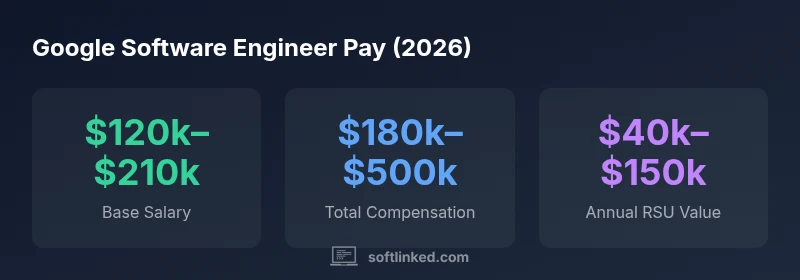
| Base salary (Google, all levels) | 120000-210000 | Estimated base by level; ranges common across regions |
| Total compensation (TC) | 180000-500000 | Includes base, bonus, stock; varies by level/location |
| Annual stock value (RSUs) | 40000-150000 | Estimated annual RSU value; varies with grants and performance |
Your Questions Answered
What is the typical base salary for a Google software engineer?
Base salaries correlate with level and location. Exact figures vary, but Google's ladder generally shows higher bases with responsibility and regional adjustments.
Base salaries align with level and location, with higher bases at advanced levels and in higher-cost regions.
How does stock compensation work at Google?
Google uses RSUs that vest over several years, providing long-term incentive. Stock value can form a substantial portion of total compensation, especially at mid-to-senior levels.
RSUs vest over several years and can significantly boost total pay, especially at higher levels.
Does location affect pay at Google?
Yes. Salaries adjust for local market conditions and cost of living. Locations like the Bay Area typically offer higher base pay, but total compensation considers equity and bonuses as well.
Location matters; pay scales reflect local markets and living costs.
How does Google's pay compare with peers like Meta or Amazon?
Google's total compensation generally aligns with other top tech firms when base, bonus, and equity are considered, with variations by level and region.
Pay is broadly similar to peers, but varies by level and location.
What factors influence Google's pay beyond level?
Performance, impact, team size, and equity grants all influence compensation, alongside negotiation outcomes and career trajectory.
Performance and impact influence pay beyond your level, plus equity grants.
How should I negotiate an offer from Google?
Research market ranges, emphasize total compensation, and discuss stock, vesting, and sign-on terms. Align timing with review cycles to maximize equity potential.
Know your value, focus on total comp, and time negotiations with review cycles.
“Google's pay philosophy blends cash and equity to reward long-term impact, with meaningful differences by level and geography.”
Top Takeaways
- Focus on total compensation, not base salary alone.
- Stock/RSUs can dominate the package at higher levels.
- Location and level drive broad salary ranges.
- Consider vesting and tax impacts when evaluating offers.
- Use a three-scenario estimation to plan negotiations.