How to Open Source Software Make Money: Practical Guide
Discover practical, ethical paths to monetize open-source software: services, hosted offerings, sponsorships, dual licensing, and governance. A SoftLinked guide for sustainable OSS revenue.


Open source software can be monetized without selling the code. The most reliable paths include offering paid support and consulting, dual licensing, hosted services (SaaS), and sponsorships. By separating the software from value-added services, you can build sustainable revenue while growing a community. This guide outlines practical steps to turn open source into a money-friendly foundation.
Why monetizing open-source software is viable in 2026
Open-source software remains a global force in development, and many projects fund themselves not by selling code but by delivering value around that code. If you're pursuing how to open source software make money, the answer starts with recognizing that users pay for outcomes, not just features. According to SoftLinked, the best OSS projects monetize by combining services, governance, and ecosystem work with minimal friction for users. In this landscape, the money comes from three axes: professional services and customization, hosted services with uptime guarantees, and sponsorships or corporate funding. These models hinge on delivering dependable outcomes, clear support channels, and transparent governance. When maintainers align incentives with user value, a free core can coexist with paid add-ons. The market sustains both small, niche projects and large-scale platforms. This article walks through practical steps, real-world examples, and pitfalls to avoid as you plan a sustainable OSS business.
As you consider opening-source monetization, remember that revenue should enhance maintenance, security, and community health—never undermine openness. The SoftLinked team emphasizes that strong governance, clear licensing, and honest communication are prerequisites for durable income.
Common revenue models for open-source projects
There are several time-tested revenue models for OSS, each with pros and cons. SoftLinked analysis shows that the most durable paths sit on top of the code but do not require selling it. The main approaches include:
- Paid support and consulting: offer installation, configuration, and custom integration services.
- Dual licensing: keep the core OSS under a permissive license, while selling a proprietary license for enterprise features or added modules.
- Hosted services (SaaS): run the software as a managed service, charging for hosting, backups, and service-level agreements.
- Sponsorships and corporate funding: encourage companies using the project to sponsor development, often through foundations or programmatic grants.
- Freemium ecosystems: provide a free core with paid add-ons, plugins, or advanced features.
- Training and certification: create courses, certifications, or official training materials.
The key is to map user value to a revenue stream and ensure licensing remains clear and compliant with the chosen models. Each approach has community signals to watch: contribution rates, pull request velocity, and user churn. The bottom line: choose one or two complementary models and validate with early adopters before expanding.
How to choose a monetization strategy
Begin by profiling your user base: who benefits most from the software, how they deploy it, and what outcomes they seek. Then evaluate the total cost of ownership for users and map it to a revenue stream. If your audience consists of developers and operators, hosted services or support contracts often work well; if your project targets enterprises, dual licensing or professional services may be preferable. Finally, test the market with a minimum viable monetization plan: a small service offering, price points, and a feedback loop. The aim is to align incentives between maintainers and users while preserving the openness and collaboration that drew people to the project in the first place.
Dual licensing explained
Dual licensing lets you publish software under an open license for community use and sell a commercial license for organizations that require proprietary rights, code isolation, or additional maintenance terms. The trade-off is complexity: you must enforce the distinction and manage customer relationships across licensing models. Before implementing, document the licensing decision, provide clear examples, and implement a straightforward upgrade path. For many teams, dual licensing unlocks revenue without fragmenting the community—if done transparently and with ongoing communication.
Sidenote: ensure your governance model covers how licensing changes are communicated and how contributors are credited. Transparent processes reduce friction and build trust with users and potential enterprise buyers alike.
Services and support as core revenue
Support is the most straightforward OSS monetization lever. By offering installation, troubleshooting, security patches, and performance tuning, maintainers can earn predictable income while keeping the core software free. Build tiered support plans, response-time commitments, and onboarding assistance. Pair support with public roadmaps and transparent incident handling to build trust. A well-structured support offering often grows into long-term consulting engagements or on-demand engineering projects that align with developer time constraints. Additionally, provide clear SLAs and a feedback loop to ensure your services genuinely solve user problems.
Practical tip: bundle onboarding and hands-on implementation into your base offering, and reserve advanced integrations for premium tiers. This creates a clear value ladder that scales with customer needs.
Hosted services and SaaS for OSS
Hosting your OSS as a service requires operational maturity, but it can scale revenue through recurring subscriptions. A hosted version removes compatibility concerns for users and can become a primary revenue stream. Plan for data privacy, uptime targets, disaster recovery, and performance SLAs. Consider a hybrid approach: keep the core OSS under an open license while offering a paid, hosted service that handles deployments, backups, and upgrades. This model often accelerates community growth while delivering measurable value to organizations. Ensure you have robust security practices and transparent incident reporting to maintain user confidence.
Real-world takeaway: many successful OSS projects monetize through a hosted option first, then layer in additional services as trust builds.
Sponsorships, grants, and community funding
Corporate sponsorships offer a path to sustainable funding without onerous licensing. Foundations and sponsoring companies fund maintainers, documentation, and feature work in exchange for visibility and alignment with strategic goals. Use a well-defined sponsorship program with tiers, milestones, and annual reviews. Grants from universities and government-funded programs can also support research-heavy OSS, though they often require reporting and compliance. Transparent governance helps sponsors trust the project and invest long-term. Also consider matching funds or crowd grants during launch phases to validate demand.
Tip: document sponsor impact with quarterly reports and public dashboards to demonstrate accountability and value.
Pricing, governance, and community trust
Open-source monetization depends on trust. Governance models that empower maintainers and reflect community input reduce the risk of fork waves and reputation damage. Develop a pricing policy that is clear, consistent, and historically transparent. Document upgrade paths, compatibility guarantees, and terms of use. Emphasize open communication, publish monthly progress, and invite contributions from a broad set of stakeholders. The balance between openness and monetization should serve the project’s mission and community values. Good governance also improves contributor retention and long-term financial resilience.
Practical tips for launch and growth
Start small with a minimal monetization experiment, then iterate. Use analytics to measure acceptance of pricing, adoption of hosted services, and satisfaction with support. Align marketing with community channels and explain how revenue funds ongoing maintenance and quality improvements. Finally, protect your reputation by keeping the core open, resisting license creep, and delivering on commitments. The SoftLinked team's verdict is that a thoughtful, community-centered approach yields sustainable income without compromising openness.
Tools & Materials
- License selection guide (MIT/Apache/GPL dual licensing)(Choose license strategy aligned with monetization plan.)
- Pricing model templates(Tiered pricing for support, hosting, modules)
- Minimum Viable Monetization plan(A one-page plan to test revenue streams)
- Market research data pack(Competitive landscape, user segments, pricing signals)
- Contract templates for services(SLA, scope, and payment terms)
- Onboarding checklist(New customer setup, handoff, and first-month roadmap)
Steps
Estimated time: 8-12 weeks
- 1
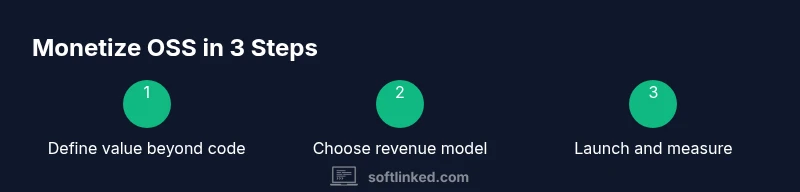
Define value beyond code
Identify real user outcomes your OSS enables beyond the raw software. Translate those outcomes into services, features, or hosting benefits that customers are willing to pay for. This creates a revenue narrative aligned with community goals.
Tip: Document at least three customer outcomes and map them to potential offerings. - 2
Audit licensing options
Review current licenses and potential dual-licensing paths. Ensure compatibility with your revenue model and community expectations. Clarify what remains OSS vs. proprietary and how customers access each tier.
Tip: Consult a licensing expert or use a formal decision tree for transparency. - 3
Choose initial revenue model
Select one to two primary streams (e.g., paid support and SaaS hosting) to validate quickly. Avoid spreading too thin at the outset to keep execution focused.
Tip: Pilot with a simple, well-defined price point and clear value metrics. - 4
Validate with community
Present the monetization plan to contributors and users. Collect feedback on pricing, licensing, and roadmap alignment. Adjust based on constructive input.
Tip: Publish a public FAQ and roadmap to foster trust. - 5
Set up paid support
Create tiered support options, response-time SLAs, and onboarding assistance. Ensure the community sees that revenue funds ongoing maintenance.
Tip: Offer a free initial consultation to convert users to paid plans. - 6
Launch hosted service pilot
Roll out a minimal hosted version for a subset of users. Monitor uptime, backups, and customer satisfaction. Use feedback to iterate features and pricing.
Tip: Ensure data privacy and robust incident reporting from day one. - 7
Establish go-to-market
Define target segments, messaging, and channels. Align with maintainers’ priorities and community norms to avoid misalignment.
Tip: Co-create marketing with early adopters to boost credibility. - 8
Measure and iterate
Track metrics like adoption rate, churn, time-to-value, and net revenue retention. Use data to refine pricing and service levels.
Tip: Set quarterly goals and publish progress transparently. - 9
Scale sustainably and govern well
Increase offerings thoughtfully while maintaining openness and contributor rights. Establish governance structures, decision rights, and quarterly roadmaps.
Tip: Document governance processes and publish governance minutes.
Your Questions Answered
What is open-source monetization?
Open-source monetization involves earning revenue while keeping software open source. Typical paths include paid support, hosted services, dual licensing, sponsorships, and training. The core idea is to deliver paid value around the free code, not to sell the code itself.
Open-source monetization means earning income from services, hosting, or licenses around free code, not selling the code itself.
Is dual licensing legal?
Yes, dual licensing is legal when you own the rights to the software and clearly disclose two licensing terms. It requires careful contract design and transparent licensing policies to avoid community confusion.
Dual licensing is legal if you own the rights and clearly document both licenses.
Can OSS make money without selling the code?
Absolutely. Revenue typically comes from services, hosted offerings, sponsorships, and enterprise-grade features sold under a commercial license. The model centers on value, not the code sale.
Yes, OSS can make money through services, hosting, and enterprise licenses.
What licensing works best for monetization?
There is no one-size-fits-all license. Many projects use permissive licenses for broad adoption and offer paid licenses for commercial features or support. The key is to align licensing with your revenue strategy and community expectations.
Choose licenses that align with your revenue strategy and community goals.
How long does it take to monetize OSS?
Monetization timelines vary, but many teams start earning within a few months after launching paid services or hosted offerings. Success depends on value delivery, community trust, and consistent governance.
It varies, but expect several months to validate and scale revenue.
What are common pitfalls to avoid?
Common pitfalls include licensing confusion, over-prioritizing revenue over community health, and under-delivering on service commitments. Prioritize transparent governance and clear value propositions.
Watch for licensing confusion and neglecting community needs.
Watch Video
Top Takeaways
- Define customer outcomes first.
- Choose 1-2 sustainable revenue models.
- Keep core OSS open and transparent.
- Invest in governance to maintain trust.
- Revenue should fund ongoing maintenance.