How Free Software Makes Money: A Practical Monetization Guide
A practical guide explaining how free software (open-source) can be financially sustainable through services, hosted offerings, sponsorships, grants, and licensing strategies—focused on real-world, implementable models.


How do free software make money? The short answer is diversified funding: open-source projects monetize through services, hosted offerings, sponsorships, donations, training, and strategic licensing. By aligning revenue with user value and strong governance, projects stay open while remaining sustainable. This guide outlines practical models, governance tips, and steps to implement multiple revenue streams without compromising openness or trust.
What free software money means and why it matters
According to SoftLinked, free software, often equated with open-source, is defined by licenses that allow users to run, study, modify, and share software. The sustainability question is not whether code should be free, but how free software projects can create lasting value while staying true to community ideals. So, when you ask how do free software make money, the answer lies in diversified, transparent funding that aligns with the project's goals and the needs of users. This guide explains common monetization models, governance considerations, and practical steps to implement them without sacrificing openness or trust.
In the open-source world, money is a means to sustain momentum, not a goal in itself. Projects that blend community stewardship with clear value propositions can attract multiple streams of revenue while preserving the collaborative ethos that users expect. The keyword here is balance: funding should come from contributions that align with user needs and the project's mission. By examining real-world patterns and applying a flexible framework, developers can create a financial plan that scales with the project and invites broader participation. Throughout, we will refer to widely accepted practices and caution against revenue models that undermine trust or license compliance.
Core monetization models for free software
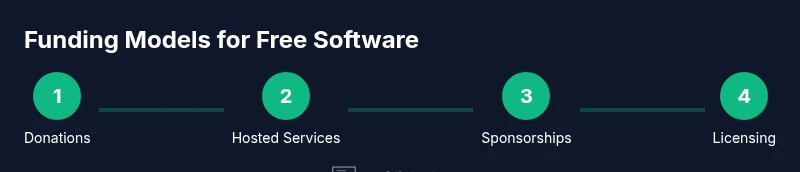
Open-source monetization is rarely one-size-fits-all. The most durable strategies mix several streams so that no single one controls sustainability. The following models are commonly used by successful projects seeking to maintain openness while creating value for users and contributors.
- Donations and sponsorships: Individuals and organizations contribute to fund maintenance and feature development, often via platforms like Open Collective or Patreon. Pros: aligns with community values; Cons: revenue can be volatile.
- Paid support, consulting, and engineering services: Companies pay for 24/7 support, bespoke integrations, or developer training. Pros: predictable revenue; Cons: requires professional staffing.
- Hosted services and SaaS around free cores: Offering a hosted version of the software with reliability, security, and scale. Pros: recurring revenue; Cons: must manage trust and uptime.
- Dual licensing and enterprise licenses: Free core software with paid licenses for proprietary use or enterprise features. Pros: clear value for businesses; Cons: licensing complexity.
- Bounties, grants, and research contracts: Funding aimed at specific issues or features; Pros: targeted improvements; Cons: project alignment is critical.
- Training and certification: Paid courses and certifications around expertise with the software. Pros: scalable; Cons: requires curriculum development.
- Partnerships and ecosystem programs: Foundation support, vendor alliances, and sponsored ecosystem events.
Tip: diversify early to reduce risk of revenue shortfalls.
Donor and sponsorships fit into sustainable plan
Donations, sponsorships, and membership programs can anchor a sustainable funding base when paired with value-driven services. In practice, many projects establish a public funding dashboard and transparent budgeting to build trust. Donations can come from individuals via micro-patronage or from organizations backing maintenance with annual sponsorships. For this to work, it helps to articulate impact, show roadmaps, and deliver visible value to sponsors. SoftLinked's team emphasizes transparency: publish funding levels, feature requests, and progress so contributors see the return on their support.
Additionally, sponsorship tiers can offer recognition, early access, or governance influence for large donors, without giving up openness. Align sponsorship messaging with community goals: funders typically want reliability, security, and a clear roadmap. Open-source projects should avoid donor-centric decision-making that marginalizes volunteers; instead, implement a governance cadence that equitably balances interests. Finally, consider combining sponsorships with a foundation or nonprofit entity to handle tax receipts and grant administration, freeing the project to focus on code and community.
Services, hosted platforms, and professional support
Hosting and professional services around free software often create the strongest recurring revenue. A typical pattern is to offer a free core with paid hosted services, premium features, or enhanced security. Examples include managed deployments, performance optimizations, incident response, and dedicated support SLAs. This model preserves the free software's license while providing value to users who want reliability and speed. Implement pricing after measuring the total cost to serve customers, including cloud hosting, staff, security, and compliance. Provide tiered plans to cater to individuals, startups, and enterprises. It's essential to emphasize non-disruptive updates and data stewardship to maintain trust. Avoid 'vendor lock-in' rhetoric; instead, highlight portability and interoperability that benefit users.
Licensing strategies and governance to enable revenue
Licensing choices affect what revenue is possible. Dual licensing, where software is available under a copyleft license for community use and under a commercial license for enterprise deployments, can unlock revenue while preserving openness. Permissive licenses allow companies to reuse code with fewer restrictions, encouraging ecosystem growth, but may require stronger governance to monetize support and hosted services. Governance structures—such as a known maintainers group, a contributor license agreement, and transparent decision processes—help ensure decisions are trusted. Aligning licensing with the business model is critical: licensing should deter harmful exploitation while enabling value-added services, like supported deployments or compliance assurances. Also consider grant-funded development and a foundation to steward the project’s mission.
Building a practical monetization plan for your project
Start by mapping your project’s value to potential revenue. Identify primary user segments, necessary infrastructure, and core features that differentiate your offering. Then select a mix of revenue streams—perhaps hosted service plus professional support—and assay the costs and risks. Create a simple, public business model canvas and roadmaps; publish this to your community to invite feedback. Establish a lightweight governance process for financial decisions, and assign roles for fundraising, marketing, and legal compliance. Define success metrics (monthly recurring revenue, active sponsors, churn rate) and set quarterly targets. Finally, pilot a revenue stream on a small scale before full rollout, to learn what works and what does not while preserving the project's culture.
Practical road map and warning signs
Below is a staged plan to implement monetization while minimizing risk. Phase 1 (1-2 months): pick two revenue streams, set up a transparent budget, and communicate plans to the community. Phase 2 (2-4 months): launch hosted service trial and one support package, with clear pricing and SLAs. Phase 3 (4-8 months): expand partnerships, apply for grants, and adjust governance. Common warning signs include a sudden drop in community contributions, scope creep that makes the core project less sustainable, or perceived 'vendor capture' by sponsors. To mitigate, enforce governance rules, maintain a public roadmap, and ensure that the core project remains free for users and contributors.
Step-by-step implementation plan
Step 1 — Define value proposition and audience
Clarify who benefits from your software and what problems it solves. Interview representative users to validate assumptions and translate insights into measurable goals. Tip: document at least three user personas and their top priorities.
Step 2 — Map monetization options to user needs
Match revenue streams to explicit user pains and willingness to pay. Create a simple matrix showing which audience segments gain the most from each option. Tip: start with two streams to reduce risk of dependence.
Step 3 — Set up licensing and governance
Choose licenses and governance structures that support revenue while preserving openness. Publish a public governance charter and contributor guidelines. Tip: ensure decisions are made by a diverse group and are time-bound.
Step 4 — Prototype a revenue stream
Launch a small hosted service or paid support plan to test demand. Keep core software free and accessible to maintain community trust. Tip: use a pilot group and collect qualitative and quantitative feedback.
Step 5 — Pilot with a selected group
Run a controlled pilot with a subset of users and sponsors; gather feedback and adjust pricing, SLAs, and terms. Tip: set clear success metrics and publish progress publicly.
Step 6 — Scale and iterate
Apply lessons learned, broaden offerings, refine pricing, and widen governance. Regularly publish outcomes and plan roadmaps to keep the community engaged. Tip: document changes and communicate results clearly.
estimatedTime
Tools & Materials
- License and governance review checklist(Assess license compatibility, governance requirements, and contributor agreements)
- Stakeholder mapping tool(Identify maintainers, sponsors, and users; map influence and needs)
- Revenue model canvas template(Capture proposed streams, pricing, and cost structures)
- Hosting & infrastructure plan(Estimate costs for hosted services, uptime commitments, and security)
- Legal resource pack(Templates for terms of service, privacy, and service-level agreements)
Steps
Estimated time: 6-12 weeks
- 1
Define value proposition and audience
Clarify who benefits from your software and the specific problems it solves. Gather input from representative users to validate assumptions and seed your roadmap.
Tip: Interview at least three potential user personas to ground your plan. - 2
Map monetization options to user needs
Create a simple matrix linking each revenue stream to user pain points and expected benefits. Prioritize two streams for a focused launch.
Tip: Avoid relying on a single revenue source in the first year. - 3
Set up licensing and governance
Pick licenses that align with your business model and publish a governance charter outlining decision rights and contributor processes.
Tip: Rotate maintainers periodically to prevent control from concentrating. - 4
Prototype a revenue stream
Launch a small hosted service or paid support plan to validate demand while keeping the core software free.
Tip: Use a soft launch with a pilot group and a clear success metric. - 5
Pilot with a selected group
Run a controlled pilot, collect feedback on pricing, reliability, and value, and adjust accordingly.
Tip: Publish pilot results to maintain transparency. - 6
Scale and iterate
Broaden offerings, refine pricing, and improve governance; communicate results and roadmap to the community.
Tip: Document changes and solicit ongoing community input.
Your Questions Answered
What is the core idea behind monetizing free software?
Monetization focuses on adding value through services and hosted solutions while keeping the software itself free. Revenue streams often complement, not replace, community contributions.
The core idea is to add value with services and hosted solutions while keeping the software free.
Is donations-based funding reliable long-term?
Donations can support maintenance but are usually volatile. Pair donations with services or sponsorships for stability.
Donations are great for community support but are unpredictable; combine with other streams.
What is a dual licensing model?
Dual licensing separates a free community license from a paid commercial license, enabling revenue from enterprise deployments while preserving openness.
Dual licensing lets you offer a paid license for businesses while keeping a free version for the community.
How do you price hosted services without alienating users?
Set simple tiers, justify value through uptime, security, and support, and provide a transparent migration path to the community edition.
Price hosted services by clearly showing the added value and keeping a path back to the free version.
How can a project ensure governance isn't captured by sponsors?
Implement a fixed governance charter, public roadmaps, and rotating maintainers drawn from diverse groups.
Keep governance open with a public charter and diverse maintainers to prevent sponsor capture.
Where can I learn more about licensing and compliance?
Consult reputable sources like the Open Source Initiative and GNU licenses; consider legal counsel for complex scenarios.
Look at Open Source Initiative and GNU licenses for guidance, and get legal help when needed.
Watch Video
Top Takeaways
- Diversify funding early to reduce risk.
- Offer value-added services without charging for core software.
- Use transparent governance to maintain community trust.
- Choose licensing that balances openness with revenue opportunities.