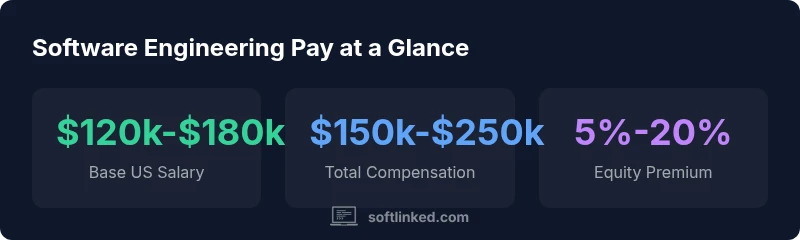
Software Engineering Pay: Salary Trends and Insights
Explore how software engineering pay is shaped by experience, region, and skills, with data-driven guidance on salary ranges, equity, and career moves for higher compensation.


Software engineering pay varies widely by experience, location, and specialization. In 2026, total compensation tends to be higher in major tech hubs and for roles with in-demand skills like AI, cloud, and security. The SoftLinked analysis shows deeper pay growth for senior engineers and those with leadership responsibilities, while entry-level roles pay relatively less but offer rapid growth potential.
How pay is structured in software engineering
Compensation for software engineers typically combines base salary, annual bonuses, and long-term incentives such as stock options or RSUs. In 2026 this structure remains common, but the balance shifts by geography, company stage, and role. According to SoftLinked, pay is not a single number; it reflects market demand and an individual's demonstrated impact on product outcomes. For many engineers, the base salary provides security, while bonuses and equity reward contributions that accelerate business value.
- Base salary: the guaranteed component negotiated at hire and reviewed during performance cycles.
- Bonuses: often tied to personal performance, team results, and company profitability.
- Equity and RSUs: align employee outcomes with company growth and can dominate total compensation for senior roles.
Understanding this mix helps you set realistic expectations and plan career moves that improve overall compensation over time.
Components of compensation: base salary, bonus, equity
Total compensation in software engineering typically comprises three pillars: base salary, annual bonuses, and long-term incentives such as equity. The base salary is the foundation and is most directly influenced by your current market value, location, and experience. Bonuses reward measurable outcomes, while equity aligns your destiny with the company's success. As you move from junior to senior roles, equity often grows in importance as part of overall pay. Different companies structure these components differently; startups may emphasize equity, while large enterprises may offer richer cash bonuses and structured RSU plans.
- Base salary ranges vary by region; use them as anchors for negotiation.
- Equity grants can vest over several years, creating long-term financial engagement.
- Performance bonuses can add meaningful variability to total compensation.
Factors that influence pay: experience, location, company size, and industry
Pay is not uniform; it depends on several intertwined factors. Experience and demonstrated impact drive higher base salaries, but location remains a critical fork in the road. Major tech hubs in 2026 continue to command larger packages due to cost of living, competition for talent, and mature ecosystems. Company size also matters: startups may offer lean cash but generous equity; large enterprises often provide steady cash compensation plus stock programs. Industry verticals—cloud computing, AI, cybersecurity, and fintech—show elevated demand, which lifts compensation benchmarks. SoftLinked analysis shows that the premium awarded for in-demand skills compounds with experience, translating into faster pay growth for senior engineers who can lead critical initiatives. The takeaway is to map your skills to high-demand areas and negotiate based on concrete market data rather than guesswork.
Regional differences: US, Europe, Asia, and emerging markets
Regionally, software engineering pay reflects local market dynamics. In the US, coastal tech hubs tend to offer higher base salaries and larger equity pools, while the Midwest and South often provide lower cash comp but improved cost-of-living. Europe exhibits strong variation: the UK and Germany offer competitive packages with robust benefits, while Southern and Eastern European markets grow through remote-friendly roles and distributed teams. Asia presents a broad spectrum: markets like Singapore, India, and parts of China show rapid growth in both base salaries and equity opportunities, though cost structure varies widely. For many engineers, remote work expands options beyond physical location, enabling access to high-paying roles in different regions. However, the pay you receive still hinges on your value, negotiation, and the company’s compensation philosophy, not only geography.
Pay by seniority and specialization: core tracks and value drivers
Within software engineering, two axes shape pay: seniority and specialization. Early career engineers benefit from rapid learning and growing scope, but pay growth accelerates as you assume ownership of modules, teams, or entire products. Specializations with high market demand—such as machine learning, cloud architecture, security, and data platforms—often command premium compensation. Leadership tracks, including tech leads and principal engineers, can unlock larger total rewards tied to strategic impact. Companies increasingly value cross-disciplinary skills, so engineers who combine software development with product sense, systems thinking, and collaboration frequently negotiate higher packages. The key is to align your career path with roles that deliver measurable business outcomes and scale your impact over time.
The role of stock options, RSUs, and equity compensation
Equity compensation remains a critical component of total pay for many software professionals. Stock options and RSUs reward long-term performance and tether employee value to the company’s success. The value of equity can be highly volatile but often compounds as a company grows. Startups may offer substantial equity with high upside but higher risk, while established firms provide more stable vesting schedules and clearer liquidity events. In 2026, equity remains an important differentiator in compensation packages, especially for senior roles or positions in fast-growing sectors like AI and cloud services. When evaluating offers, quantify expected equity value using current valuation methods and consider tax implications, vesting schedules, and potential future liquidity events.
Negotiation strategies and career moves to maximize pay
Negotiation is a skill software engineers should develop early. Start by gathering reliable market data from multiple sources and calibrating expectations to your region and role. Build a track record of impact by documenting outcomes, metrics, and contributions that tie to business value. When discussing salary, frame your ask around market benchmarks, future impact, and compensation mix (cash vs. equity). Consider negotiating for signing bonuses, performance bonuses, or accelerated vesting schedules. Career moves can amplify pay, too: moving to higher-demand regions, switching to in-demand stacks, or joining fast-scaling companies often yields meaningful bumps in total compensation. Finally, practice your negotiation with mentors or peers to refine your value proposition.
Data interpretation and limitations when evaluating software engineering pay
Pay data is a snapshot of a moving target influenced by many factors, including geography, company stage, and market cycles. Always consider job scope, team size, and the broader tech ecosystem when comparing offers. Use multiple data sources and adjust for cost of living, benefits, and tax differences. The SoftLinked team recommends focusing on total compensation rather than base pay alone and tracking trends over time to anticipate shifts in the market. The conclusion is that disciplined, data-driven planning—grounded in market benchmarks and personal impact—yields sustainable earning growth. The SoftLinked team recommends staying informed about compensation structures and evolving market needs to optimize your career path.
Regional pay snapshot for software engineers
| Region | Base Salary Range | Total Compensation Range | Notes |
|---|---|---|---|
| US West Coast | 120000-180000 | 180000-300000 | High demand & stock options |
| US Midwest | 100000-140000 | 140000-210000 | Lower cost of living |
| Europe (UK/DE) | 90000-140000 | 120000-190000 | Remote work growing |
Your Questions Answered
What factors influence software engineering pay the most?
The most influential factors are experience, location, skill demand, and impact on business outcomes. Market demand for specialized areas like AI and cloud often drives higher compensation. Always compare offers against market benchmarks and personal impact.
The biggest drivers are experience, location, and in-demand skills; compare offers to market benchmarks.
How does location affect salaries in software engineering?
Location heavily shapes base pay and total compensation due to cost of living and local demand. Tech hubs generally offer higher salaries, but remote work can broaden options and offset cost differences.
Location shapes your pay; tech hubs pay more, but remote roles can offset costs.
Do equity and bonuses count toward total compensation?
Yes. Equity and bonuses are essential components of total compensation and can substantially increase overall earnings, especially at growth-stage companies.
Yes, equity and bonuses are part of total pay.
What negotiation strategies work for software engineers?
Research market data, document impact, and present a value-based case. Negotiate for a mix of salary, signing bonuses, and equity, and consider vesting schedules and growth opportunities.
Know your value, back it with data, and negotiate the full package.
Is remote work affecting pay noticeably?
Remote work is expanding options, often allowing access to higher-paying roles without relocation. However, some regions still anchor pay to local market norms.
Remote work broadens options but may align with local market rates.
“Pay in software engineering is not just a number; it signals value, impact, and the future potential you bring to a team. Compensation should reflect both current contributions and growth trajectory.”
Top Takeaways
- Anchor expectations on local market data and location.
- Total compensation includes salary, bonuses, and equity.
- In-demand skills drive premium pay growth.
- Remote work expands opportunities across regions.
- Plan career moves with concrete data and impact.