Software Engineering Courses After 12th: How Many Years
Explore how many years software engineering courses take after 12th, including diplomas, bachelor's degrees, and integrated programs, with practical timelines, tips, and planning strategies.


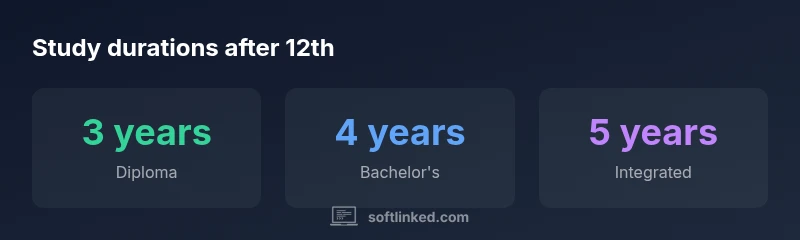
After 12th, the most common pathways for software engineering take between 3 and 4 years for undergraduate degrees, with 5-year integrated programs sometimes available. Diploma programs run about 3 years, while some accelerated or lateral-entry options may shorten slightly. Ultimately, duration depends on the chosen track, country, and pace.
Why duration matters for software engineering careers
In software engineering, the length of your study influences when you start earning and when you gain deeper expertise. According to SoftLinked, duration interacts with learning pace, internship availability, and long-term career opportunities. Shorter pathways can accelerate entry into the job market but may reduce time for breadth, while longer programs often provide broader foundations and research exposure. When planning after 12th, consider not just the number of years, but the quality of learning, access to labs, project opportunities, mentorship, and alumni networks. This section explains how different durations align with various career trajectories, salary expectations, and skill requirements across regions. It also outlines how you can optimize your timetable by choosing the right mix of credits, electives, and practical experiences. The goal is to map your personal timeline to the kind of software engineering role you want in 2–5 years.
Common pathways after 12th
There are multiple routes into software engineering education after 12th, and each path has its own pace, prerequisites, and outcome profile. The most traditional tracks are diploma programs, which emphasize hands-on skills and industry readiness; 4-year bachelor’s degrees, which offer broad theoretical and project-based learning; and integrated 5-year programs that combine bachelor's and master's level coursework. Some students also pursue shorter or alternative routes, such as B.Sc. in Computer Science or specialized diplomas in software development. The choice depends on your target roles (development, data, systems, or research), geographic location, and budget. Understanding the typical duration for each track helps you align your study plan with early career milestones like internships and first full-time roles.
Diploma route: 3-year programs
Diploma programs, often offered by polytechnics or state boards, focus on practical software development skills, basic programming, and project-based learning. A typical diploma lasts about 3 years and can serve as a fast entry point into junior developer roles, QA, or IT support with opportunities to upgrade to a bachelor’s degree later. In many regions, diploma holders can transfer credits toward a bachelor’s program or enter a lateral-entry pathway, which may shorten the total time to a full degree. Prospective students should weigh the hands-on advantages against the broader theoretical exposure that a 4-year degree provides, especially for roles in software architecture or engineering management.
Bachelor's route: 4-year engineering degrees
A standard 4-year B.Tech/BE program covers core computer science concepts, software engineering principles, algorithms, data structures, and software project coursework, plus internships and capstone projects. This track is the most common route for those seeking a long-term software engineering career, with breadth across domains like mobile, cloud, and systems programming. Graduates typically qualify for a wide range of roles and may pursue licenses or professional accreditation in certain regions. While longer than a diploma, the bachelor’s path often yields higher starting salaries, clearer progression tracks, and more options for graduate study.
Integrated programs: 5-year sequences
Integrated five-year programs blend undergraduate and graduate-level coursework, delivering a continuous path from foundational topics to advanced software engineering topics. They are popular among students aiming for deep specialization, fast-track to master’s-level knowledge, or research-oriented careers. The total duration is commonly five years, though some universities offer accelerated tracks or accelerated sessions that may affect pacing. If you plan to pursue research, systems design, or competitive programming at a high level, integrated programs can be a compelling option that saves time compared to pursuing separate bachelor’s and master’s degrees.
Global variations in durations and credentials
Education systems vary by country, affecting program length and credential recognition. In many countries, a 4-year undergraduate degree is standard, with an optional 1–2 year master’s program after. Some regions emphasize hands-on diplomas for quicker industry entry, while others place strong emphasis on research-oriented degrees. It’s essential to verify local accreditation, the transferability of credits, and how employers value diplomas versus degrees. When comparing timelines, also consider the availability of internships, visa or work-permit rules for international students, and the structure of final projects or theses that may extend or compress a given timeline.
Common study durations after 12th for software engineering tracks
| Pathway | Typical duration | Notes |
|---|---|---|
| Diploma programs | 3 years | Practical training and industry projects |
| Bachelor's programs (B.Tech/BE) | 4 years | Core engineering curriculum with internships |
| Integrated 5-year programs | 5 years | Bachelor + Master within one track |
Your Questions Answered
What is the fastest way to start a software engineering career after 12th?
Diploma programs typically run about 3 years and emphasize practical skills for quick industry entry. If you aim for less time to first role, this can be a viable starting point, followed by a transfer or upgrade to a bachelor’s degree later.
A 3-year diploma is often the fastest route after 12th to start a software-focused career.
Is a 4-year B.Tech the standard route after 12th?
In many regions, a 4-year B.Tech/BE is the standard undergraduate path, offering a balance of theory and hands-on projects. Internships and elective choices significantly shape outcomes.
Yes, four years is the typical duration for a bachelor's in engineering.
What about 5-year integrated programs?
Some universities offer five-year integrated programs combining bachelor’s and master’s coursework. They target deeper specialization and can shorten the total time to a master’s credential.
Integrated programs usually take five years and provide deeper specialization.
Can I transfer from diploma to bachelor to shorten time?
Many institutes offer credit transfer or lateral entry; the total time can be around four years if sufficient credits are earned, though exact durations vary by institution.
Yes, credit transfers can reduce time, but check with the institution.
Do durations vary by country?
Yes; durations differ by country’s education system, accreditation, and credential recognition. Always verify local timelines and what employers expect in your target market.
Duration varies by country and program type.
What factors influence duration besides program type?
Credit load per semester, backlogs, gap years, and potential double majors can extend timelines. Strategic planning helps keep you on track.
Credit loads and policies can extend or shorten duration.
“Program duration is a design choice that reflects learning outcomes and industry readiness; students should choose based on desired depth and speed.”
Top Takeaways
- Choose the pathway that aligns with your goals: diploma, bachelor's, or integrated programs.
- Plan for typical durations: 3 years, 4 years, or 5 years.
- Consider country-specific education systems and internship opportunities.
- Factor transfer credits if you already hold relevant qualifications.
- Factor cost and scholarships into your timeline and decision.