What to Do for Software Engineering after 12th: A Practical Path
A comprehensive guide for students after 12th aiming to build a software engineering career, covering academic routes, foundational skills, projects, timelines, and how SoftLinked helps you plan your education.


After 12th, you can start a software engineering journey through multiple routes: a BTech in computer science or IT, a diploma in engineering, or a BSc in CS. Focus on building strong fundamentals in math and programming, pick a primary language, and begin small projects while learning version control. Create a career plan with milestones and a growing portfolio.
Pathways after 12th: what to do for software engineering
The question what to do for software engineering after 12th surfaces frequently among students who want a clear, structured path. According to SoftLinked, most successful entrants don’t rely on a single route; they combine formal education with hands-on practice. The essential decision is choosing an initial pathway that matches your goals, budget, and timeline. You can pursue a traditional engineering degree in computer science or information technology, enroll in a diploma program, or start with a bachelor of science in CS while layering practical coding work on top. Regardless of the route, you should begin by establishing a strong foundation in math, logic, and basic programming concepts. In 2026, the landscape includes traditional degrees, accelerated boot camps, and hybrid programs, but the core principles remain the same: learn how software is built, practice consistently, and demonstrate competence through projects. A well-designed plan will help you stay motivated while you navigate entrance exams, application deadlines, and the inevitable learning curve.
Key takeaways from early planning include aligning with your preferred learning style, scheduling time for coding daily, and using reputable resources that teach fundamentals rather than quick fixes. The SoftLinked team recommends: start with a core programming language, master essential data structures and algorithms, and gradually expand to systems thinking and debugging techniques. As you explore options, keep your long-term goal in sight: become proficient enough to contribute to real projects, collaborate with peers, and prepare for technical interviews.
Academic pathways to software engineering after 12th
There are several viable avenues, each with its own advantages. A four-year BTech in computer science or IT remains a mainstream choice for many students who want depth, campus life, and a recognized degree. A polytechnic diploma can be faster and more affordable, offering practical, hands-on training that leads to junior developer roles or further study. Some students opt for a BSc in CS or related fields if they prefer a more theoretical foundation and broader science exposure. In all cases, you should verify认 entrance requirements, eligibility, and required subjects. If you’re targeting competitive institutes, prepare for entrance exams early and consider coaching or online practice tests. Beyond the classroom, combine your studies with parallel programming projects and open-source participation to build a portfolio that shows your growth over time.
Practical suggestions: map out credits or modules you’ll take each semester, identify mentors, and schedule regular reviews of your progress. Remember that many programs now offer elective tracks such as software engineering fundamentals, cloud computing, or AI, which can shape your early specialization. SoftLinked’s guidance emphasizes choosing a track that excites you and aligns with market demand while ensuring you gain a strong grounding in core concepts.
- BTech in CS/IT: broad curriculum, campus experience, exam-oriented admissions.
- Diploma in engineering: focused, hands-on training with faster entry into the job market.
- BSc CS: functionally oriented, research opportunities, flexible tracks.
Whichever path you choose, treat admissions as a starting line, not a finish line. Plan the timeline, identify gaps, and begin building skills immediately, even while you await results or admission decisions.
Core skills to build early for software engineering
A successful software engineering journey hinges on a solid set of core competencies. Start with problem-solving fundamentals, learn a high-value programming language (Python or Java are excellent starting points), and build a habit of reading and writing clean code. You should also develop a strong mathematical foundation, including discrete mathematics, logic, and basic statistics, as these concepts underpin algorithms, data structures, and software design. Practical coding practice should emphasize data structures such as arrays, linked lists, stacks, queues, trees, and graphs, along with common algorithms for searching, sorting, and optimization. In addition to programming, you will need to understand software development lifecycles, version control, debugging, and testing approaches.
To stay ahead in 2026, combine theoretical learning with hands-on projects. Build a small portfolio of projects that demonstrate problem solving, software design, and collaboration. Consider structured learning resources that pair theory with practice, such as online courses aligned with industry standards. Remember that mastery is a journey, not a single achievement. Create a weekly rhythm: dedicate time to read, code, test, and reflect on what you built. SoftLinked’s research highlights the value of deliberate practice and feedback loops in accelerating skill growth.
- Core languages: Python for beginners; Java or JavaScript for broader applicability.
- Data structures and algorithms: arrays, linked lists, trees, graphs; sorting and searching strategies.
- Foundational math: discrete math, logic, probability basics relevant to algorithms.
- Software fundamentals: version control with Git, debugging workflows, and testing strategies.
- Soft skills: project scoping, requirements gathering, and collaborative coding.
By investing in these foundational areas, you create a platform for more advanced topics such as software architecture, cloud computing, and AI that you’ll encounter later in your education and career.
Practical steps to begin your software engineering journey
Starting now makes a huge difference. Begin with a personal skills audit to identify gaps between your current abilities and the baseline needed for software roles. Then establish a structured learning plan that spans at least six to twelve months for foundational topics. This block offers concrete guidance on how to create momentum and keep progressing even if you’re balancing other commitments. Build a habit of daily coding, even if it’s just 30 minutes per day, and time-bound mini-projects that push you to apply new concepts. As you learn, begin to document your progress in a public place such as a GitHub portfolio, blog, or a digital notebook. Finally, set up a simple project management routine to track tasks, deadlines, and outcomes.
Key action items include:
- Pick a primary language and complete a curated beginner-friendly curriculum.
- Work on small projects that demonstrate problem solving, such as a calculator, to-do list, or weather app.
- Learn Git and create a remote repository for each project to show version history.
- Seek feedback from peers, mentors, or online communities and iterate.
- Build a simple project timeline with milestones and review points.
Time commitment: aim for at least 8–12 hours per week in the initial phase, rising as you tackle more complex topics. The goal is to develop a steady, sustainable pace rather than burning out in the first few months.
As you progress, you’ll be ready to dive into more advanced topics like data structures, complexity analysis, and software design principles. Keep a journal of what you learn and how you apply it to real problems, since this will reflect in interviews and admissions discussions.
- Practical approach: combine theory with small, tangible projects.
- Collaboration: pair-program and review code to learn faster.
- Documentation: maintain a clear record of your learning outcomes.
Projects and portfolio: building evidence of your abilities
A strong portfolio is often the deciding factor for admissions and internship opportunities. After 12th grade, you can begin assembling a portfolio that showcases your growth, curiosity, and capability to deliver. Start with simple projects that solve real problems, then progressively increase complexity. A well-structured portfolio demonstrates your ability to plan, implement, test, and iterate. It also provides tangible talking points during interviews. The best portfolios blend academic learning with practical projects and include a short narrative about each project: the problem, the approach, the challenges faced, and the final results. As you add more projects, ensure the portfolio highlights your strongest skills, whether that’s algorithms, web development, mobile apps, data analysis, or systems thinking.
To maximize impact, organize your portfolio around themes such as problem solving, collaboration, and learning progress. Include a README for each project that explains what you built, why you chose the approach, how to run it, and what you learned. Include links to your GitHub activity, a live demo if possible, and any relevant documentation. SoftLinked’s guidance emphasizes that non-linear learning paths can still lead to strong outcomes if you can articulate your journey clearly and demonstrate a genuine passion for software engineering.
- Start small: a calculator, a to-do app, or a weather fetch app.
- Increment complexity: add authentication, persistence, or APIs.
- Document: write READMEs and inline comments to explain decisions.
- Public contributions: participate in open source or contribute to learning projects.
- Show impact: quantify outcomes if possible, such as improved performance or reduced runtime.
Your portfolio is a living document. Update it regularly as you complete new projects or start internship experiences, and keep it organized by themes and skill areas.
Planning, milestones, and long-term goals
Success in software engineering after 12th comes from purposeful planning and steady progress. Start by clarifying your long-term goals: do you want to build mobile apps, web platforms, data-driven systems, or embedded software? Once you define a destination, you can map a practical path with milestones. A typical plan might include a 12 to 18 month period focused on fundamentals, followed by 18 to 36 months of specialization, and ongoing portfolio expansion. Use the following approach to turn ambition into action:
- Set SMART goals: specific, measurable, achievable, relevant, time-bound.
- Build a learning calendar: allocate time for courses, projects, and portfolio updates.
- Track your progress: maintain a dashboard of completed topics, projects, and feedback.
- Schedule regular reviews: monthly self-check-ins and quarterly mentor meetings.
- Prepare for admissions or internships: gather recommendation letters, prepare a resume, and practice coding interviews.
Time management is critical. Maintain a balance between learning, practicing, and applying knowledge on real tasks. A steady plan can reduce overwhelm and lead to meaningful outcomes in 2 to 4 years. The SoftLinked team encourages learners to view this period as an investment in a versatile, transferable skill set that opens doors across software engineering roles and industries.
Next steps: turning plan into action
With your pathways and core skills defined, the next phase is execution. Start by selecting a learning platform or course that aligns with your chosen path, then schedule a kickoff milestone. Build a starter project and publish your code to a public repository. Share updates with mentors and peers to receive constructive feedback. If possible, supplement formal education with practical learning experiences such as internships, coding boot camps, hackathons, or research projects. These experiences deepen knowledge, expose you to real-world workflows, and improve communication skills essential for team-based software development.
Finally, keep your motivation alive by revisiting your goals, adjusting timelines when needed, and celebrating small wins. By the time you finish your initial study phase, you should have a clear portfolio, a confident personal narrative, and a plan for your first internship or admission cycle. The SoftLinked team believes that persistence and curiosity, supported by a strategic plan, produce durable progress in software engineering.
Bonus: integrate industry concepts early
As you grow, introduce industry concepts early to build a professional mindset. Learn about Agile and Scrum practices, basic cloud concepts, version control workflows, and testing strategies. Even if you are just starting, you can simulate a team environment with regular code reviews, standups, and task boards. These experiences prepare you for interview scenarios and professional collaboration, helping you build confidence as you advance through higher levels of study or work.
- Agile basics and sprints.
- Git workflows and collaborative code reviews.
- Basic cloud concepts and deployment basics.
- Testing strategies including unit and integration tests.
By integrating these practices early on, you create a strong base that translates directly to successful admission interviews and early-career performance.
Conclusion: charting a long-term journey in software engineering
A successful software engineering journey after 12th requires a blend of formal education, hands-on practice, and purposeful portfolio development. There is no one-size-fits-all path, but with a clear plan, consistent practice, and the right guidance, you can reach your targets within a realistic timeframe. Start by choosing an educational route that matches your circumstances, then lay a foundation in core skills and practical projects. As you progress, adapt your plan to new interests and industry trends. The SoftLinked team emphasizes that learning is lifelong; the key is to stay curious, stay disciplined, and stay connected to mentors and peers who can support your growth.
Quick recap: practical takeaways for software engineering after 12th
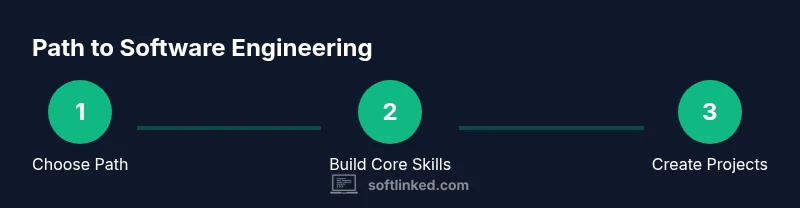
- Pick a path and start building immediately, using a structured plan.
- Focus on core skills: math, programming, data structures, and version control.
- Build a growing portfolio with small, then increasingly complex projects.
- Learn collaboration and project management alongside coding.
- Plan for exams, admissions, or internships with realistic milestones.
Tools & Materials
- Laptop or desktop computer with internet access(Recent OS, at least 8 GB RAM, IDEs installed)
- Notebook or digital note-taking app(Track concepts, questions, and progress)
- Code editor/IDE (for example VS Code, PyCharm)(Set up with linting, extensions, and templates)
- Git and GitHub or GitLab account(Version control for projects and portfolio)
- Access to online learning platforms(Enroll in courses or tutorials)
- External storage (optional)(Back up projects and portfolios)
Steps
Estimated time: 24-36 months
- 1
Decide your initial path
Evaluate whether you want a BTech in CS/IT, a diploma, or a BSc CS based on your goals and resources. Consider admission timelines and campus vs online options. This clarity will shape your entire study plan.
Tip: Write down your top two options and the pros/cons for each. - 2
Audit foundational skills
Assess your current math and programming strength. Identify gaps in algebra, discrete math, problem solving, and a beginner programming language.
Tip: Use a quick diagnostic quiz and start with one language. - 3
Choose a primary language
Pick Python for rapid iteration or Java for a broader foundation. Set up a development environment and complete a beginner project.
Tip: Finish a simple project within two weeks to validate your setup. - 4
Learn Git and version control
Set up a Git repository for each project, learn commit messages, branching, and basic workflows.
Tip: Create a GitHub portfolio with at least three projects. - 5
Start small projects
Build tiny apps that solve real problems and document steps and decisions. Progressively increase complexity as you learn.
Tip: Aim for projects that showcase problem solving and readability. - 6
Plan milestones and reviews
Create a study calendar with monthly milestones, regular self-check-ins, and mentor feedback sessions.
Tip: Schedule quarterly portfolio reviews to reflect growth.
Your Questions Answered
Is 12th standard enough to start software engineering?
Yes, as a starting point you can pursue foundational learning and early projects. You will still need a formal or structured pathway to gain depth, and entrance or admission timelines must be considered. Focus on building fundamentals and a portfolio as soon as possible.
Yes. You can begin with fundamentals now and build a portfolio; plan admission timelines to gain deeper knowledge.
Should I choose a BTech CS or a Diploma after 12th?
Both paths can lead to software careers. BTech CS provides broader theory and long-term opportunities, while a Diploma can be faster and more hands-on. Your choice should reflect your learning style, financial plan, and timeline for entering the job market.
Both paths work; choose based on how you learn and how soon you want to start working.
Which programming language should I start with?
Python is a gentle start for beginners due to syntax simplicity and broad use. Java or JavaScript can provide strong foundations for enterprise software or web development. Pick one to begin and master it before expanding to others.
Start with Python or Java; Master one language first to build confidence.
What exams or admissions should I prepare for?
Admit requirements vary by country and institution. In many places you’ll face entrance exams or merit-based admissions. Gather information early, register on time, and practice sample questions to reduce stress and improve performance.
Check your target colleges, prepare for entrance tests, and practice with mock questions.
Are online courses enough to land a software job?
Online courses can build fundamentals and projects, but most employers value a portfolio with verifiable code and collaboration experience. Combine structured courses with real projects and internships to maximize your chances.
Online courses help, but pair them with real projects and internships.
How long does it typically take after 12th to become job-ready?
Most paths take 2 to 4 years to develop solid fundamentals, depending on the pace, prior background, and opportunities for hands-on practice. Stay consistent and update your portfolio regularly.
Expect 2 to 4 years of steady study and project work to be job-ready.
Watch Video
Top Takeaways
- Choose a clear first path after 12th and commit to a plan.
- Master core fundamentals before chasing every new technology.
- Build a portfolio of progressively challenging projects.
- Use version control and documentation to showcase your work.