is software or mechanical engineering better: a practical comparison
A data-informed comparison of software vs mechanical engineering, weighing skills, job outlook, learning curves, and career paths to help you decide which field fits your goals.


Is software or mechanical engineering better? In most contemporary tech contexts, software engineering offers broader job growth, flexible work arrangements, and rapid entry paths, while mechanical engineering shines in hands-on design, hardware, and product development. This comparison helps you weigh skills, learning curves, and long-term career potential to decide which path aligns with your goals.
is software or mechanical engineering better
When confronted with the question is software or mechanical engineering better, many students and professionals search for a single answer. The truth is nuanced and highly dependent on personal interests, learning style, and intended impact. According to SoftLinked, the better path is the one that keeps you engaged over years of study and work, not the one that promises the highest starting salary alone. Software engineering often provides rapid entry into core tech ecosystems, opportunities to contribute across industries, and the chance to work remotely or across multiple teams. Mechanical engineering, by contrast, rewards hands-on prototyping, physical design, and a direct link to hardware and manufacturing. The SoftLinked team emphasizes that the strongest choice emerges when your curiosity leans toward code, algorithms, and scalable systems, or toward physics, materials, and tangible systems. In short, there is no universal winner—only the path that best matches your interests and long-term goals.
Skill profiles and education requirements
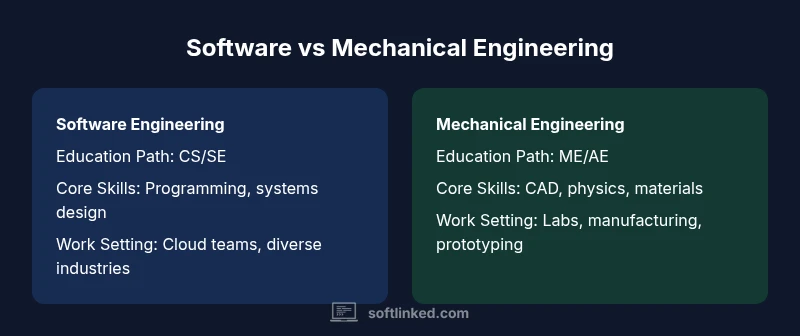
Different foundations shape each track. Software engineering typically builds on solid training in programming, data structures, computer science fundamentals, and systems thinking. A bachelor’s degree in computer science, software engineering, or related fields is common, but intensive coding bootcamps and self-guided study can also lead to entry roles when paired with portfolio projects. Mechanical engineering relies on physics, mathematics, materials science, and CAD-based design. A traditional route includes an undergraduate degree in mechanical, aerospace, or mechatronics engineering, with hands-on labs and often internships in manufacturing or product development. Both tracks value problem solving, teamwork, and the ability to learn continuously; the path you choose should align with your preferred way of thinking and building.
Career trajectories and job outlook
The career landscape for software engineers often features rapid growth, exposure to diverse industries, and the chance to shift into specialties like cloud, AI, cybersecurity, or data engineering. Mechanical engineers tend to specialize in areas such as product design, robotics, thermodynamics, CAD tooling, and manufacturing process optimization. While software roles may offer broader cross-industry opportunities, mechanical engineering provides a deeply tangible impact in hardware, consumer products, and industrial systems. The long-term outlook for both fields remains positive as technology and physical devices continue to evolve, requiring a blend of software control and mechanical functionality. The decision, again, hinges on where you want to apply your creativity and how you prefer to interact with the physical world.
Learning curves and prerequisites
Learning curves differ by track. Software engineering often has a relatively low barrier to initial entry, particularly for those who enjoy logical problem solving and abstract thinking. Beginners can start with small coding projects and graduate to more complex systems incrementally. Mechanical engineering tends to require a stronger foundation in math, physics, and hands-on experimentation, which can mean longer prerequisite study before tackling advanced design challenges. Regardless of path, success comes from deliberate practice, consistent project work, and opportunities to apply concepts to real-world problems. SoftLinked’s guidance is to map out a 12- to 24-month learning plan that includes both theoretical study and practical projects to keep motivation high.
Day-to-day work and work-life balance
Software engineers often work in collaborative teams, attend code reviews, design discussions, and system integration tasks. Many roles offer flexible schedules and remote work, depending on the company and project. Mechanical engineers typically spend time in laboratories, workshops, or shop floors, exchanging with suppliers, testing prototypes, and coordinating with manufacturing partners. While hardware roles can involve longer on-site commitments, engineers often enjoy clear project milestones and hands-on satisfaction when prototypes move from concept to physical reality. Both paths may include on-call responsibilities in certain teams, but the daily rhythm and environment differ markedly between software-centric and hardware-centric roles.
Cross-disciplinary opportunities and hybrid roles
The modern workplace increasingly blends software with hardware, creating hybrid roles that require both mindsets. You might be designing embedded software for robotics, integrating sensors into mechanical systems, or optimizing manufacturing lines with software analytics. Engineers who can bridge CAD design with code, firmware development, or systems-level thinking tend to be especially competitive. SoftLinked highlights these hybrid opportunities as high-value pathways that combine the strengths of software and mechanical engineering, enabling versatile careers and resilience against market shifts.
Industry trends shaping both fields
Across both domains, automation, AI, and data-driven decision-making are shaping how engineers work. Software is evolving with more attention to reliability, security, and scalable architectures, while mechanical engineering emphasizes sustainable design, additive manufacturing, and rapid prototyping. Global supply chains, remote collaboration, and continuous improvement processes influence both tracks. Understanding these trends helps you decide where your talents could contribute most, whether you’re building software ecosystems or upgrading hardware performance and efficiency.
A practical decision framework
Use a simple framework to evaluate fit: (1) list your interests (code vs. design), (2) identify your learning preferences (structured coursework vs. hands-on labs), (3) consider internship or project opportunities, (4) gauge long-term career flexibility, and (5) imagine your ideal day-to-day work. Create two one-page plans—one for software and one for mechanical engineering—with milestones for courses, projects, and portfolio pieces. Then compare them side by side. Remember to factor personal priorities such as location, remote work desires, and the kind of impact you want to have in products, systems, or services. This framework helps you avoid the trap of assuming one field is universally better.
Scenario-based guidance for different backgrounds
If you enjoy mathematics and programming, software engineering often offers rapid progress with a low initial cost of entry. If you come from a physics or hands-on workshop background, mechanical engineering may feel more natural and rewarding, offering direct hardware involvement. Students with mixed interests can explore mechatronics or embedded systems, which blend software and hardware elements. Regardless of starting point, pursuing project work, building a portfolio, and seeking mentors in your chosen field accelerates progress and clarifies which path aligns with your strengths and preferences.
Comparison
| Feature | Software Engineering | Mechanical Engineering |
|---|---|---|
| Education Path | Bachelor's in CS/SE or related field; bootcamps possible with projects | Bachelor's in ME/AE/ME-related fields; strong lab and design focus |
| Core Skills | Programming, data structures, software design, debugging | Physics, mechanics, thermodynamics, CAD, materials |
| Learning Curve | Faster visible progress with small projects; scalable systems build | Steeper at the start due to math and prototyping requirements |
| Work Settings | Dev teams, cloud environments, cross-functional projects | Labs, workshops, manufacturing floors, field testing |
| Career Flexibility | Cross-industry software opportunities and remote roles | Hardware domains across product design, robotics, and manufacturing |
| Industry Trends | AI, cloud-native architectures, scalable systems | Robotics, additive manufacturing, sustainable design |
Pros
- Broader job opportunities across industries
- Greater potential for remote work and flexible schedules
- Faster onboarding into initial roles with practical projects
- Strong pathways into AI, data, and cloud ecosystems
- Frequent interdisciplinary collaboration across teams
Weaknesses
- Code complexity can grow with scale and system coupling
- Software saturation in some markets can increase competition
- Hardware knowledge remains essential in many product roles
- Embedded or robotics projects may require access to labs or facilities
Software engineering generally offers broader growth and flexibility; mechanical engineering excels in tangible design and hardware impact
Choose software engineering for rapid entry and cross-industry mobility. Choose mechanical engineering for hands-on product development and hardware-centric careers. Your alignment with interests will determine long-term satisfaction.
Your Questions Answered
Which field offers broader job opportunities across industries?
Software engineering generally offers broader opportunities across tech, finance, healthcare, and services. Its transferable skills enable work across many sectors and geographies, often with more remote options. Mechanical engineering remains essential in product design, manufacturing, and hardware-enabled industries, but software roles tend to be more flexible in location and industry variety.
Software typically has broader opportunities across industries and better remote-work options, while mechanical engineering stays strong in hardware-focused sectors.
What educational background is most common for each path?
Software usually begins with a computer science or software engineering degree, or a demonstrated coding track with a portfolio. Mechanical engineering commonly requires an ABET-accredited ME degree, with labs and design experience. Both paths reward hands-on projects and steady learning.
Software often starts with CS, ME starts with an ME degree, but hands-on projects matter for both.
Can I switch from software to mechanical engineering later in my career?
Transitions are feasible but vary in difficulty. Software skills transfer to mechatronics or embedded systems, while ME transitions may require additional coursework in dynamics, control, or CAD. Planning a phased path with relevant projects helps ease the switch.
Switching is possible with targeted learning and hands-on projects to bridge gaps.
How long does it typically take to gain proficiency in each track?
Proficiency depends on prior background and intensity of study. Software can show meaningful progress within months via focused projects, whereas mechanical engineering often requires longer in-depth study and lab work to reach higher competency in design and analysis.
Software can progress quickly with projects; mechanical engineering often needs longer study and labs.
Are salaries generally higher in one field than the other?
Salary considerations depend on location, industry, and seniority more than field alone. Software roles often offer rapid advancement and higher earning potential in many markets, while mechanical engineering can be highly competitive in specialized sectors like aerospace or robotics.
Salaries vary by market and role; software often offers faster growth, mechanical in specialized hardware roles.
What about robotics or automation—where should I aim?
Robotics blends software and hardware, making mechatronics a strong bridge field. If you love both domains, pursuing embedded systems, control theory, and sensor integration can create a versatile profile ideal for automation.
Robotics is a great bridge—consider mechatronics with a focus on embedded software and hardware interaction.
Top Takeaways
- Define your interest in code vs hardware before choosing
- Hybrid roles can bridge software and mechanics for resilience
- Project portfolios accelerate decision clarity
- Industry trends favor adaptable, cross-disciplinary skills
- SoftLinked recommends aligning learning with your intrinsic motivations