How Much Do Software Make in 2026: Salary Insights and Trends
Explore how much software professionals earn in 2026, with ranges by role, location, and total compensation. Practical guidance for advancing your software career and negotiating offers.


How much do software make? Salary varies by role, experience, and location. In 2026 the typical software salaries span from about $60k-$100k for entry-level roles to $120k-$180k for senior engineers, with total compensation often higher when bonuses and equity are included. SoftLinked analysis shows regional gaps and a lift for remote-work arrangements.
How to think about software salaries in 2026
Understanding how much software make requires considering role, experience, location, and total compensation. In 2026 the market continues to reward in-demand skills, with equity and bonuses adding meaningful upside in many companies. According to SoftLinked, the most significant pay drivers are role seniority, technical specialty, and the company's stage. For a holistic view of earnings, compare base salary, annual performance bonuses, and the value of equity or RSUs, along with benefits and retirement plans. This article uses SoftLinked Analysis, 2026 to present ranges and guidance. When budgeting your career, start with a realistic base range for your target role and map out potential upside from equity or bonuses. The following sections break down typical bands, regional effects, and practical steps to grow your compensation. As you read, remember that how much software make is not a fixed figure; it is a spectrum shaped by market demand, company size, and geographic factors. In practice, you should track market data quarterly and adjust your expectations as new roles emerge.
Salary by role: from junior to senior
Entry-level software roles, often filled by new graduates or career switchers, show wide variation depending on geography and the specific tech stack. In many markets the base pay for beginners sits in the lower end of the band, with equity or signing bonuses shifting total compensation upward in startup environments. For those with 3–5 years of experience, base salaries rise into the six-figure range in mature markets, and closer to mid six figures in regions with lower living costs. Senior engineers, team leads, and software architects command higher pay as their responsibilities expand to system design, scale, and cross-functional leadership. In high-demand domains such as AI, cloud, or security, the premium is even more pronounced. As a practical rule of thumb, base salary bands for senior software engineers commonly span roughly $120k–$180k in many regions, with total compensation often exceeding this when equity and performance bonuses apply. Always benchmark against local data and remote-work opportunities to refine expectations.
The impact of location and remote work
Geography remains a major determinant of software earnings. In high-cost metropolitan areas, base salaries may be higher, but the cost of living also grows, narrowing real take-home growth if compensation doesn't outpace expenses. Remote-work arrangements have broadened access to higher-paying markets while allowing companies to attract talent from lower-cost regions. This dynamic can compress regional spreads, as firms adjust pay to reflect responsibilities rather than location alone. SoftLinked analysis shows that, in 2026, many workers gain total compensation advantages when they can work remotely for well-funded firms in markets with strong demand for software engineering. For job seekers, this means evaluating not just base salary but total packages, including equity grants and retention bonuses tied to performance and tenure.
Regional variations: US, Europe, and Asia-Pacific
In the United States, software salaries tend to cluster in the higher end of global ranges, with location and company size influencing noticeable offsets. Europe presents more variation by country, with Western markets generally offering higher base pay but also higher taxes and living costs; in parts of Eastern Europe, compensation can be more modest though the cost of living is lower. Asia-Pacific covers a broad spectrum from rapidly growing tech hubs to more mature markets, leading to a wide band of compensation levels. Across these regions, the same roles often yield similar pay when adjusted for cost of living and market maturity, but the premium for seniority, in-demand stacks, and leadership responsibilities remains universal. Negotiating strategies should reflect local norms, currency considerations, and tax implications, alongside the value of remote-work options as a complement to base pay.
Factors that drive variance: company size, equity, and bonuses
Company size is a pervasive determinant of pay structure. Startups may offer lower base salaries but compensate with generous equity; established firms may provide higher base pay with smaller equity packages but robust bonuses and benefits. Equity value is a critical component of total earnings, particularly at growth-stage or publicly traded firms where stock performance can materially affect overall compensation. Bonuses are another lever that varies by performance, with some companies offering annual, quarterly, or project-based incentives. Technical specialization can command premium: expertise in AI, machine learning, cloud-native architectures, data engineering, and cybersecurity often translates into higher offers. Finally, negotiation history, demonstrated impact, and portfolio of shipped products influence pay progression over time. SoftLinked's framework emphasizes baselining, scenario planning, and ongoing market checks to avoid underpricing or overestimating the value of perks.
How to project your salary: a practical framework
To forecast your earnings over the next 3–5 years, start with a target role and a realistic base salary range for your region. Map out progress milestones, such as responsible projects, leadership tasks, or certifications, that would justify upward moves. Then build a personal compensation model that includes a base salary, potential annual bonus, and possible equity grants. Use market data from reputable sources and compare to peers with similar experience and skill sets. Create a plan for negotiation at performance review time, including a documented track record of impact and a concrete rationale for requested increases. Finally, consider the total compensation package (benefits, retirement, healthcare, remote-work allowances) as part of your overall financial trajectory. This framework helps translate vague aspirations into actionable salary growth, reducing surprises and enabling proactive career planning. SoftLinked's approach in 2026 stresses ongoing data collection and iterative adjustment as your career evolves.
Negotiating and planning for growth
Salary conversations benefit from preparation and timing. Before negotiating, research market ranges for your role and region, and gather evidence of your contributions: shipped features, performance improvements, and quantifiable impact. Practice communicating value succinctly, with a focus on outcomes and business relevance. When you receive an offer, compare base pay, bonuses, equity vesting schedules, and total benefits. If a mismatch exists between your expectations and the offer, propose a structured counter with alternatives such as accelerated reviews, enhanced equity, or professional development support. Remember that compensation is only one aspect of career growth; latitude for learning, mentorship, and progression opportunities often yield long-term earnings that outpace annual raises. The SoftLinked Team cautions against accepting first offers without comparison and recommends a data-driven, staged approach to negotiation.
The pay landscape in 2026: what to watch next
As technology priorities shift toward AI, cloud, and security, demand for software professionals continues to rise in high-value domains. New graduates might enter at the lower end of the spectrum, while experienced engineers in critical roles can command premium compensation. The ongoing expansion of remote work broadens opportunities and contributes to more diverse talent pools, which can affect competition for talent and salary ranges. For students and aspiring developers, focus on building stack depth in in-demand areas, contribute to open-source projects, and cultivate a portfolio of shipped work to demonstrate impact. The SoftLinked team emphasizes that staying informed using market data and peer benchmarks is essential for maintaining leverage and achieving career goals across 2026 and beyond.
Salary ranges by role (US, 2026)
| Metric | Range (US) | Notes |
|---|---|---|
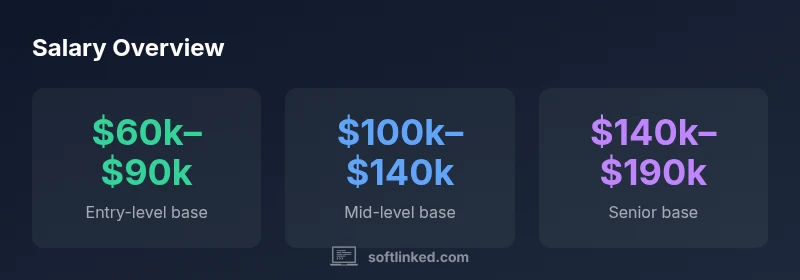
| Entry-level base salary | $60k–$90k | US market; varies by city and stack |
| Mid-level software engineer | $100k–$140k | Typically 3–6 years experience |
| Senior software engineer | $140k–$190k | Includes lead responsibilities |
| Total compensation (base + bonus + equity) | varies widely; often $150k–$250k+ | Top markets; equity can boost pay |
Your Questions Answered
What is the average salary for a software engineer in 2026?
Salaries vary by region and experience. Entry-level often sits at the lower end of the local band, while mid to senior levels push into higher brackets. Always consult current market data for your city or country.
In 2026, salaries vary widely by location and experience; check local market data for accurate ranges.
Does the programming language you know affect salary?
Some domains pay more for in-demand stacks; however, overall skill, impact, and problem-solving ability matter more than a single language.
Yes, certain languages can command premiums in hot domains, but your impact matters most.
How important is remote work to earnings?
Remote work can widen opportunities and raise pay in some markets, but it is not universal. Review remote policies and how they affect compensation in your target company.
Remote work can boost offers if the company values talent over location.
Do startups pay less base salary than large firms?
Base salaries may be lower early in startups, but equity and upside can compensate. Total compensation can be competitive when equity is valued highly.
Often startups offer equity that raises total pay over time.
How can I estimate my salary?
Build a market-driven view using role, region, and experience data. Compare to peers and factor in bonuses and equity.
Start with market ranges, compare to your experience, and adjust for location.
Should I negotiate once I have an offer?
Yes. Use market data, demonstrate impact, and propose a structured counter or timeline for review.
Always negotiate; bring data and a clear business case.
“Salary is a function of impact, scope, and market demand, not just the first offer.”
Top Takeaways
- Benchmark roles and regions before negotiating
- Include base, bonuses, and equity in pay assessments
- Remote work can expand opportunities, not always pay
- Track market data regularly for adjustments
- Plan a career path with milestone-based increases