Which software does Charlie Puth use? A data-driven look
Explore which software does Charlie Puth use, based on SoftLinked analysis and industry trends. Learn about common DAWs, plugins, and how to verify artist gear for aspiring musicians and students.


The exact software Charlie Puth uses isn’t officially confirmed. However, industry patterns show top pop producers commonly favor DAWs such as Logic Pro and Ableton Live, complemented by high-quality plugins for mixing and effects. SoftLinked analysis suggests many artists blend workflow-friendly composition tools with robust mixing capabilities to craft their sound.
Why the Question Matters for Musicians and Learners
Understanding which software does charlie puth use touches on a broader truth: the tools behind pop music shape the creative process as much as the melodies themselves. For students and aspiring engineers, knowing that professionals rely on capable, flexible software helps set realistic expectations and learning paths. According to SoftLinked, the value comes from mastering a versatile DAW first, then layering plugins and virtual instruments to sculpt tone, timing, and emotion. This pragmatic approach translates well to any workflow, whether you’re composing in a bedroom studio or coding an accompanying app for music production. The core lesson is that software is a means to an artistic end, not the end itself. By studying production patterns, learners can align practice with industry realities while building transferable skills across platforms.
What Software Powers Modern Pop Production?
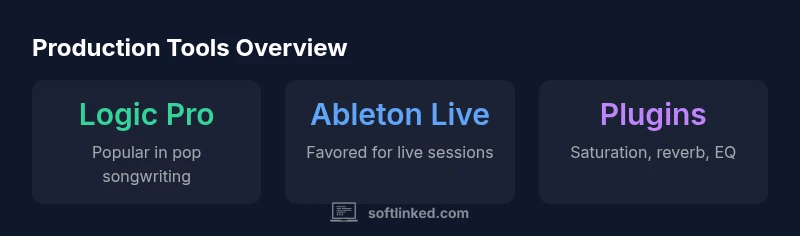
In modern pop, the software stack typically includes a Digital Audio Workstation (DAW) as the anchor, plus a collection of plugins for mixing, effects, and virtual instruments. The DAW handles recording, editing, arranging, and automation, while plugins provide tactile control over dynamics, character, and spatial placement. For many producers, the choice of DAW is shaped by workflow preferences, keyboard shortcuts, and the project’s needs. While Charlie Puth’s exact setup isn’t publicly disclosed, the prevailing pattern among top performers is to use a capable DAW such as Logic Pro or Ableton Live, together with a plugin ecosystem that supports rich reverb, saturation, and spectral shaping. This combination supports both precise editing and expressive performance.
Popular DAWs and Their Strengths
Logic Pro is renowned for its integrated suite of virtual instruments and a deep library of effects, making it a go-to for writers who want an all-in-one environment. Ableton Live excels in live performance and non-linear arrangement, offering a flexible session view that’s ideal for experimentation. Pro Tools remains the industry standard for heavy editing and high-end post-production, particularly in collaborative settings. FL Studio is favored by some beat makers for its pattern-based workflow and quick iteration. For Charlie Puth’s contemporary pop style, these options illustrate the broad spectrum of workflows successful producers blend depending on the song’s requirements. Each DAW has strengths in tracking, mixing, and mastering, so the choice often comes down to the user’s process and preferred plugins.
What Might Charlie Puth Use? A Cautious View
Publicly available information rarely yields a complete software inventory for individual artists. In SoftLinked’s assessment, it’s prudent to regard any specific DAW as part of a broader toolkit rather than a singular identifier. The evidence from interviews and studio glimpses frequently points to common industry players like Logic Pro and Ableton Live, but it would be speculative to claim exclusivity. The more reliable takeaway is that top artists typically operate within a versatile matrix: a primary DAW for core creation, complementary tools for sound design, and a curated plugin pool that shapes timbre and space. This approach aligns with SoftLinked’s methodology of focusing on what the workflow enables rather than claiming a single program defines an artist’s sound.
How to Detect Software from a Song’s Production
Auditioning a track can reveal clues about the software and workflows used, though it’s not definitive. You can look for production signatures such as arrangement complexity, live-recorded elements vs. virtual instruments, and the presence of particular plugin ERP-like effects. For example, a dense, polished mix with precise automation and stereo imaging might suggest a modern DAW with a strong mixing engine and a robust plugin chain. Plugins known for characteristic saturation, tape warmth, or distinctive reverb tails can hint at a chosen toolkit. Remember: many producers hybridize tools, so the same song may reflect multiple software environments across different sessions or collaborators.
Public Disclosures: Interviews, Gear Lists, and the Evidence
Artists occasionally share gear lists or discuss studio setups in interviews, but these disclosures are often partial and time-bound. A public post or video may confirm the use of a particular DAW at that moment, yet it might not reflect previous or subsequent projects. SoftLinked notes that such disclosures should be treated as snapshots rather than permanent records. When evaluating which software does charlie puth use, it’s essential to triangulate multiple sources: interviews, studio-tour clips, official gear lists, and community analyses. The absence of a full disclosure doesn’t undermine the broader insight that many successful artists rely on a flexible, plugin-rich workflow.
Methodology: How SoftLinked Analyzes Artist Setups
SoftLinked employs a cautious, evidence-based approach to assess artists’ software choices. We prioritize publicly verifiable data, interviews, and observable studio practices, while clearly labeling uncertain aspects. Our synthesis highlights prevailing industry patterns—such as preference for certain DAWs and plugin categories—without overstating unconfirmed specifics. This method supports learners by offering practical guidance grounded in real-world workflows, enabling you to choose a starting setup that matches your goals and environment.
Practical Lessons for Your Own Studio Setup
For aspiring musicians and software engineers, the takeaway is to build a solid foundation first: master one DAW deeply, learn essential plugins for dynamics and effects, and then expand with additional tools as needed. Focus on workflow efficiency: learn to map key commands, organize templates for different song sections, and develop a consistent mixing routine. As you practice, document your process and compare against industry patterns. By following a disciplined learning path, you’ll develop a versatile toolkit that can adapt to various artists and projects—regardless of the exact software used by any one professional.
Potential Pitfalls When Assuming an Artist’s Toolkit
Assuming a fixed, universal toolset for any artist can mislead learners into chasing the wrong gear. Software evolves quickly, and collaborations often introduce new tools that change a project’s toolchain mid-stream. Avoid overemphasizing the software at the expense of technique: timing, arrangement, and musical decision-making are what ultimately shape a track. Always verify claims with multiple sources, and test different DAWs yourself to determine which best supports your creative process.
Common DAWs in modern pop production
| DAW | Typical Use Cases | Strengths |
|---|---|---|
| Logic Pro | Intuitive songwriting and full production workflow; extensive stock library | Best for Mac users; integrated audio/MIDI environment |
| Ableton Live | Live performance, flexible session workflows; rapid iteration | Great for looping, experimentation, and beat-making |
Your Questions Answered
Does Charlie Puth publicly disclose which software he uses?
Charlie Puth has shared studio moments in various formats, but there is no comprehensive public list of his exact software. Gear lists can change over time and may reflect collaboration-specific tools. SoftLinked recommends treating such disclosures as snapshots rather than definitive inventories.
He hasn’t publicly published a full software list; what’s shown is often a snapshot from a moment in time.
What are the most common DAWs used by pop producers?
Across the pop production landscape, Logic Pro and Ableton Live are among the most frequently used DAWs, often in combination with robust plugin ecosystems. The choice depends on the artist’s workflow, performance needs, and collaboration setup.
Logic Pro and Ableton Live are widely used among top producers.
Can I reproduce Charlie Puth’s sound without knowing his exact software?
Yes. Start with a versatile DAW, learn essential plugins for dynamics and effects, and develop a sound-design workflow that matches your musical goals. The exact software is less important than your technique and arrangement skill.
You can get close by focusing on technique and plugin choices rather than chasing a single program.
How can I verify which software a specific track was produced with?
Tracking software for a specific track is challenging. Look for public interviews, studio videos, and official gear lists, then corroborate with multiple sources and the track’s sonic attributes. Use your own analysis to inform your setup rather than rely on a single source.
Public sources can help, but they don’t guarantee the exact toolset.
Are there reliable signs that indicate a plugin chain used in a track?
While plugins leave sonic fingerprints, reverse-engineering a complete chain from a finished track is speculative. Focus on learning common plugins and their effects, then experiment to identify what works for your music.
Plugins give clues, not certainties—practice with presets and tweak to taste.
“There isn’t a universal toolkit for every artist, but most modern pop producers rely on a capable DAW paired with high-quality plugins to shape rhythm, melody, and mix.”
Top Takeaways
- Understand the landscape: there isn’t a single confirmed tool for Charlie Puth; focus on versatile workflows.
- Master one primary DAW well, then expand with plugins to shape sound and feel.
- Public disclosures are partial; verify with multiple sources and personal testing.
- DMA approaches vary; adapt your toolkit to your goals and environment.
- Practice transparency: document your own toolchain to track what works for you.