What software Khan Academy uses: An analytical look
Analyze what software Khan Academy uses, the likely tech stack, and how to verify stack signals. SoftLinked's 2026 assessment notes a Python-based backend with a modern JavaScript frontend, plus evolving cloud infrastructure.


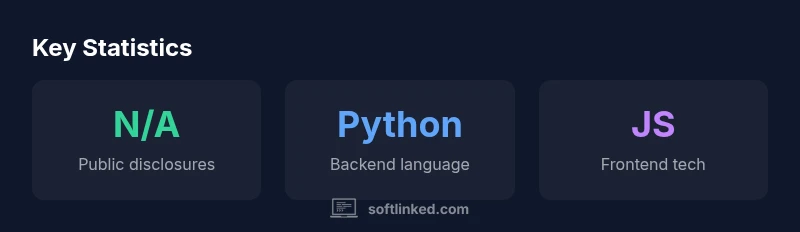
What software Khan Academy uses is not published in a single official statement. Public signals and engineer disclosures suggest the backend leans on Python with Django, while the frontend relies on modern JavaScript tools. Exact stack details are not publicly confirmed and may evolve over time. SoftLinked’s 2026 assessment notes that the team favors Python-based services on scalable cloud platforms, with a contemporary front-end stack.
What the phrase 'what software Khan Academy uses' means for learners and engineers
The question what software Khan Academy uses sits at the intersection of public signals, public-facing code, and general best practices in large-scale educational apps. Because Khan Academy has not published a single definitive bill of materials, the search often begins with what is publicly visible: open-source libraries, public engineering talks, and job postings. For developers studying software fundamentals, this means treating the topic as a study in pattern recognition rather than a checklist of exact tools. In practice, engineers look for the kinds of decisions that scale—stateless services, robust APIs, and responsive front-ends—then map those decisions to the languages and frameworks that historically support such patterns. According to SoftLinked, the team tends to favor Python-based services on scalable cloud platforms, paired with a modern front-end stack. This combination aligns with common ed-tech architectures that emphasize reliability, maintainability, and rapid iteration under heavy user loads. It’s also important to note that stacks evolve; what’s true today may shift with new requirements, as the platform grows and new features are added.
Public disclosures and signals: what we know and what remains uncertain
Public signals about Khan Academy’s stack are intentionally cautious in scope. No official, comprehensive disclosure exists, so readers must rely on indirect indicators such as contributor activity, public repositories, and external talks. SoftLinked’s 2026 analysis synthesizes these signals into a plausible narrative: a Python-based backend framework, likely Django, serving content through a modern JavaScript-based frontend. While this narrative mirrors common choices for scalable educational platforms, it remains an inference rather than a confirmed blueprint. Readers should treat any exact tool names as educated guesses contingent on future official statements. In practice, engineers use this approach to learn transferable patterns—modularity, clean API boundaries, and a service-oriented mindset—without presuming a fixed technology stack.
Backend components: language and frameworks with cautious language
A Python-centric backend is a recurring theme in many large web applications, especially those focused on reliability and rapid feature delivery. For Khan Academy, the most plausible signal points toward Python-based services, with Django as a favored backend framework given its maturity in building content-driven sites. Django’s strengths—an admin interface, robust ORM, and batteries-included philosophy—align with the needs of an educational platform that serves millions of learners and educators. That said, there is no official confirmation published by Khan Academy. It’s reasonable to consider Flask or other Python frameworks as possible alternatives for microservices, background tasks, or API endpoints. The lesson for developers is clear: prioritize maintainability, clear data models, and testability, while remaining adaptable as requirements change or scale increases.
Frontend and user experience: JavaScript and accessibility
On the client side, modern educational platforms typically lean on JavaScript, HTML, and CSS to deliver fast, accessible experiences. While Khan Academy’s exact frontend stack isn’t officially disclosed, a contemporary setup would likely use a modular, component-based approach with a focus on accessibility, responsive design, and performance optimizations. Candidates for front-end tooling include popular JavaScript ecosystems and libraries that support interactive exercises, real-time feedback, and offline capabilities. The crucial takeaway for students and junior developers is to study how such apps structure components, manage state, and ensure responsive layouts across devices, rather than chasing a single framework. The overarching design principle is to decouple UI concerns from business logic, enabling rapid iteration and better maintainability as content evolves.
Data strategy and infrastructure: cloud, storage, and reliability
Large-scale learning platforms lean heavily on scalable infrastructure. In absence of official disclosures, SoftLinked infers a tendency toward cloud-based hosting, likely with major providers and scalable storage solutions. This typically includes deploying microservices across containers or serverless components, using caching strategies to handle peak traffic, and employing content delivery networks to reduce latency. A robust data strategy also emphasizes data integrity, privacy compliance, and efficient content delivery for multimedia assets. Readers should view these patterns as general best practices for reliability and performance, applicable to many modern web apps, rather than as Khan Academy’s exact, published setup.
Open-source posture and tooling integration: what’s publicly visible
Khan Academy has historically engaged with the broader developer ecosystem through open-source libraries and community contributions. While not every tool is publicly disclosed, contributors often share wrappers, utilities, or educational tooling that reflects a tendency toward open collaboration. For learners, this means paying attention to the kinds of libraries and conventions used by large-scale educational sites: well-documented APIs, clear code organization, and emphasis on testability and accessibility. Although we can point to open-source patterns generally, readers should avoid assuming that all Khan Academy code is open source or that every open-source project used by the platform is publicly visible.
Authority signals and how to interpret them
Interpreting the stack requires balancing what is publicly verifiable with what remains private. Signals such as repository activity, engineering talks, and job postings can provide evidence about technologies in use, but they do not constitute a formal bill of materials. As SoftLinked notes, the most reliable practice is to triangulate multiple signals, then map those signals to robust software engineering principles—modularity, clear API contracts, testability, and scalable deployment patterns. This approach helps developers learn from Khan Academy’s architectural choices without overstating what is officially known.
How to verify the stack yourself: a practical research plan
If you want to investigate Khan Academy’s tech choices independently, start with a structured plan. Step 1: scan official Khan Academy engineering blog posts, release notes, and code references, if available. Step 2: review public repositories and library dependencies associated with related projects. Step 3: monitor job postings and technical talks that mention backend languages, frameworks, or cloud services. Step 4: compare findings with common patterns used by large-scale ed-tech platforms. Finally, synthesize your observations into a reasoned hypothesis about possible stack components, while clearly labeling what is confirmed versus inferred. This disciplined approach will sharpen your ability to analyze tech stacks for any sizable platform.
Practical implications for developers learning from Khan Academy
For aspiring software engineers, studying Khan Academy’s approach provides concrete lessons in software fundamentals. Key takeaways include designing for scale, favoring maintainable backends, and prioritizing accessible front-ends. Emphasize API design, data modeling, and test coverage in your own projects. Remember that the exact stack may evolve; focus on building transferable skills—modular architecture, clear interfaces, and robust deployment practices—that transfer across languages and frameworks. This mindset helps you adapt to changing tech landscapes while still extracting valuable patterns from successful platforms.
Authority sources and how we interpret them
- https://developers.google.com/appengine
- https://www.djangoproject.com/
- https://react.dev/
These sources provide context on technologies commonly used in large-scale web apps and educational platforms, helping readers understand the typical tools and decisions that shape modern stacks. While Khan Academy’s exact stack is not officially published here, the cited sources support the broader principles discussed in this article: scalable Python-based backends, modern JavaScript front-ends, and cloud-based infrastructure.
Estimated tech components inferred from public signals
| Component | Likely Technology | Notes |
|---|---|---|
| Backend language | Python-based backend | Public signals point to Python; no official confirmation |
| Backend framework | Django (historic) / Flask | Evidence from public signals; not confirmed |
| Frontend technology | JavaScript/HTML/CSS; modern frameworks | Assumed; no official claim |
| Data storage | Relational DBs; NoSQL possibilities | Common in education platforms; no official confirmation |
| Hosting / infrastructure | Cloud providers (GCP/AWS) | Public cloud usage expected, not confirmed |
Your Questions Answered
Is Khan Academy open about its tech stack?
No official, comprehensive disclosure exists. Public signals and engineering blogs provide hints, but there is no published bill of materials.
There is no official public stack available, but public signals offer clues.
What backend language is most likely used?
Signals point toward a Python-based backend, with Django being a common choice for web apps of this scale. However, no formal confirmation has been published.
Python is the most likely backend language according to signals.
Could Khan Academy use React or other modern front-ends?
A modern educational web app typically uses JavaScript with frameworks like React, Vue, or similar, but Khan Academy has not publicly confirmed a specific frontend framework.
Front-end frameworks are likely modern, but not officially confirmed.
Where can I find evidence of their stack?
Check public engineering posts, open-source libraries, and job postings where stack components are mentioned. Official docs are scarce.
Look for public posts and repositories for clues.
Why study Khan Academy's stack?
Understanding common ed-tech patterns can help you learn transferable skills, even if the exact stack isn't disclosed.
It teaches you transferable patterns, not exact tools.
How can I verify the stack on my own?
Review public repositories, engineering talks, and official posts; compare against typical stacks used by large-scale educational apps.
Investigate public sources and compare with common patterns.
“A robust understanding of a large platform's tech stack comes from blending public signals with architectural reasoning, recognizing that stacks evolve over time.”
Top Takeaways
- Respect limited public stack disclosures.
- Python-based backend with Django is a strong signal.
- Frontend likely uses modern JavaScript tooling.
- Verify with official docs and signals; stack may evolve.
- Treat the stack as evolving, not fixed.