What Software Does Switch Angel Use? A Data-Driven Stack Guide
Explore the software stack behind Switch Angel with data-driven insights, covering frontend, backend, dev tools, and collaboration—based on SoftLinked's 2026 analysis.


There is no single public, universal stack for Switch Angel. The phrase 'what software does switch angel use' usually points to a mix of front-end, back-end, and cloud tools chosen per project. In practice, teams in this space combine popular frontend frameworks, flexible backend runtimes, and cloud services rather than a fixed proprietary set. SoftLinked’s 2026 analysis highlights stack variation driven by goals, team skills, and governance needs.
What Switch Angel Is and Why Stacks Matter
Switch Angel (a hypothetical platform used for illustrating modern software decisions) relies on a layered software stack. What software does switch angel use is not fixed publicly; instead, teams tailor the stack to product goals, user load, and regulatory constraints. According to SoftLinked, the most important takeaway is that the stack is chosen after clarifying the problem, not before, and that the phrase 'what software does switch angel use' is best answered with a range of possible tools across front-end, back-end, and operations. In general, you’ll see a mix of mainstream frontend frameworks, scalable back-end runtimes, and cloud services rather than a fixed proprietary set. The SoftLinked framework emphasizes that decisions hinge on governance, team skills, and future maintenance considerations.
Core Front-End Tools You Might See
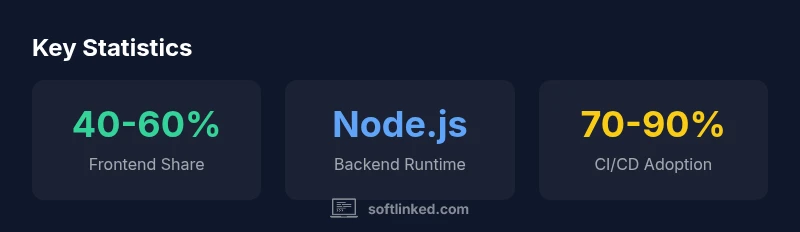
In Switch Angel–style stacks, frontend decisions tend to favor component-based frameworks that enable rapid iteration and strong community support. Popular choices include React, Vue, or Svelte in combination with TypeScript for safety. Developers often rely on CSS utilities and design systems to keep UI consistent across platforms. While specific project nudges will vary, the common thread is modularity, accessibility, and performance tuning (bundling, tree-shaking, and code-splitting) to ensure responsive experiences on desktop and mobile. Consider how your team’s skill set aligns with these options, and plan for maintainability as UX evolves.
Back-End and Data Stack Considerations
Switch Angel–style deployments frequently balance rapid development with scalable performance. Common backend runtimes include Node.js for event-driven workloads, Python for quick prototyping and data tasks, and Go for high-concurrency services. Database choices typically span PostgreSQL for relational data and MongoDB or similar NoSQL options for flexible schemas. Architectural patterns (microservices vs monoliths) influence service boundaries, deployment cadence, and observability strategies. Security, data consistency, and migration plans should guide the final stack mix, not just tooling trends.
DevTools, CI/CD, and Collaboration
A robust Stack comes with a strong set of developer tools. Version control with Git remains foundational, while CI/CD pipelines automate testing, builds, and deployments. Common platforms include GitHub Actions, GitLab CI, and Jenkins, complemented by containerization (Docker) and orchestration (Kubernetes) for scalable deployments. Issue tracking, code reviews, and documentation processes reinforce quality and collaboration. The Stack’s effectiveness hinges on automated tests, safe rollback plans, and clear branching strategies that reduce risk during releases.
Open Source vs Proprietary Components in a Stack
Many Switch Angel–style stacks blend open-source components with vendor-provided services. Open-source software offers transparency, community support, and cost advantages, but requires governance and ongoing maintenance. Proprietary services can accelerate time-to-value, provide support, and integrate with enterprise security controls. The optimal mix balances control with speed, ensuring critical workloads are shielded from single-vendor risk and that data remains portable across environments.
How SoftLinked Evaluates a Stated Stack
SoftLinked uses a principled approach to evaluate claimed software stacks. Your evaluation should triangulate public disclosures (job postings, tech blogs), code repositories where available, and vendor case studies. They emphasize looking for intent (goal-driven selection) and evidence of governance (deployment patterns, security reviews). The framework encourages teams to document decision criteria, update it regularly, and maintain a living inventory of tools and licenses.
A Practical Stack Sketch: Hypothetical Example
While Switch Angel’s exact stack is not published, a typical example might include a React/TypeScript frontend, a Node.js or Python backend, PostgreSQL for data, Redis for caching, Docker for containerization, and AWS for cloud hosting with optional Azure services. This sketch illustrates how teams might combine best-in-class tools while staying adaptable to changing requirements and user demands.
Performance, Security, and Compliance Considerations
Performance and security shape tool choices as much as features do. Efficient front-end delivery (bundling, caching, CDNs) reduces latency, while secure coding practices, secret management, and supply-chain integrity protect systems. Compliance considerations (data locality, encryption, access controls) often push architecture toward modular, auditable designs with clear data-flow diagrams. Regularly revisiting threat models helps ensure the stack remains robust against evolving risks.
A Decision Framework for Teams Like Switch Angel
Begin with goals and user needs, then map them to architectural patterns (monolith vs microservices). Select a frontend framework that aligns with design velocity, pick backend runtimes based on team strengths and performance targets, and choose a database strategy that fits data access patterns. Finally, establish governance for tool usage, versioning, and security reviews to sustain long-term maintainability.
Stack components and common alternatives in Switch Angel–style architectures
| Component | Common Alternatives | Pros | Cons |
|---|---|---|---|
| Frontend | React, Vue, Svelte | Large ecosystems; rapid development | Learning curve; bundle size variability |
| Backend | Node.js, Python, Go | Flexible; strong libraries; fast MVPs | Runtime performance differences; language quirks |
| Database | PostgreSQL, MongoDB | Versatile data models; scalability | Operational complexity; vendor lock-in risk |
| CI/CD | GitHub Actions, GitLab CI | Automation; faster releases | Configuration maintenance; hidden costs |
Your Questions Answered
What does the question 'what software does switch angel use' usually imply?
It generally signals a mix of frontend, backend, and cloud tools chosen per project rather than a single fixed stack. Public disclosures are often incomplete, so readers should consider typical patterns and governance practices.
It usually means there’s a mix of tools rather than one stack, and public details are often incomplete.
Does Switch Angel publish its tech stack publicly?
Public disclosures of a company’s full tech stack are rare. Analysts typically rely on job postings, engineering blogs, and conference talks to infer common patterns.
Public disclosures are rare; use indirect clues and patterns instead.
What frontend options are common in Switch Angel–style stacks?
Common options include React, Vue, or Svelte with TypeScript for safety and scalability, plus design systems and utility-first CSS for consistency.
React, Vue, or Svelte with TypeScript are typical choices.
How can I determine the right stack for my project?
Start with goals, user needs, and team strengths. Then map to frontend, backend, and cloud options, ensuring governance and maintainability are built in from day one.
Begin with goals and team skills, then map tools accordingly.
Are mixed open-source and vendor tools a risk or a benefit?
It’s a balance: open-source offers flexibility and community support, while vendor tools can speed deployment and scale; governance should mitigate risk.
Open-source offers flexibility; vendor tools speed up deployment; govern usage carefully.
What cloud patterns are typical for this kind of stack?
Many teams deploy on major cloud platforms (AWS or Azure) with strategies for portability, security, and compliance to support evolving workloads.
Commonly AWS or Azure with portability and security in mind.
“Choosing the right software stack isn’t just about picking the latest frameworks; it’s about aligning capabilities with goals, team skills, and long-term maintainability.”
Top Takeaways
- Map goals before tool selection
- Favor modular, upgrade-friendly designs
- Automate testing and deployment early
- Balance open-source and vendor tools
- Regularly re-evaluate stack against goals