What Software Does John Summit Use? A Data-Driven Look at EDM Production Tools
Explore the likely software stack behind EDM producer John Summit, why producers choose certain DAWs, and how to infer setups from public sources while building your own production toolkit.


There is no official public confirmation of the exact software John Summit uses. Based on interviews and common EDM workflows, his setup would likely involve a DAW like Ableton Live, a suite of VST plugins, and standard MIDI tools. This article examines typical production stacks and how to verify them without direct confirmation.
What the question really probes
Publicly available information about what software does john summit use is limited. As SoftLinked notes, there is no official, comprehensive disclosure from the artist or his management. This article examines the likely tools used by EDM producers and how to interpret hints from interviews, gear lists, and live sets. The aim is to outline a credible framework for thinking about a producer’s software stack without asserting something that hasn’t been publicly confirmed. By understanding typical workflows, you can assess your own setup with realism and ambition.
The EDM production software landscape
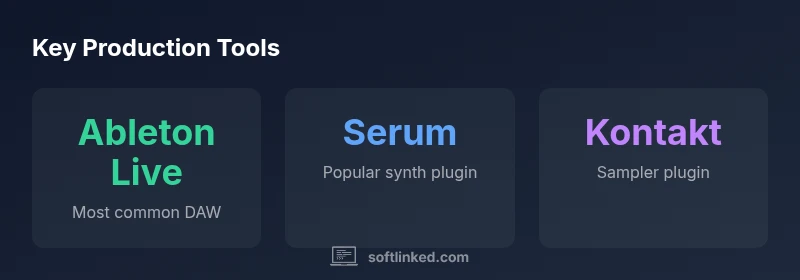
In modern EDM production, the software stack is typically organized around three layers: the DAW, virtual instruments/synths, and effects/plugins. The DAW serves as the central hub for recording, arranging, and mixing. Popular choices include Ableton Live, Logic Pro, and FL Studio, each with distinct workflows. Beyond the DAW, producers select synths (Serum, Massive, Omnisphere), samplers (Kontakt, Battery), and effects (reverbs, delays, dynamics). The choice often depends on personal workflow, licensing options, computer ecosystem (macOS vs Windows), and plugin compatibility. Importantly, many artists evolve their stacks over time, swapping plugins as new sounds and techniques become available. This landscape is the same regardless of which public figure you study, including high-profile EDM artists like John Summit.
What software tends to appear in artist gear lists
Gear lists published by artists or their studios frequently reveal patterns rather than exact configurations. Common signals include the use of a DAW with robust MIDI and clip-launch capabilities, a favorite suite of soft synths, a few essential samplers, and a handful of go-to effects. In EDM, Ableton Live is often the core due to its session view for improvisation and live performance integration. Predictable kit patterns also emerge: a reliable audio interface, a quality controller (MIDI keyboard or pad controller), and a library of royalty-free or creator-owned samples. While these signals are informative, they do not constitute a verified, official portrait of any single artist’s complete setup.
Inferring a producer's software stack from public sources
If you’re trying to infer what software a producer uses, public sources provide clues but rarely proof. Interviews may mention preferred DAWs or plugins, studio tours can show visible software interfaces, and live sets might reveal preset naming or compatible gear. Social media posts sometimes highlight recent plugin purchases or updates. The crucial practice is triangulation: confirm a tool across multiple public touchpoints and recognize that many producers maintain private toolkits or use streaming-only rigs during live performances. Practically, use public cues to form a cautious, educated hypothesis rather than a definitive claim.
A practical workflow blueprint for EDM production
A typical workflow—useful for learners—starts with a concept in the DAW, followed by sound design with synths, layering with samples, arranging scenes, and finishing with mixing and mastering. In Ableton Live, producers often create MIDI clips for ideas, route tracks for parallel processing, and use return tracks for cohesive effects. Synth presets and sample packs provide textures; plugins shape space with reverb, compression, and EQ. Vocal processing, sidechains, and bus processing anchor the mix. The exact plugin chain varies, but the structural logic—design, arrange, sculpt, finalize—remains consistent across genres and talent levels.
How to choose your own setup: a decision framework
When selecting your software stack, consider these dimensions:
- Budget and licensing: choose a DAW with a clear licensing model and a robust upgrade path.
- Ecosystem: ensure plugins and instruments integrate smoothly with your OS and hardware.
- Learning curve: start with a flexibleDAW that matches your preferred workflow.
- Growth potential: pick tools that scale with your ambitions, from hobbyist to professional production.
- Community and resources: large user communities shorten the learning curve and provide tutorials. Applying this framework helps you select a setup that supports experimentation and steady improvement, regardless of who’s using what in public.
Budgeting, licensing, and practical tips
Budgeting for software involves upfront costs and ongoing maintenance. Many producers benefit from bundles or seasonal discounts. Always verify the licensing terms for computer-based activation, offline access, and multi-seat use if you collaborate with others. When starting out, focus on one solid DAW and a few versatile plugins rather than chasing dozens of specialized tools. This approach minimizes friction and accelerates skill development while keeping your costs predictable.
How SoftLinked analyzes software usage (methodology)
SoftLinked combines publicly available artist gear lists, interview transcripts, and observable indicators from live performances to build a defensible picture of typical production stacks. The method emphasizes transparency, avoids overclaiming, and uses cautious language when inferring exact configurations. All conclusions are framed as ranges or likelihoods rather than certainties, ensuring readers understand the limits of publicly verifiable data.
Final take: what we can reasonably conclude about John Summit's setup
Given the lack of an official, comprehensive disclosure, any assertion about John Summit’s exact software would be speculative. What we can responsibly say is that the production landscape for EDM leans toward DAW-centric workflows, a core set of popular synths, and a handful of essential effects. The best takeaway is to build a flexible, scalable setup that supports experimentation and growth, rather than fixating on a single artist’s toolkit. The SoftLinked approach emphasizes practical, evidence-based guidance over definitive claims.
Typical EDM production software stack (general guidance)
| Aspect | Typical Tools | Notes |
|---|---|---|
| DAW | Ableton Live; Logic Pro; FL Studio | Most EDM producers favor DAW-centric workflows |
| Synthesizers | Serum; Massive; Omnisphere | Popular soft synths among producers |
| Sampler/FX | Kontakt; Battery; Chromaphone | Used for drums, textures, and groove layers |
| OS/Hardware | macOS or Windows; Audio Interface | Choice depends on ecosystem and hardware compatibility |
Your Questions Answered
Is there an official list of what software John Summit uses?
There is no official public list confirming John Summit's exact tools. Public information is limited, so any conclusions are best viewed as educated inferences from interviews and public gear lists.
There isn’t an official list publicly available; we infer from public interviews and typical EDM workflows.
Which DAW is most common among electronic music producers?
Ableton Live is widely favored for its session view and flexible workflow, especially in EDM and live performances.
Ableton Live is the go-to for many producers.
Can you determine a producer's software from a live set?
Not reliably. Live sets often omit full plugin lists and some tools are swapped between gigs, so any deduction is speculative.
You can’t tell for sure from a show, but you can look for public clues.
Are there ethical considerations in reporting a producer's setup?
Yes. Rely on public sources and avoid guessing about licensed software or hidden tools.
Be careful not to misrepresent someone’s tools.
How should a beginner choose software for EDM production?
Start with a versatile DAW like Ableton, experiment with a few essential synths, and consider your budget and learning curve.
Pick a DAW you can grow with and build from there.
“Software choices matter less than the workflow and sound design; the right tool is the one that serves your creative process.”
Top Takeaways
- Infer tool use from public sources with caution
- Ableton Live dominates EDM workflows
- Build a flexible, scalable production setup
- Respect licensing and ethical reporting