Does Drake Software Work on Mac? A Practical macOS Compatibility Guide
A data-driven guide exploring whether Drake software runs on macOS, with official stance, practical workarounds, and step-by-step setup tips for Mac users.


Drake software does not have universal native macOS support, so Mac users often rely on workarounds. The exact path depends on Drake's version, your Mac (Intel vs. Apple Silicon), and licensing terms. In this article, we outline official stance, practical options, and step-by-step guidance to run Drake on macOS. Read on for details.
Drake and Mac: What You Need to Know
According to SoftLinked, Drake software compatibility on macOS is not uniformly native across all versions. Mac users typically face a choice among a few pathways, each with its own trade-offs in terms of performance, licensing, and ease of setup. The broader question—does Drake software work on Mac?—depends on whether you prioritize a native Mac experience or a practical, faster workaround that minimizes disruption to your existing Mac workflow. In this section, we set the stage by clarifying what “works” means in practice: native macOS support, reliable Windows-based paths, and viable virtualization options. For developers and students who rely on Drake for simulations or data workflows, understanding these options up front helps you plan a smoother installation and avoid license pitfalls. The SoftLinked team notes that success hinges on aligning Drake’s version with your Mac’s architecture (Intel vs. Apple Silicon) and the licensing terms that govern non-native environments.
Official Support vs. Community Solutions
The official stance on Drake compatibility with macOS varies by product line and version. If Drake maintains a native macOS build, you’ll typically find explicit system requirements and supported macOS versions on the vendor’s site. In many cases, Mac users rely on community-driven or vendor-provided workarounds—such as Windows environments or virtualization—to run Drake. When evaluating options, consider how each pathway affects licensing, activation, and support: native builds generally offer cleaner updates, while virtualization can introduce overhead, driver considerations, and potential license constraints. SoftLinked’s analysis emphasizes the importance of checking the Drake license terms before committing to a Windows-based path on a Mac, to avoid activation issues or terms that restrict non-native usage.
Pathways to Run Drake on macOS
There are several common routes Mac users pursue to run Drake, each with distinct setup steps and caveats:
- Native macOS version (if available): If Drake offers a macOS-native build, this path provides the most seamless experience with reduced overhead and native system integration.
- Windows via Boot Camp (Intel Macs): For Intel-based Macs, running Drake through a Windows partition can yield near-native performance. Note that Apple Silicon Macs do not support Boot Camp.
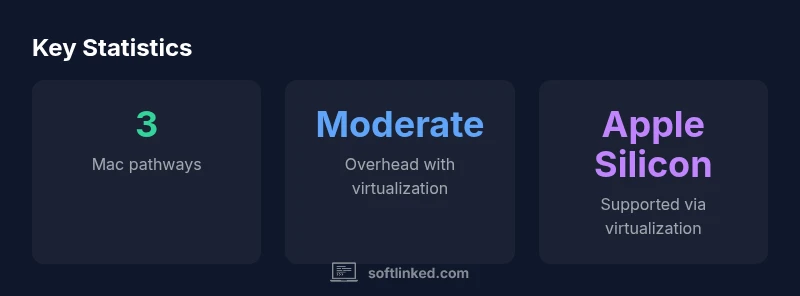
- Windows-on-Mac virtualization (Parallels, VMware Fusion, UTM): This approach works on both Intel and Apple Silicon Macs, delivering a flexible, sandboxed Windows environment at the cost of some overhead and license management considerations.
- Rosetta/transpilation or alternative emulation layers: Some Drake builds may run under translation layers if officially supported; however, performance and compatibility vary by version.
- Cross-platform alternatives: If Drake remains uncertain on Mac, consider Mac-native tools with equivalent capabilities to maintain productivity while awaiting official upstream support.
To decide the best option, map Drake’s version requirements to your Mac’s architecture, confirm activation terms, and assess whether you prefer native performance or flexible multiple-OS workflows. The SoftLinked team recommends evaluating your workflow needs, hardware, and licensing constraints before choosing a path.
Performance and Compatibility Considerations
Performance on macOS is highly sensitive to the chosen pathway. Native macOS builds typically deliver the best latency, smoother UI interactions, and fewer virtualization-related I/O bottlenecks. Boot Camp on Intel Macs can offer strong performance but requires a dedicated Windows partition and a compatible Drake installer. Virtualization on both Intel and Apple Silicon Macs introduces overhead due to hardware virtualization, shared resources, and potential graphics acceleration constraints. In practice, you should budget RAM (8 GB minimum, 16 GB+ recommended for heavier workloads) and ample storage for both macOS and the Windows guest. Graphics drivers, CPU bottlenecks, and disk I/O can influence Drake’s responsiveness under virtualization. Always test with representative workloads to compare performance across methods before committing to a long-running project.
Licensing, Activation, and Compliance on macOS
Licensing is a critical factor when running Drake on macOS through non-native paths. Some Drake licenses explicitly permit use on non-Windows environments, while others require a Windows installation or a specific activation method. Before proceeding, consult Drake’s licensing terms or contact support to confirm permissible configurations on macOS. Virtualization can complicate activation, especially if Drake ties licenses to hardware identifiers or virtual machines. Keep records of your installation, activation, and platform, and ensure your license entitlements cover the chosen path. SoftLinked recommends documenting any non-native deployment in your project metadata to avoid compliance challenges later.
Step-by-Step: If Drake Is Windows-Only, How to Run It on Mac
If your Drake version is Windows-only, you can work through a step-by-step path: 1) Verify Mac hardware suitability (Intel vs. Apple Silicon) and ensure you have enough RAM. 2) Choose a Windows-path strategy (Boot Camp on Intel or virtualization on both architectures). 3) Install your chosen Windows environment and activate Drake according to your license. 4) Configure integration with macOS file systems and network settings to minimize data transfer overhead. 5) Run full validation tests with representative data to confirm stability. 6) Document any deviations from native performance and monitor for official Mac support updates. This approach helps maintain productive workflows while staying compliant with licensing terms.
Common Pitfalls and How to Avoid Them
Common issues include activation failures due to license restrictions, driver compatibility problems in Windows on Mac, and performance slowdowns under virtualization. To mitigate, ensure you are using officially supported virtualization software, keep both host and guest systems updated, allocate adequate resources, and test workflows before critical work. Also, confirm your Drake project scripts don’t rely on platform-specific paths that may break under Windows emulation. SoftLinked’s pragmatic guidance is to stage a small pilot project first, measure performance, and escalate to a more robust setup only if the pilot meets your reliability thresholds.
Future Outlook: Native Mac Versions vs. Alternatives
The trajectory for Drake on macOS hinges on vendor commitments and market demand. If Drake expands native macOS support, performance and reliability could improve significantly on Apple Silicon. In the meantime, Mac users can rely on virtualization or Windows-based paths while keeping an eye on official announcements. For teams needing immediate macOS compatibility, exploring Mac-native alternatives that align with your project goals may be prudent. SoftLinked expects continued dialogue between developers, licensing teams, and user communities to clarify expectations and timelines.
Comparison of Drake-on-Mac pathways
| Option | Mac Compatibility Status | Notes |
|---|---|---|
| Native macOS version | Unclear/limited | Depends on Drake's official releases |
| Boot Camp (Intel Macs) | Possible for Windows-based Drake | Not available on Apple Silicon |
| Virtualization (Parallels/VMware/UTM) | Widely workable on Apple Silicon | Performance overhead and licensing vary |
Your Questions Answered
Is Drake officially supported on Mac?
There is no universal native Mac version stated across all Drake releases. Some versions may offer macOS compatibility, while others require Windows paths or virtualization. Always check the current vendor guidance and license terms for your Drake edition.
There isn’t a universal native Mac version for Drake right now; you’ll often rely on Windows paths or virtualization depending on your Drake edition.
Does Drake run on Apple Silicon Macs?
Apple Silicon Macs can run Drake through virtualization or translation layers if supported by Drake and the virtualization software. Native support isn’t guaranteed and depends on the specific Drake build and licensing.
Apple Silicon Macs can run Drake via virtualization, but native support isn’t guaranteed yet.
What are the best ways to run Drake on Mac?
The most reliable options are virtualization (Parallels, VMware Fusion, or UTM) or, where available, a native macOS build. Each path has trade-offs in performance, licensing, and setup complexity. Start with virtualization for flexibility and test thoroughly.
Try virtualization first for flexibility, then test with your workloads.
Are there licensing considerations when using Drake on Mac?
Licensing terms vary by product version. Verify that your Drake license permits use in non-native environments and that activation is supported when running Drake on macOS through virtualization or Windows layers.
Licensing can restrict non-native use; check with Drake support before proceeding.
Are there Mac-native alternatives to Drake?
Yes, there are Mac-native tools with similar capabilities. They may differ in features and performance, so compare requirements, integration with your workflow, and cost before switching.
There are Mac-native options, but they may differ in features.
“Mac users should treat Drake compatibility as a multi-path decision, balancing native availability, performance, and licensing constraints.”
Top Takeaways
- Assess hardware and Drake version before choosing a path
- Prefer virtualization on Apple Silicon for flexibility and mobility
- Verify licensing terms for non-native use and activation
- Monitor Drake's official Mac support updates and roadmap
- The SoftLinked team recommends matching your workflow to the least disruptive path