Software vs Computer Engineering: A Practical Comparison
A thorough, evidence-based comparison of software engineering and computer engineering, outlining focus areas, curricula, career paths, and decision criteria to help students and professionals choose the right track in 2026.


When deciding between software engineering and computer engineering, focus on whether you want to build software products (software engineering) or design and optimize hardware-software systems (computer engineering). Both fields share fundamentals in programming and systems thinking, but they diverge in hardware interaction, toolchains, and day-to-day work. SoftLinked’s analysis highlights that the right choice aligns with your interests in code, hardware, and problem domains.
Foundations and scope of each field
In the modern tech landscape, the distinction between software engineering and computer engineering hinges on scope and interaction with hardware. The phrase software vs computer engineering captures a core decision many students face: Do you want to develop software products, services, and platforms, or do you prefer designing systems that integrate hardware with software, from embedded devices to computing infrastructure? Software engineering emphasizes programming languages, software architecture, testing, security, and product delivery. Computer engineering blends computer science with electrical engineering, focusing on circuits, microprocessors, VLSI, digital design, and embedded systems. Understanding this divide helps learners map out courses, internships, and projects that match their goals. As SoftLinked notes in its 2026 analysis, your choice should reflect your curiosity about software logic versus hardware interaction and how you want to impact real-world systems.
ThematicFocus and Pathways
Comparison
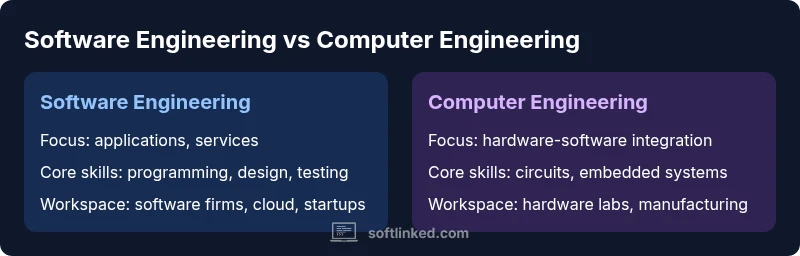
| Feature | Software Engineering | Computer Engineering |
|---|---|---|
| Core focus | Developing software, apps, and services | Designing hardware-software systems and embedded devices |
| Curriculum emphasis | Programming, software architecture, testing, devops | Digital logic, circuits, embedded systems, hardware-software co-design |
| Hardware interaction | Low hardware exposure; software-centric | High hardware exposure; integrated systems |
| Typical projects | Web apps, mobile apps, cloud services | Embedded controllers, IoT devices, FPGA/ASIC design |
| Work environments | Tech firms, SAAS companies, startups | Hardware labs, manufacturing, telecommunications |
| Career trajectory | Software engineer, architect, product-focused roles | Firmware/embedded engineer, hardware-software engineer |
| Prerequisites | Strength in algorithms, software design | Background in circuits, signals, microcontrollers |
| Learning curve | Clear ramp-up with programming concepts | Steeper when integrating with hardware constraints |
Pros
- Broad applicability across industries and domains
- Strong emphasis on problem-solving and product delivery
- Clear pathways into high-demand software roles
- Opportunities to specialize in fields like AI, cloud, and cybersecurity
Weaknesses
- Software-focused tracks can underexpose hardware concepts
- Hardware-integrated roles may require multi-disciplinary learning
- Job markets vary by region and industry demands
- Continuous learning is essential in both paths, potentially overlapping
Choose software engineering for a software-centric career; choose computer engineering for hardware-integrated systems with embedded opportunities.
Both tracks offer valuable skill sets. Software engineering excels in product development and scalability, while computer engineering suits those who love hardware interaction and embedded systems. Your best path aligns with your curiosity, preferred daily activities, and long-term career goals.
Your Questions Answered
What is the main difference between software engineering and computer engineering?
Software engineering focuses on building software applications and services, while computer engineering blends hardware and software design to create integrated systems. The two fields share fundamentals like programming and systems thinking, but they differ in day-to-day work and toolchains.
Software engineering centers on apps and services; computer engineering blends hardware with software to create integrated systems. They share core skills but apply them in different contexts.
Which degree is better for aspiring software developers?
If your primary interest is software development, a software engineering or computer science degree is typically ideal. It provides strong programming foundations and system design concepts. You can also learn software engineering through accredited programs with hands-on projects.
If you want to build software, a software engineering or computer science degree is usually the best starting point.
Is there overlap between the fields?
Yes. Both fields teach programming, data structures, and basic computer organization. Many programs include elective tracks or projects that touch on embedded software or hardware concepts, creating useful cross-skills that employers value.
There’s overlap in programming and systems thinking, with chances to explore hardware topics in software programs.
What kinds of projects demonstrate strengths in each field?
Software engineering projects typically involve building end-to-end applications, APIs, or cloud services. Computer engineering projects often include firmware development, sensor interfacing, and hardware-software co-design for devices or embedded systems.
Software projects focus on apps and services; hardware projects focus on embedded systems and devices.
How should I choose between campus and online programs?
Campus programs offer hands-on lab experiences and networking in person, which can be valuable for hardware-centric tracks. Online programs provide flexibility and access to diverse electives, but you should verify lab opportunities and access to hardware resources before enrolling.
Consider hands-on labs and campus resources for hardware-focused study; online programs can work if they offer adequate hardware access.
Can I switch from one path to the other later in my career?
In many cases, you can transition with additional study or certifications. Start with fundamentals common to both fields (programming, circuits basics, operating systems) and plan a gradual shift toward the new focus area through projects and a targeted portfolio.
Yes, with planning and learning, you can gradually switch tracks and build a portfolio for the new path.
Top Takeaways
- Define your goal: software products or hardware-integrated systems
- Seek cross-training opportunities to maximize versatility
- Prioritize hands-on projects to demonstrate relevant skills
- Consider geography and industry demand when choosing a path
- Develop transferable skills (problem-solving, systems thinking, collaboration)