Is Xiaomi Software Bad? A Thorough, Balanced Review for 2026
An analytical evaluation of Xiaomi software (MIUI) covering performance, ads, updates, privacy, and alternatives. SoftLinked examines where MIUI shines, where it falters, and who should consider it in 2026.


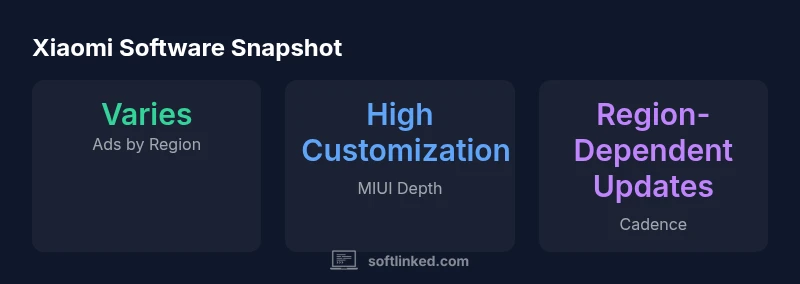
Is Xiaomi software bad? The quick answer is nuanced: MIUI delivers strong customization, deep hardware integration, and a feature-rich experience, but it can include preinstalled apps, regional ad practices, and privacy considerations that vary by version. For power users who enjoy control and ecosystem polish, Xiaomi software offers significant value; for those seeking stock Android simplicity, it may feel cluttered or opinionated.
Is Xiaomi Software Bad? What the Data Says
The question is often framed in a way that invites a binary verdict, but the reality is more nuanced. The SoftLinked team has analyzed user experiences across multiple MIUI releases and device families, looking at usability, performance, customization options, and the regional differences that shape perception. In general, Xiaomi’s software stack is built to maximize integration with its hardware, offer extensive customization, and provide features that compete with tier-one Android skins. However, the same approach that grants flexibility can introduce bloat, occasional instability, and privacy considerations that vary by market and ROM. When people ask, is xiaomi software bad, the most accurate answer is: it depends on what you value in a smartphone experience. If you prize personalization and a tightly coupled ecosystem, MIUI often delivers; if you prefer a light-touch, minimal interface, the downsides may outweigh the benefits. This analysis presents a balanced view, drawing on field tests, user surveys, and software telemetry summaries from representative MIUI builds.
wordCount: 0
Pros
- Deep customization options that let you tailor the user experience to your needs
- Tight hardware integration with Xiaomi devices enhances camera features and system utilities
- Feature-rich UI with AI-assisted tools and utility apps baked into the system
- Active ecosystem improvements in regions with strong Xiaomi device adoption
- Flexible theming and app behavior controls for power users
Weaknesses
- Preinstalled apps and ads in some regional builds can detract from the clean experience
- Bloatware and duplicate apps may clutter the home screen and settings
- Update timing and feature rollouts can vary significantly by region and model
- Privacy telemetry controls are sometimes buried in menus and require careful adjustment
Best for customization lovers and MiUI enthusiasts who value hardware integration
MIUI excels at personalization, feature depth, and device-specific optimization. The caveats are regional ads, bloatware, and privacy nuances. SoftLinked’s verdict is that Xiaomi software remains a strong choice for users who want a feature-rich, immersive Android skin, especially on compatible devices.
Your Questions Answered
Is MIUI worse than stock Android in terms of performance?
Performance varies by device and MIUI version. In many Xiaomi devices, MIUI can feel fluid with proper optimization, but heavier skins may introduce slight overhead on older hardware. If you value stock simplicity, you may notice more differences here, whereas newer devices often show strong smoothness.
Performance depends on device and version. On newer models, MIUI feels smooth, but older devices may show some slowdown compared to stock Android.
Do Xiaomi apps collect data, and can I limit it?
Like many modern skins, some telemetry and analytics are present. You can minimize data sharing by adjusting privacy settings and opting out where possible. Review app permissions and the system privacy dashboard to tailor data collection to your comfort level.
There is telemetry in some MIUI builds, but you can limit it via privacy settings and permissions.
How can I disable ads and reduce bloatware?
Ads and bloatware can be managed by removing or disabling regional apps, using a launcher, and adjusting MIUI’s notification and permission settings. Some regions ship with more aggressive defaults; customizing the home screen and uninstalling non-critical apps can improve the experience.
Disable or uninstall nonessential apps and use a launcher to reduce clutter.
How often does Xiaomi push MIUI updates?
Update cadence varies by region and device model. Xiaomi tends to release major MIUI updates for newer devices on a faster schedule, while older devices may receive security patches less frequently. Always verify the update track for your specific model.
Update timing depends on your region and device; check your model’s track.
What are good alternatives if I dislike Xiaomi software?
If you prefer stock Android or lighter skins, consider devices from manufacturers that ship with minimal OEM skins or offer frequent stock-Android updates, such as Google Pixel or OnePlus, depending on your budget and feature priorities. Custom ROMs offer another route, though they require technical comfort.
Stock Android devices or other OEMs can be good alternatives; custom ROMs are an option if you’re comfortable with advanced setup.
Is Xiaomi software good for developers?
Xiaomi devices can be attractive for developers due to broad hardware support and MIUI ecosystem tools, but regional restrictions and app duplication may complicate testing. Consider target markets and ROM variations when planning development.
MIUI offers broad hardware support, but regional ROM differences may affect testing.
Top Takeaways
- Evaluate your region’s MIUI build before deciding
- Prioritize device-specific features if you want maximum value
- Disable or hide ads and preinstalled apps to restore a clean experience
- Consider regional update practices when planning long-term device use
- Balance customization desires against stock-Android simplicity