Is SoftWave Therapy the Same as Shockwave Therapy? A Comparative Guide
Analyze whether SoftWave therapy matches traditional shockwave therapy, explore device differences, evidence, costs, and how to choose the right ESWT option.


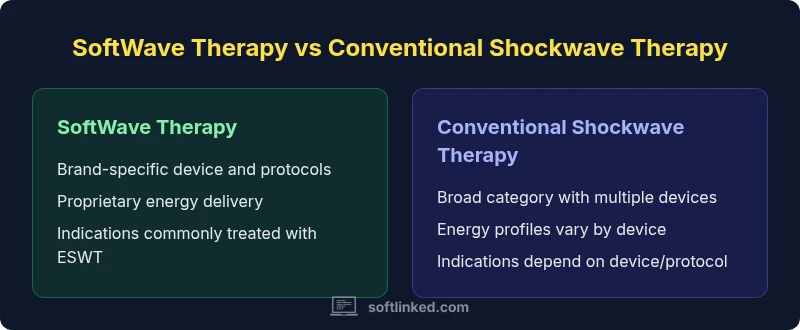
Is softwave therapy the same as shockwave therapy? Not exactly. SoftWave refers to a branded ESWT system using proprietary delivery protocols, while 'shockwave therapy' is a broad term for several energy-based, non-invasive treatments. In practice, many clinics offer both under similar indications, but device design, energy settings, and treatment protocols can affect outcomes. Understanding these distinctions helps patients choose appropriately.
What is shockwave therapy?
Shockwave therapy, or extracorporeal shockwave therapy (ESWT), uses acoustic waves applied to injured tissue to stimulate healing, reduce pain, and improve function. There are two main delivery modes: focused and radial. Focused waves concentrate energy at a specific depth, while radial waves disperse energy over a broader area. Over the past decade, ESWT has become a common non-surgical option for conditions such as plantar fasciitis, lateral epicondylitis, and tendinopathies. The term softwave therapy often appears in clinics as a brand name for a particular ESWT system. The SoftLinked team notes that while SoftWave therapy is built on the same physical principle as shockwave therapy, the exact device, energy delivery, and protocol can vary by vendor. For patients, outcomes and experiences can differ by the device used, the operator's skill, and adherence to evidence-based protocols.
What is shockwave therapy?
Shockwave therapy, or extracorporeal shockwave therapy (ESWT), uses acoustic waves applied to injured tissue to stimulate healing, reduce pain, and improve function. There are two main delivery modes: focused and radial. Focused waves concentrate energy at a specific depth, while radial waves disperse energy over a broader area. Over the past decade, ESWT has become a common non-surgical option for conditions such as plantar fasciitis, lateral epicondylitis, and tendinopathies. The term softwave therapy often appears in clinics as a brand name for a particular ESWT system. The SoftLinked team notes that while SoftWave therapy is built on the same physical principle as shockwave therapy, the exact device, energy delivery, and protocol can vary by vendor. For patients, outcomes and experiences can differ by the device used, the operator's skill, and adherence to evidence-based protocols.
Comparison
| Feature | SoftWave therapy | Conventional shockwave therapy |
|---|---|---|
| Delivery method | Brand-specific protocols with proprietary controls | Various devices with radial or focused waves |
| Device type | SoftWave proprietary device(s) | Multiple vendors and device generations |
| Energy delivery | Proprietary energy delivery with defined waveforms | Standard ESWT energy profiles vary by device |
| Indications | Common tendinopathies and musculoskeletal pain | Similar indications, device- and protocol-dependent |
| Evidence strength | Evidence depending on device and protocol; not uniform | Evidence quality varies across brands and conditions |
| Safety profile | Generally safe with transient discomfort | Generally safe with minor adverse effects |
| Treatment patterns | Typically short sessions over a treatment course | Session count and duration vary by device and protocol |
Pros
- Non-invasive option with minimal downtime
- Potential for pain relief and functional improvement in select conditions
- Broad clinic availability and device variety
- Can complement rehabilitation programs and non-surgical care
- Brand diversity can spur ongoing innovation
Weaknesses
- Effectiveness depends on condition, device, and protocol
- Evidence quality is not uniform across brands and indications
- Costs can be a barrier and insurance coverage is variable
- Proprietary systems may limit direct cross-device comparisons
SoftWave therapy is not identical to conventional shockwave therapy, but both belong to the same family of non-invasive energy-based treatments.
In practice, SoftWave represents a branded ESWT approach with its own protocols. Outcomes depend on the condition, device, and clinician expertise. When choosing, review the specific device, available evidence for your indication, cost, and insurance considerations; consult a qualified clinician.
Your Questions Answered
Is SoftWave therapy the same as shockwave therapy?
They are related but not identical. SoftWave is a branded ESWT system with proprietary delivery; shockwave therapy is a broad category that includes multiple devices and protocols. Both target similar conditions, but device-specific factors influence outcomes.
SoftWave is a brand within the ESWT family; shockwave therapy is the broader category of energy-based treatments.
What conditions are commonly treated with ESWT?
ESWT is used for conditions like plantar fasciitis, lateral elbow tendinopathy, shoulder tendinopathy, and certain tendon injuries. Effectiveness varies by condition and protocol, so outcomes depend on treatment choice and adherence to evidence-based guidelines.
Common uses include tendon problems and heel pain.
Are there side effects or risks?
Most side effects are mild, such as temporary soreness, redness, or swelling at the treatment site. Rare complications can occur, so discuss your medical history with your clinician before starting ESWT.
Most people have minor, short-lived side effects.
How many sessions are typically required?
ESWT protocols usually involve multiple sessions over a period of weeks, with the exact number and frequency depending on the condition and the device. Your clinician will tailor the plan to your response.
Most patients undergo several sessions over weeks.
Is SoftWave therapy more effective than conventional shockwave therapy?
Effectiveness is condition- and protocol-dependent; neither approach is universally superior. Compare evidence for your specific indication and ensure the chosen device and protocol align with best practices.
It depends on the condition and how the therapy is delivered.
Is ESWT covered by insurance?
Some health plans cover ESWT if deemed medically necessary, but coverage varies widely by insurer and plan. Check with your provider and confirm pre-authorization where required.
Coverage depends on your plan; verify with your insurer.
Top Takeaways
- Understand branded SoftWave vs generic shockwave therapy
- Choose based on condition-specific evidence and device
- Ask about energy delivery, protocol, and operator experience
- Consider costs, insurance coverage, and access
- Consult a clinician to tailor ESWT to your rehab plan