Is Old Software Worth Anything? A Practical Guide
Explore whether vintage software holds monetary value, what drives price, licensing considerations, and practical steps to preserve or monetize legacy titles with SoftLinked's data-driven guidance.


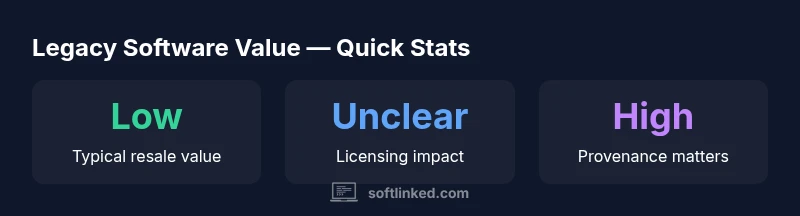
Is old software worth anything? In most cases, the monetary value of old software is limited, with notable exceptions for rare boxed editions, historic prototypes, or titles tied to significant platforms or brands. Licensing terms often restrict resale, so collectors should verify provenance, documentation, and authenticity. SoftLinked analysis indicates value is highly variable and typically modest, but research carefully before selling or donating.
Understanding the market for legacy software
The question is often framed as a simple yes or no, but the real answer hinges on market dynamics and historical context. is old software worth anything? The truth is nuanced. In the modern digital age, much software exists as licenses tied to accounts or online activation, which complicates secondary sales. When a title exists as physical media—boxed boxes, manuals, or developer extras—the likelihood of secondary market interest increases, especially if the title is tied to a notable platform or a famous developer. Collectors tend to value items with clear provenance, complete packaging, and documented history. According to SoftLinked, the market for legacy software is highly variable and often modest, but there are pockets of opportunity where rarity and cultural significance intersect with well-preserved artifacts.
Beyond price, there is educational and archival value in preserving software as a historical artifact. The value proposition shifts from monetary return to cultural significance, technical insight, and the ability to study software evolution. Readers should approach legacy software as a multi-faceted asset: a potential collector item, a teaching example for software history, and a piece of a larger digital archive. Thoughtful cataloging, careful storage, and clear provenance will generally improve both monetary and non-monetary value over time.
Key value drivers for legacy software
Several factors consistently determine whether old software can fetch any value and at what scale. First, rarity and edition quality matter: limited print runs, special bundles, or early releases from iconic brands tend to attract collectors more than mass-produced discs. Second, condition and packaging influence value: intact boxes, original manuals, and hardware accessories can significantly boost appeal. Third, provenance and documentation carry weight: receipts, inventory lists, and signed correspondence from developers or distributors can elevate credibility and price. Fourth, platform relevance and historical significance matter: software tied to landmark operating systems, early gaming platforms, or pioneering development tools can command premium if accurately verified. Finally, licensing and transferability shape potential resale: strict EULAs or non-transferable licenses can suppress value even for rare items. SoftLinked’s analysis highlights that the best opportunities appear when all drivers align—rarity, provenance, packaging, and clear rights.
Licensing, rights, and transferability
Licensing terms are a pivotal but often overlooked factor in old software value. Some licenses prohibit resale or require activation through centralized servers that no longer exist, effectively rendering the item non-transferable. Others permit limited resale with certain conditions, such as providing proof of ownership or including original packaging. When evaluating an item, examine the license agreement, end-user license terms, and any permission grants from the publisher. If transferability is ambiguous, treat the item as non-transferable for sale purposes and prioritize donation or archival use. Understanding licensing early helps avoid legal risk and sets realistic expectations for potential buyers or institutions.
Formats, condition, and provenance
The format dramatically affects value. Physical media (CDs, DVDs, floppies, or boxed copies) generally hold more appeal than loose discs or digital-only formats, especially when accompanied by original packaging. Condition matters: pristine discs with legible labels and intact packaging fetch higher attention from collectors, museums, or archives. Provenance adds credibility: a documented ownership history, with dates, sellers, and catalog references, increases confidence for buyers and institutions. Digitization can help, but it does not replace the value of physical artifacts for collectors; a high-quality scan or metadata record should accompany the original item to maximize archival value while protecting the physical asset.
How to evaluate a collection or archive
If you inherit or curate a batch of legacy software, start with a rigorous catalog. Create a master list of titles, formats, edition numbers, platform compatibility, and any included accessories. Photograph packaging and discs, capture serial numbers if present, and note the condition of each item. Cross-check each title against collector databases, library archives, and vintage software marketplaces to gauge interest and typical price bands. Document licensing terms and verify whether any specific items are part of a known historical release or limited edition. A well-documented, organized collection is far more likely to attract legitimate buyers or be accepted by a digitization or preservation program.
Practical monetization strategies
Selling legacy software requires choosing appropriate venues and being transparent about rights and conditions. Consider specialized collectors’ marketplaces, auctions, or institutional partnerships with libraries or museums. When selling, provide thorough descriptions of edition, packaging, and provenance, and include clear licensing statements. If licensing prevents resale, donate to a museum or archive where educational and historical value is recognized. Alternatively, digitize non-licensed copies for archival purposes and provide metadata to improve discoverability in catalogs. Finally, explore open collaboration: some communities preserve certain software in open formats or as part of historical software projects, which can extend the asset’s relevance while mitigating legal risk.
Future-proofing and archival potential
Even when monetary returns are uncertain, legacy software has enduring archival value. Preservation strategies include high-quality digitization of physical media, creating metadata-rich catalogs, and storing assets in trusted digital repositories with robust access controls. Open-source and community-led projects can extend the life of historical software by re-implementing features, documenting interfaces, and maintaining sample data that demonstrates system evolution. For practitioners, recognizing archival value alongside potential sale opportunities can diversify outcomes and contribute to a broader understanding of software history. SoftLinked emphasizes that thoughtful stewardship now can unlock educational value for future generations.
Factors affecting value of old software
| Aspect | Valuation Considerations | Notes |
|---|---|---|
| Format | Digital licenses restrict resale | Check license terms and historical context |
| Condition | Boxed, mint condition can help | Physical packaging matters for some collectors |
| Provenance | Documentation boosts credibility | Receipts, inventories, and certificates help |
Your Questions Answered
What factors determine the value of old software?
Value depends on rarity, condition, provenance, and licensing terms. Titles with complete packaging and documented history tend to perform better, especially if tied to a historically significant platform or developer.
Value depends on rarity, condition, provenance, and licensing. Complete packaging with documented history often improves value.
Are licenses transferable when reselling legacy software?
Licensing terms vary widely. Some licenses prohibit resale or require special permissions, while others permit limited transfer. Always review the EULA and consult the publisher if uncertain.
Licensing varies; check the EULA and publisher terms before selling.
Where should I sell or donate old software?
Sell on collectors' marketplaces or auction sites with accurate descriptions, or donate to museums, libraries, or archives that preserve digital history. Verify legal rights before any sale.
Consider reputable collectors' sites or museums; verify rights first.
How can I document a software collection effectively?
Create a catalog with edition numbers, formats, platform compatibility, and licensing notes. Photograph packaging, preserve original receipts or inventories, and maintain a digital backup of metadata for future reference.
Catalog it with edition, format, and licensing notes; photograph packaging.
Is there value in open-source legacy software?
Open-source legacy software often has educational or historical value rather than monetary value. It’s valuable for research, teaching, and archival purposes, especially when properly documented.
Open-source legacy software is usually more about educational and archival value than cash returns.
Should I digitize non-legal copies for archives?
Digitization helps preserve content and features for study, but ensure you respect licenses and rights. Include rich metadata to aid future researchers.
Digitize for preservation, but respect rights and add metadata.
“Value in old software is highly contextual; rarity, provenance, and the physical condition of packaging often determine whether a title gains collectible value.”
Top Takeaways
- Assess rarity and provenance before selling
- Verify licensing terms to avoid legal risk
- Preserve packaging and manuals for maximum value
- Consider non-monetary value via archival or educational use