How to Make Software in Infinite Craft: A Practical Guide
A practical, step-by-step guide to building software in the Infinite Craft mindset, focusing on modular architecture, iterative development, testing, and sustainable deployment.


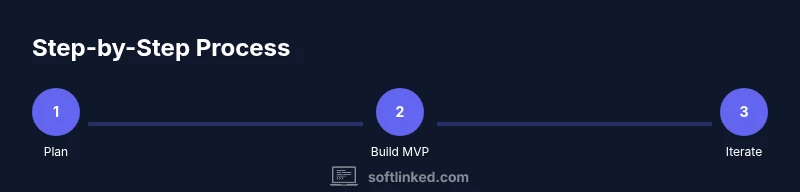
How to make software in infinite craft is a disciplined, iterative process that treats software development as a continuous craft. Start by clarifying the problem and outcomes, design modular components with stable interfaces, build a minimal viable product, automate tests, and use feedback loops to evolve architecture and features. Emphasize maintainability, documentation, and incremental improvement.
Foundations of Software Craft in Infinite Craft
How to make software in infinite craft is best described as a continuous practice rather than a one-off project. According to SoftLinked, this mindset helps teams focus on maintainability and adaptability. It prioritizes modularity, stable interfaces, and incremental learning over big upfront architectures. In practice, you build small, testable pieces and let feedback shape the next iteration, ensuring the product evolves with user needs and technological change.
Key habits include documenting decisions, investing in automated tests, and aligning engineering with clear outcomes. The ultimate goal is to create software that persists through change, not one that becomes brittle when requirements shift. This foundation sets up the rest of the guide, showing how a craft mindset translates into tangible, repeatable steps.
Planning and problem framing
Before you touch code, define the problem space, the users, and the desired outcomes. Write short, testable success criteria and capture constraints such as budget, time, and environment. Use user stories or job stories to anchor requirements, then validate assumptions with early feedback. A clear plan reduces rework in later iterations and keeps the infinite craft approach focused on delivering real value.
Document assumptions, create lightweight prototypes, and schedule check-ins with stakeholders to ensure alignment throughout the journey.
Designing Modular Architecture and Interfaces
A core practice in infinite craft is designing for modularity. Break the system into decoupled components with clear boundaries and stable contracts. Favor lightweight data schemas and clear API boundaries to minimize ripple effects when requirements change. Use interface-driven design and domain-driven thinking to keep the system comprehensible as it grows. This approach enables teams to swap implementations without breaking clients, which is essential for long-term maintainability.
MVP design and incremental delivery
Start with a Minimal Viable Product (MVP) that delivers core value to users. Focus on essential features, validate hypotheses, and defer non-core capabilities to later epochs. Structure work in small, runnable increments so you can learn quickly from user feedback. This cadence helps prevent over-engineering and keeps the craft sustainable over time.
Combine MVP planning with a lightweight backlog and clear acceptance criteria to guide every sprint.
Testing, quality assurance, and reliability
Prioritize automated testing as a cornerstone of the craft. Implement unit, integration, and end-to-end tests to detect regressions early and provide confidence during changes. Use code quality metrics sparingly to guide improvements, not to gate every decision. Regular test maintenance is essential; otherwise, tests become a source of churn rather than protection.
Incorporate performance and security checks into your CI pipeline to guard against common failure modes.
Deployment, monitoring, and feedback loops
Adopt continuous integration and continuous deployment practices where appropriate, coupled with feature flags to switch capabilities on and off without redeploying. Monitor application health with telemetry, logs, and user feedback to understand real-world usage. Establish a fast feedback loop: failures or user pain points should trigger small, well-scoped improvements in the next iteration.
Document incidents and responses to improve future resilience.
Collaboration, governance, and documentation
A sustainable craft relies on clear collaboration practices and governance. Define coding standards, decision logs, and architectural guardrails to keep teams aligned across projects. Maintain living documentation—diagrams, API specs, and rationale—so newcomers can onboard quickly. Regular design reviews and retrospectives help spread best practices and reduce miscommunication.
Encourage ownership and cross-team knowledge sharing to keep momentum.
Measuring success and sustaining the craft
Measure outcomes that reflect value to users and the business, not just technical elegance. Track progress with lightweight metrics like lead time, defect rate, and customer satisfaction, and adjust targets as you learn. Sustaining the craft requires ongoing education, automated tooling, and a culture that embraces change. By focusing on maintainability, you create software that lasts as requirements evolve.
Common pitfalls and mitigations
Common traps include premature optimization, scope creep, and insufficient testing. Combat these with disciplined MVPs, clear acceptance criteria, and automated checks. Regularly revisit architecture decisions to ensure they still align with goals. Invest in readable code and good documentation to reduce cognitive load during changes.
Tools & Materials
- Git-based Version Control(Hosted repository (GitHub, GitLab) with branch protections)
- Integrated Development Environment (IDE)(Popular choices include VS Code, IntelliJ, or PyCharm)
- Documentation & Design Tools(Markdown/diagram tools; maintain design docs)
- Automated Testing Framework(Unit, integration, and end-to-end tests)
- CI/CD Platform(Automate builds, tests, and deployments)
- Project Management Tool(Backlog, sprints, and issue tracking)
Steps
Estimated time: Estimated total time: 6-8 weeks
- 1
Clarify goals and success metrics
Define the problem, users, and measurable outcomes. Articulate success criteria and constraints to guide later decisions.
Tip: Write 2-3 concrete metrics you can observe after release. - 2
Identify core modules and interfaces
Break the system into decoupled components with clear boundaries and stable contracts.
Tip: Aim for loose coupling and high cohesion to simplify future changes. - 3
Design data contracts and interfaces
Define data formats and API boundaries early to prevent downstream churn.
Tip: Document interface expectations and error handling strategies. - 4
Set up repo structure and tooling
Create a workspace that supports modular development, with conventional naming and separate service areas.
Tip: Enforce branching model and code review standards. - 5
Build a Minimal Viable Product (MVP)
Implement the smallest set of features that delivers value and validates assumptions.
Tip: Prioritize core value; schedule later improvements in a backlog. - 6
Automate tests and CI
Add tests and configure CI to run on every change, ensuring regression protection.
Tip: Keep tests fast; long-running tests slow feedback. - 7
Deploy to staging and collect feedback
Release to a safe environment, invite stakeholder feedback, and observe real usage.
Tip: Use feature flags to control exposure during early stages. - 8
Analyze telemetry and iterate on design
Review metrics and logs to identify improvement opportunities, then adjust scope.
Tip: Prioritize changes that reduce friction for users. - 9
Reflect and evolve architecture
Periodically reassess architecture against goals and adapt accordingly.
Tip: Document decisions and rationale for future teams.
Your Questions Answered
What is the 'infinite craft' mindset in software development?
The infinite craft mindset treats software as an ongoing practice rather than a fixed project. Teams continuously refine architecture and features, guided by feedback and measurable outcomes.
The infinite craft mindset treats software as an ongoing practice, guided by feedback and measurable outcomes.
How long does it take to deliver an MVP in this approach?
Time varies by scope, but the approach emphasizes rapid, incremental delivery. Plan for a few weeks to validate core value and learn what to improve next.
Time varies by scope, but the approach emphasizes rapid, incremental delivery to validate value.
What are the key benefits of modular architecture in infinite craft?
Modular architecture reduces coupling, makes testing easier, and lets teams evolve parts of the system without breaking others. It supports ongoing improvement and resilience.
Modular architecture reduces coupling and supports ongoing improvement and resilience.
Is this approach suitable for large teams?
Yes, with proper governance. Establish coding standards, design reviews, and shared documentation to align multiple teams around common goals.
Yes, but you’ll need governance and shared documentation to align teams.
What role does documentation play in this approach?
Documentation captures decisions, interfaces, and rationale, helping new team members onboard quickly and preventing knowledge loss as the project evolves.
Documentation captures decisions and rationale to help teams evolve smoothly.
Watch Video
Top Takeaways
- Define the problem and success metrics before coding.
- Design modular interfaces to enable evolution.
- Iterate with user feedback to drive improvements.
- Automate tests and deployment to reduce risk.
- Document decisions for long-term maintainability.