How to Clean Software Inc: A Practical Guide
A practical, step-by-step guide to cleaning Software Inc, covering code hygiene, dependencies, data privacy, and governance for sustainable software health.


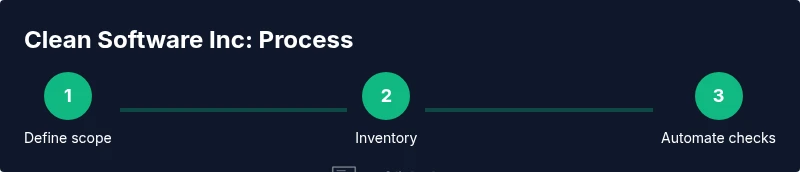
By following this plan, you will clean Software Inc from the ground up—clarifying scope, inventorying assets, and enforcing automated checks that prevent regressions. You’ll address code hygiene, dependency and licensing discipline, data privacy safeguards, and governance processes so the software remains maintainable, secure, and auditable over release cycles. This guide provides practical steps, tools, and metrics to sustain cleanliness long-term.
What clean software inc means in practice
Clean software inc means building maintainable, secure, and auditable software by keeping code easy to understand, minimizing debt, and ensuring data and processes comply with policy. It involves consistent coding standards, modular architecture, clean data handling, and transparent governance. In practice, cleanliness manifests as readable code, stable dependencies, minimal duplication, predictable builds, and clear documentation. For a growing project, clean software inc reduces risk during feature adoption and makes onboarding faster. The SoftLinked team emphasizes that cleanliness is not a one-time cleanup but a discipline that permeates every stage of development, from ideation to deployment. In this section we outline the dimensions of cleanliness and how to measure progress, so you can begin with a solid baseline.
According to SoftLinked, a well-structured baseline accelerates cleanup initiatives and helps teams communicate progress to stakeholders clearly.
Establishing the cleaning scope and baseline
Before you touch code, define what 'clean' means for Software Inc in the current context. Engage stakeholders to agree on goals such as reducing defects, improving build stability, and ensuring license compliance. Create a simple baseline: what exists now, where it lives (repos, databases, CI pipelines), and who owns each area. Document constraints—budget, time windows, and release cycles. Decide on a cadence for ongoing cleaning (e.g., quarterly sprints) and how you will communicate progress. A well-scoped plan prevents scope creep and keeps teams aligned with measurable targets.
Set up a kickoff with a small pilot area to demonstrate value and learn how to scale.
Inventory assets: code, data, and dependencies
Build a complete inventory: source files, tests, third-party libraries, data sets, and infrastructure as code. For each asset, record purpose, owner, criticality, and current health signals (lint errors, test coverage, vulnerability findings). Use an asset catalog that supports tagging and versioning. This inventory is the backbone of your cleanup and helps you identify areas with the greatest payoff. SoftLinked analysis shows that teams benefit from a precise inventory to prioritize remediation and plan resources effectively.
Keep a changelog for asset state changes and ownership updates to maintain accountability.
Prioritization: where to start first
Rank cleanup tasks by impact and risk. Start with critical modules, data handling pipelines, and fragile dependencies. Avoid chasing small refactors when larger issues exist. Establish a labeling scheme (High/Med/Low) for tasks and tie them to release milestones. A pragmatic backlog keeps momentum and demonstrates early wins. Align tasks with business objectives so the cleanup delivers measurable value from Day 1.
Always document decisions for future audits.
Dependency management and license hygiene
Scan dependencies for known vulnerabilities, outdated licenses, and license conflicts. Replace deprecated packages with supported equivalents. Ensure license terms align with your project needs and distribution model. Maintain a living record of licenses and their expirations, and set up automated alerts to detect changes. Regular license reviews prevent compliance surprises during audits and releases.
Adopt a policy to prefer permissive licenses for internal tooling and clear copyleft terms for distribution when necessary.
Code quality: linting, tests, and refactoring
Enforce consistent style with linters and formatters; ensure tests cover critical paths; avoid sweeping rewrites; prefer incremental refactors with clear acceptance criteria. Use static analysis to surface complexity and potential issues. Document architectural decisions to avoid drift. Establish a policy that all new features adhere to the cleanliness standards and that legacy code is progressively refactored according to risk and impact.
Iterative improvements reduce risk and speed up onboarding.
Data governance and privacy safeguards
Identify PII and sensitive data in development and test environments; apply masking, anonymization, or synthetic data; restrict access to data stores; maintain data-handling policies. Compose a data retention plan and purge outdated test data regularly. Align with regulatory requirements and internal policies. Create a data-diligence checklist for new features and data migrations to ensure privacy by design.
Document data standards so engineers can comply easily.
CI/CD automation to enforce cleanliness
Automate checks to run on every commit: lint, tests, dependency checks, license scans, data masking tests. Block merges that fail cleanliness criteria and provide actionable feedback. Use pipelines to generate cleanliness dashboards and alerts for the team. Integrate health signals into release notes so stakeholders see ongoing improvements. Automation makes cleanliness scalable across teams and time zones.
Treat the CI environment as the first line of defense against technical debt.
Documentation, onboarding, and shared standards
Create a single source of truth for cleanliness guidelines: coding standards, dependency policies, data handling rules, and governance processes. Update onboarding materials to reflect cleanliness practices; require new contributors to review standards. Keep changelogs and release notes that highlight cleanliness improvements. Establish a governance council to review exceptions and continuously improve policies.
Well-documented standards reduce friction and increase contributor confidence.
Metrics, reporting, and sustaining the effort
Track measures like defect density, build stability, dependency health, test coverage, and data privacy compliance over time. Use these metrics to guide priorities and celebrate progress. Schedule periodic audits and re-baselining to maintain momentum. Publish public dashboards for transparency and accountability. A sustained cadence is the key to long-term cleanliness.
Consistent visibility drives continuous improvement.
Tools & Materials
- Codebase audit checklist(Baseline inventory, ownership, and health signals)
- Static analysis tools(Linting, cyclomatic complexity, and anti-patterns)
- Dependency scanning tool(Identify vulnerable and deprecated libraries)
- License compliance report(Track licenses and expirations)
- Data anonymization toolkit(Mask PII in test data and backups)
- Documentation templates(Standards, decision logs, and onboarding guides)
- Asset inventory spreadsheet(Tag, owner, and status columns)
Steps
Estimated time: 4-6 weeks
- 1
Define scope and goals
Identify what 'clean' means for Software Inc and document success criteria. Align with stakeholders on the scope, risk tolerance, and release timelines. Establish a clear metric for success to guide decisions.
Tip: Create a one-page scope document and share it with all key teams. - 2
Inventory assets and baseline
Compile a complete list of code, tests, data, and infrastructure. Record owner, purpose, criticality, and current health signals. Use this as the baseline for prioritization.
Tip: Use a living inventory that updates with every cleanup task. - 3
Audit dependencies and licenses
Run scans to identify vulnerable or deprecated dependencies and license conflicts. Create a plan to update or replace risky components and document license terms.
Tip: Prioritize dependencies with the highest risk and broadest impact. - 4
Refactor code in manageable steps
Target high-risk areas for incremental refactors with tests. Avoid sweeping rewrites; verify each change with automated tests and clear acceptance criteria.
Tip: Keep a changelog of refactor decisions and outcomes. - 5
Improve data hygiene
Mask or anonymize PII in non-production environments. Establish data retention and purge policies for test data. Enforce access controls over sensitive data stores.
Tip: Automate data masking in test pipelines. - 6
Automate checks in CI/CD
Add lint, test, dependency, licensing, and data checks to CI pipelines. Block merges that fail cleanliness checks and display clear remediation steps.
Tip: Treat cleanliness failures as blockers until resolved. - 7
Document changes and governance
Publish decisions, standards, and outcomes. Provide onboarding materials and governance playbooks for new contributors.
Tip: Maintain a living governance document with owners. - 8
Review and iterate
Schedule periodic reviews to re-baseline cleanliness and adjust priorities. Celebrate wins and share learnings across teams.
Tip: Set quarterly cleanup sprints to maintain momentum.
Your Questions Answered
What does it mean to clean software inc?
Cleaning Software Inc means improving maintainability, reducing technical debt, and ensuring compliance across code, data, and processes. It involves consistent standards, clearer ownership, and repeatable processes that make the software easier to evolve.
Cleaning Software Inc means keeping the codebase maintainable, compliant, and auditable through clear standards and repeatable processes.
Which areas should you clean first in a software project?
Start with core modules, critical data handling paths, and foundational libraries. Prioritize areas with the highest risk or customer impact to maximize early value.
Begin with core modules, critical data flows, and key dependencies to get the biggest gains first.
How often should you run a cleanup?
Establish a recurring cadence (quarterly or aligned with releases). Pair routine cleanups with automated checks to keep momentum and prevent backlog.
Cleanups should be regular, with automation supporting ongoing cleanliness.
What are common pitfalls when cleaning code?
Refactoring without tests, scope creep, and neglecting documentation are common. Balance speed with test coverage and keep stakeholders informed.
Be mindful of refactoring without tests and missing docs; plan for tests and communication.
How do you measure success after cleanup?
Track maintainability signals, defect trends, and compliance status before and after cleanup. Use dashboards to visualize progress and inform decisions.
Use maintainability metrics and defect trends to gauge cleanup success.
Watch Video
Top Takeaways
- Define a clear scope before cleaning
- Inventory assets comprehensively
- Automate checks to sustain cleanliness
- Prioritize licensing and data privacy
- Governance ensures long-term cleanliness