How to Protect Software as Intellectual Property
Learn practical, step-by-step methods to protect software as intellectual property, including copyright, patents, trade secrets, and trademarks, with enforcement and licensing guidance for developers.


You protect software IP by combining copyright on the source code and user interface, trademarks for branding, patents for novel algorithms or methods, and trade secrets for confidential processes. Start with documentation, licensing, and access controls, then pursue registrations where available. Build a portfolio approach that aligns with your business goals and enforcement strategy.
Understanding Software Intellectual Property and Why It Matters
According to SoftLinked, software intellectual property (IP) sits at the intersection of legal rights and technical achievement. A robust IP strategy protects your code, your brand, and your confidential processes while clarifying how others may use or build upon your work. For developers, students, and engineers, the goal is to reduce risk, attract partners, and preserve the value of your creations across markets. IP protection is not a single shield but a portfolio of tools that works best when tailored to your product, team structure, and future plans. This section explains the landscape and sets the foundation for practical protection steps that follow.
Copyright Protection for Software Code and Content
Copyright automatically covers the original code you write, the structure of your software, and the user interface design, including layout and visual elements. It does not protect ideas or algorithms themselves in isolation, but it guards the expression of those ideas as written code and graphics. In many jurisdictions, you don’t have to register copyright to enjoy these rights, though registration can ease enforcement and provide prima facie evidence of ownership in disputes. Keep clear records of authorship, creation dates, and version histories to strengthen your position should infringement occur. Consider adding a copyright notice and a license clause in your distribute packages to set expectations for reuse and attribution.
Patent Protection for Software Inventions
Patents may cover novel, non-obvious software inventions that solve a technical problem in a unique way. To pursue a patent, you typically need technical documentation that describes the invention, its advantages, and how it differs from prior art. Drafting strong claims is crucial; they define the scope of protection. Patent protection can be powerful but is costly and time-consuming, and not all software aspects qualify. Start with a careful invention disclosure, consult a patent professional, and be prepared for a multi-year journey if you pursue filings in multiple jurisdictions.
Trade Secrets and Confidentiality as a Protection Layer
Trade secrets protect confidential information that gives you economic value from being publicly known. Effective trade secret protection relies on internal controls: limiting access to key code, algorithms, and data; requiring NDAs for employees and contractors; and enforcing strong password policies and encryption. Keep sensitive implementations out of public repositories, or segment access so that only a need-to-know basis can interact with critical components. A trade secret strategy requires ongoing discipline and documentation to prove the secrecy of your assets over time.
Trademarks and Branding as IP Protection
Brand elements such as product names, logos, and slogans can be protected as trademarks, helping customers distinguish your software and preventing confusion with rivals. Trademarks contribute to your IP portfolio by safeguarding the consumer-facing identity behind your product. Conduct clear brand reviews to ensure proposed marks are distinctive and avoid conflicts with existing brands. Registration in key markets strengthens your enforceability, enabling you to pursue takedowns or legal remedies when someone exploits your brand. Compliance with local trademark rules is essential as you expand internationally.
Building a Practical IP Portfolio Strategy
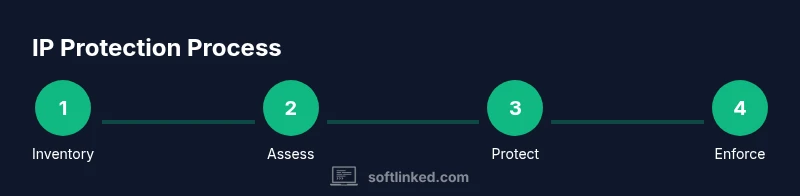
A practical IP plan combines multiple protection forms to cover different asset types—code, UI, brand, and confidential processes. Start with a formal inventory of assets and assign ownership. Map each asset to the most suitable protection path (copyright, trade secret, patent, or trademark). Balance protection costs with perceived risk and business needs, prioritizing core products and differentiators. An IP portfolio should evolve with your product roadmap, partnerships, and market strategy, not stay static after a single filing.
Documentation, Record-Keeping, and Proof of Ownership
Clear documentation helps you establish authorship, dates, and the chain of custody for your IP. Maintain version-controlled repositories, signed invention disclosures, and dated design notes. Preserve correspondence with contractors and third parties that clarify ownership rights. Regularly audit who has access to sensitive assets and update licenses or agreements as teams change. Strong record-keeping underpins any enforcement actions and smooths licensing negotiations with partners.
Enforcement, Monitoring, and Proactive Enforcement Strategy
Protecting software IP requires ongoing vigilance. Monitor markets and app stores for potential infringements or misuses of your branding. When you identify a risk, pursue proportionate enforcement actions such as cease-and-desist letters, licensing negotiations, or, if necessary, legal action. Proactive IP enforcement can deter infringement and preserve the value of your assets. Combine internal audits with external counsel to respond quickly to threats and maintain an up-to-date protection plan.
Open-Source Considerations: Balancing Sharing and Protection
Many software projects rely on open-source components. Protecting IP in this context means clear licensing compliance, proper attribution, and careful management of derivative works. Distinguish between what you own versus what you license from others, and ensure your open-source usage does not create conflicting obligations. Establish internal guidelines for when to rely on open-source and how to contribute back to the community while safeguarding your core innovations.
Tools & Materials
- IP audit checklist and template(Used to inventory code, branding assets, and ownership)
- NDAs and confidentiality agreements(For employees, contractors, and partners)
- Copyright registration forms (where applicable)(Optional in some jurisdictions to aid enforcement)
- Trademark search and registration forms(Useful when establishing brand protection in target markets)
- EULA/license templates(Clarifies permitted uses and ownership rights)
- Non-disclosure and invention disclosure templates(Helps prove authorship and invention dates)
- Secure development guidelines(Documentation of best practices for protecting IP during development)
- Patent search tool access(Assist initial prior-art checks when pursuing patents)
- Record-keeping and version-control system access(Critical for proving authorship and timeline)
Steps
Estimated time: 4-6 weeks
- 1
Inventory IP assets
Create a comprehensive list of all code, UI designs, logos, names, and confidential methods. Assign owners and document creation dates. This establishes the foundation for every protection path.
Tip: Use a shared template to ensure consistency across teams. - 2
Assess protectability
Identify which assets can be copyrighted, patented, trademarked, or kept as trade secrets. Not every asset will qualify for every protection, so prioritize based on risk and value.
Tip: Consult with a legal advisor to confirm eligibility before filing. - 3
Document authorship and dates
Record creator names, dates, and contributions. Maintain a clear chain of custody for each asset, including version histories and change logs.
Tip: Store timestamps in a secure, immutable log where possible. - 4
Protect copyright rights
Apply copyright notices to source files and documentation where appropriate. Consider registration in jurisdictions where enforcement is easier with proof of ownership.
Tip: Include license terms that set expectations for reuse and attribution. - 5
Pursue patent protection if applicable
Prepare invention disclosures detailing the technical problem, your solution, and its novelty. Work with a patent professional to draft claims and assess regional strategies.
Tip: Don’t delay patent-related disclosures; early documentation helps establish priority. - 6
Establish trade secret protections
Limit access to confidential components, implement NDAs, enforce encryption, and maintain secure storage. Regularly review access permissions and monitor for leaks.
Tip: Classify data so you know what qualifies as a trade secret. - 7
Register trademarks for branding
Evaluate distinctive marks for your product names and logos. Conduct searches to avoid conflicts and file registrations in key markets to secure brand protection.
Tip: Protect product names early to reduce rebranding costs later. - 8
Create an enforcement and licensing plan
Define processes for monitoring infringements, issuing notices, negotiating licenses, and pursuing remedies when necessary. Align enforcement with business priorities and budget.
Tip: Document every enforcement action for future reference.
Your Questions Answered
What is the first step to protect software IP?
Begin with an IP inventory to identify all protectable assets and owners. This establishes what can be protected and how.
Start with an IP inventory to identify protectable assets and owners.
Can software be patented?
Yes, software can be patented if it meets criteria like technical improvement and novelty. Not all software qualifies, and processes vary by country.
Software can be patented if it shows a technical improvement and novelty, but it depends on jurisdiction.
Is copyright automatic for software?
In many places, copyright arises automatically upon creation. Registration is optional but can aid enforcement and prove ownership.
Copyright often arises automatically, but registration helps with enforcement.
How does open-source affect IP protection?
Open-source licenses require compliance and attribution. They affect how you can reuse code and protect your own innovations.
Open-source requires careful license compliance and attribution to protect your own work.
What should I do to enforce IP rights?
Monitor for infringements, consult counsel, and pursue appropriate remedies such as notices or litigation when necessary.
Watch for infringements and take appropriate action with legal counsel when needed.
Are UI/UX designs protected?
UI/UX can be protected by copyright and, in some jurisdictions, design or trade dress laws. Protection varies by region.
UI/UX can be protected depending on the jurisdiction, often via copyright and design laws.
Watch Video
Top Takeaways
- Protect software IP with a multi-layered approach.
- Copyright covers code and UI, not every algorithm.
- Trade secrets rely on confidentiality and controls.
- Trademarks safeguard branding and market identity.
- Documentation and enforcement are essential for enforcement.