Does Software Have Warranty? A Practical Guide for Developers
Explore whether software carries a warranty, how terms differ by product type, license, and SLA, and how to evaluate and negotiate warranties in software contracts.


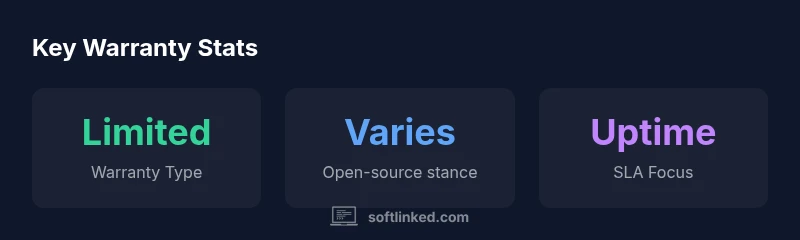
Does software have warranty? In short, there is no universal warranty for software. Warranties depend on vendor terms, product type (software as a product vs. software as a service), and the governing license agreement. Open‑source software often carries no warranty, while commercial software may offer a limited warranty or service commitments within a contract. Always read the license and support terms for specifics.
Why software warranties differ from hardware expectations
Warranties for hardware are often straightforward: a time-bound promise that a physical product will perform as described, with remedies like repair or replacement if defects appear. Software, by contrast, lives as code, data, and services, making warranties more complex and often more limited. According to SoftLinked Analysis, software warranties vary by product type (shrink-wrapped software, downloadable licenses, SaaS), by vendor strategy, and by the governing contract. The SoftLinked team found that most consumer-grade software licenses either offer a narrow warranty or rely on disclaimers that shift risk to the user. This difference matters because developers must parse warranty language alongside license terms to understand risk, remedies, and exclusions.
In practice, you will encounter several warranty patterns:
- Limited warranties: A fixed period during which defects are covered, typically related to installation or performance that clearly fails to meet stated specs.
- Disclaimers and exclusions: Many licenses explicitly state that the software is provided "as is" with no implied warranties beyond what is written.
- Service-level promises: For SaaS or hosted software, warranties are often framed as uptime SLAs, support response times, and data-handling commitments rather than software defect coverage.
- Open-source obligations: Community software frequently carries no warranty of any kind, or only a limited warranty from a sponsor, with many exclusions.
Warranty types and their typical scope
Warranties come in several forms, and each carries different remedies and limits. A limited warranty might promise the software performs according to its stated specs for a defined period and with certain installation conditions. Many software licenses, especially consumer-grade, explicitly state the product is provided "as is" and disclaims implied warranties of merchantability or fitness for a particular purpose. For SaaS offerings, the focus shifts toward service-level commitments: uptime guarantees, maintenance windows, incident response times, and data protection assurances. These are typically enforceable as part of a separate service agreement rather than a hardware-style defect warranty. Open-source licenses frequently omit warranties altogether or offer disclaimers from sponsors. When evaluating terms, separate the warranty language from SLA promises; you may find that what is promised about service reliability is not the same as what is promised about software defects.
How licenses, warranties, and SLAs interact
Licenses grant usage rights, often with disclaimers that limit liability. Warranties, when present, provide defect coverage but are frequently narrow or time-bound. SLAs, by contrast, specify performance metrics (uptime, response times) and remedies tied to service delivery (credits, outages). In a typical contract, you can expect:
- The license to outline permissible use and basic quality disclaimers.
- A warranty clause to address defects, installation, or integration failures within a defined window.
- An SLA to govern service delivery for hosted software, including remedies if targets are not met.
Understanding how these three elements align helps developers quantify risk and plan mitigations, especially when mixing on-site software with cloud components.
Open-source and community software: what you should expect
Open-source software is a cornerstone of modern development, but it carries unique warranty considerations. Most open-source licenses explicitly state there is no warranty, and liability is typically disclaimed. Commercial sponsors of open-source projects may offer optional warranties or support contracts, but these are not guaranteed and vary by project. For developers, this means:
- Treat open-source components as part of a broader risk management strategy rather than relying on warranty coverage.
- When integrating open-source into a project, document usage, version pins, and support plans to avoid ambiguity about warranties.
- If warranty-like assurances are essential, consider a commercial support contract or a vendor-backed distribution that includes explicit warranties.
In every case, read the license text carefully and check how it interacts with any downstream licenses or proprietary components.
Practical approach: map all components to their license terms and identify any disclaimers, limitations, or exclusions that affect your risk posture.
Practical steps to evaluate warranty terms in contracts
For developers, evaluating warranty terms starts before purchase and continues through deployment. A structured approach:
- Scrutinize the warranty scope: defect coverage, installation conditions, and any exclusions.
- Compare warranty with SLA commitments: ensure service performance promises align with business needs.
- Check remedies and remedies windows: what happens if the product fails, and for how long?
- Verify data handling, security, and privacy commitments included in warranties or SLAs.
- Demand clarity on updates, patches, and supported configurations.
Checklist:
- Is there a time-bound warranty? If yes, what are the conditions?
- Are there explicit exclusions for certain environments or integrations?
- Do you have service credits or monetary remedies if targets are missed? If not, negotiate.
- Is there a separate SLA that covers uptime and incident response? Ensure the math and remedies add up for your risk profile.
How to negotiate better warranty terms as a developer
Negotiation is about balancing risk and cost. When negotiating warranties:
- Push for a finite, clearly defined warranty period with objective acceptance criteria.
- Tie remedies to measurable outcomes (defect resolution times, patch delivery, and version stability).
- Seek explicit coverage for updates, security patches, and compatibility with planned integrations.
- Combine warranty terms with well-defined SLAs to cover both product quality and service reliability.
- Document all expectations in the contract and request written warranties in plain language to avoid ambiguity.
Negotiation is easier in longer-term relationships or enterprise deals, where vendors may offer stronger terms in exchange for commitment or volume.
Summary and implications for practice
Understanding how warranties, licenses, and SLAs interact is essential for developers who build on top of software products or rely on cloud services. The differences between warranty coverage, license terms, and service-level commitments determine how risk is allocated and what remedies are available. By explicitly mapping expectations, negotiating clear protections, and maintaining thorough documentation, teams can reduce risk and avoid costly disputes down the line. The SoftLinked team emphasizes that you should never assume warranty terms cover everything; always verify, negotiate, and document.
Bonus guidance for teams in regulated or high-stakes environments
In regulated settings, warranties may need to align with compliance requirements and audit trails. Consider:
- Requiring signed warranties tied to regulatory controls and data governance.
- Requesting independent third-party attestations for security or reliability where possible.
- Maintaining a change log of updates and patches that affect compliance posture.
- Planning for vendor contingency and exit strategies should the warranty terms fail to meet critical needs.
Warranty vs License vs SLA: how terms differ
| Aspect | Warranty Terms | License Terms | SLA/Support |
|---|---|---|---|
| Definition | Limited warranty; may be time-bound or none | License is a grant of use with terms; warranties often disclaimed | SLA outlines performance targets and remedies |
| Remedies | Repair, replacement, or refund depending on vendor | Updates or assistance may be the remedy in licenses | Remedies tied to uptime targets and response times |
| Duration | Typically 0-12 months or none depending on product | License term duration and renewal | SLA duration aligned with service commitments |
Your Questions Answered
Do all software products come with a warranty?
No. Warranties vary by product and vendor; many licenses offer limited or no warranty, and open-source software often carries no warranty at all.
Not all software comes with a warranty; read the license terms.
What warranties exist for SaaS or cloud software?
SaaS agreements may promise uptime, data handling standards, and supported incident response, but remedies are often limited and tied to service credits or SLA performance.
SaaS terms usually address uptime and support with limited remedies.
Is there a difference between warranties and SLAs?
Yes. Warranties cover defects or issues in software, while SLAs specify performance targets and remedies for service delivery.
They’re different; warranties cover defects, SLAs cover performance.
Can warranties be negotiated?
Yes, especially in enterprise deals; vendors may adjust scope, duration, and remedies in exchange for price or commitment.
They can be negotiated; ask for clearer remedies.
Where can I find warranty terms in software agreements?
Look in the license agreement, EULA, or service contract; review warranty language, disclaimers, and exclusions.
Check the license and service contracts.
What should developers do to mitigate warranty risk?
Document expectations, request explicit warranties or SLAs, require updates, and keep a record of support commitments.
Get it in writing and set clear SLAs.
“Software warranties are negotiable terms rather than universal guarantees. Clear, well-defined terms help developers manage risk and set realistic expectations.”
Top Takeaways
- Read license terms carefully before purchase
- Warranties for software are not universal
- SaaS warranties focus on uptime and support
- Open-source software typically has no warranty
- Negotiate terms to balance risk and cost