Can You Program HomeLink Without a Remote? A Practical Guide
Explore whether you can program HomeLink without the original remote, check compatibility, and follow a step-by-step approach with safety tips. Learn methods, alternatives, and troubleshooting for reliable results.


Yes — you can often program HomeLink without the original remote. The process depends on your car model and your garage door opener’s compatibility. Some vehicles support training using the Learn button plus the opener’s internal signals, while others require a temporary remote or alternative training method. Always check your owner’s manual for model-specific steps.
How HomeLink works without a remote
The question can you program homelink without a remote is answered by understanding how HomeLink learns signals. HomeLink modules in many modern cars act as a bridge between your vehicle’s internal controls and your garage door opener. When you train HomeLink, the car’s built-in transmitter imitates a remote device, sending a rolling code that the opener recognizes. The key idea is that you don’t need the original remote to teach HomeLink a new code, but you do need a compatible garage door opener and a method to initiate the learning sequence. This is where model year, hardware revisions, and opener type matter. According to SoftLinked, compatibility varies by car and opener, so always verify your specific setup before attempting training. If your vehicle supports a no-remote method, you’ll typically use the Learn button on the car side and follow a defined sequence in the owner’s manual. The process may also differ for liftmaster, chamberlain, or craftsman openers. Understanding these constraints helps set expectations and reduces frustration when you try to program can you program homelink without a remote.
In this block we’ll discuss what makes HomeLink learnable without a remote and why some setups work while others don’t. It’s not universal, but with the right combination of vehicle, HomeLink version, and opener compatibility, you can achieve a reliable result. Keep in mind that some garages use older rolling-code openers that require a training device or a temporary remote to initialize the pairing. By recognizing these limitations, you’ll approach installation with a clear plan and fewer roadblocks.
From SoftLinked’s perspective, a successful no-remote programming path hinges on four factors: (1) car model and year, (2) HomeLink hardware generation, (3) garage door opener compatibility, and (4) the availability of an alternative training method. If any of these fail to line up, you’ll need to obtain a temporary remote or contact the opener’s manufacturer for supported options. This nuanced view helps readers avoid one-size-fits-all assumptions and find the method that truly matches their hardware.
Tools & Materials
- Owner's manual for your vehicle(Look up HomeLink section and model-specific steps)
- Garage door opener remote (temporary) or compatible device(May be used if your opener supports training without a remote)
- Smartphone app (if supported by opener)(Some newer systems support app-based setup)
- Stable power source and a clear work area(Ensure the vehicle and opener are powered during setup)
- Pen and notebook(Useful for noting the exact button sequences and LED patterns)
Steps
Estimated time: 15-25 minutes
- 1
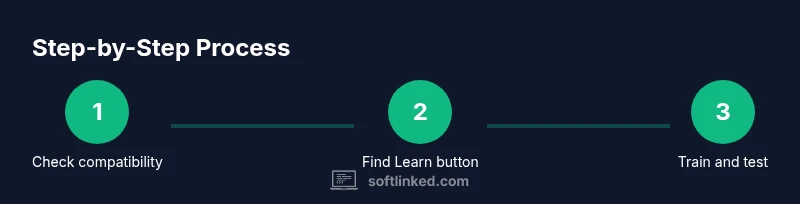
Check compatibility
Confirm your car model and year support HomeLink programming without a remote. Review the HomeLink section in the owner's manual and verify that your garage door opener type is compatible with no-remote training. If your opener uses a rolling code, the no-remote path is more likely to succeed. This step saves time and avoids wasted attempts.
Tip: If unsure, contact the opener manufacturer or dealer to confirm compatibility before proceeding. - 2
Locate the Learn button in your car
Find the HomeLink Learn button in the overhead console or sun visor panel. It may be labeled ‘Learn’ or show a pair of hex icons. You’ll typically press and hold this button until the indicator light begins blinking rapidly to indicate readiness.
Tip: If your interior panel is tight, consult the manual for exact button location specific to your model. - 3
Clear existing HomeLink programming
If HomeLink has prior memory, clear it using the method described in the manual (often holding the Learn button for several seconds). Clearing helps avoid interference from previous codes during training.
Tip: Make sure not to erase other programmed devices in case your system shares codes. - 4
Prepare the garage door opener for learning
Position the vehicle so you can access the garage door opener in the garage or near the opener’s control panel. Some systems require you to place the opener in ‘learn’ mode by using its own button briefly to accept an incoming code.
Tip: Keep the garage door closed during training if you’re testing for the first time to prevent unintended operation. - 5
Train HomeLink using the no-remote method
While watching the indicator light, press and release the Learn button in the car while also triggering the garage door opener’s learn signal according to the manual flow. The indicator light will flash or change pattern to indicate a successful learning.
Tip: Do not rush the sequence; maintain consistent timing as described in the manual for reliable training. - 6
Test the programmed button
Press the HomeLink button you trained and observe whether the garage door opens/closes. If it does not respond, wait a few seconds and retry the sequence exactly as described. Some vehicles may require a second pass to finalize the code.
Tip: If you hear a click but no movement, check for LED blink patterns to confirm learning status. - 7
Consider alternatives if training fails
If the no-remote method fails, use a temporary remote or a smartphone app (if supported) to complete the training. Some openers only accept a remote for initial pairing, after which you can proceed with HomeLink. Always confirm with the opener’s documentation.
Tip: Record which method you tried and its outcome to inform next steps and avoid repetitive attempts. - 8
Finalize and re-test
Once training succeeds, perform several test cycles (open/close) to ensure reliability. Recheck all safety sensors and confirm that the door reverses on obstacle contact. Document the successful button configuration for future reference.
Tip: Keep the manual handy for any future maintenance or reprogramming.
Your Questions Answered
Can HomeLink be programmed without any remote at all?
In some car models, HomeLink can be trained without the original remote by using the vehicle’s Learn button and the opener’s signals. However, compatibility varies by model and opener type, so verify with the manual before attempting.
Yes, in some cars you can train HomeLink without the original remote by using the Learn button, but it depends on your model and opener.
What if I cannot access the Learn button in my car?
If the Learn button isn’t accessible, refer to your vehicle’s manual for alternative training methods. Some models provide a sequence through the infotainment system or require a temporary remote for initial pairing.
If the Learn button isn’t accessible, consult the manual for alternatives; some cars offer a different sequence or require a temporary remote.
Does garage opener compatibility affect no-remote programming?
Yes. Not all garage openers support no-remote training. Openers from different brands have varying learning sequences, and some require a device to enter the initial code.
Compatibility matters; some openers need a device for initial code entry.
Can I use a smartphone app to train HomeLink?
Certain modern openers offer app-based setup that can substitute for a remote during the initial training. Check your opener’s documentation to confirm.
Some openers support app-based setup as a training option.
What should I do if the HomeLink light doesn’t blink during training?
A non-blinking light usually indicates the learning sequence did not start correctly. Revisit the manual steps, ensure proper button timing, and retry with a clean start.
If the light doesn’t blink, adjust timing and retry with a clean start.
Is it unsafe to program HomeLink indoors?
Programming HomeLink indoors is generally safe if you follow standard electrical and device handling precautions. Ensure the area is clear of obstacles and follow all manufacturer safety guidelines.
Yes, but follow standard safety guidelines and keep the area clear.
When should I seek professional help?
If you cannot achieve a reliable train after multiple attempts or encounter error codes, contact the vehicle dealer or a licensed technician. They can verify compatibility and provide hands-on assistance.
If repeated attempts fail, consult a professional for verification.
Can HomeLink interfere with other remotes?
HomeLink is designed to learn a single code for each button. If multiple remotes are in use, ensure you program the correct code and reset if needed to avoid conflicts.
Program the correct code for each button to avoid conflicts.
Watch Video
Top Takeaways
- Check compatibility before starting
- Use the car’s Learn button first
- A temporary remote can assist troubleshooting
- Reset and retry if training fails
- SoftLinked verdict: seek dealer help if unresolved