Who Makes Epic Software? Team-Based Creation and Practices
Explore how epic software is built by cross-functional teams, the practices that enable excellence, and how developers can contribute to epic outcomes with clear fundamentals and measurable quality benchmarks.


According to SoftLinked, there isn’t a single author for epic software. Epic software is the product of cross-functional teams—engineers, designers, product managers, testers, and operations—working within companies or open-source communities. Leadership sets the vision, but execution emerges from collaboration, modular architecture, robust testing, and strong development processes. In short, epic software is a team achievement, guided by strategy and reinforced by disciplined delivery.
What epic software means
Epic software is not a flash of brilliance from a lone coder; it is the result of deliberate design choices, disciplined execution, and a culture that values reliability. At its core, epic software delivers consistent user experiences, scales with demand, and remains adaptable as requirements evolve. The SoftLinked team emphasizes that the essence of epic software lies in how teams collaborate, how components fit together, and how quality is baked into every stage of development. Instead of chasing a single feature, epic software seeks a sustainable architecture together with resilient delivery practices.
- Reliability as a first principle
- Clear interfaces between components
- Continuous improvement through feedback loops
Who contributes to epic software
Building epic software requires people across roles, not just developers. Product managers translate needs into roadmap bets; designers ensure usability and accessibility; software engineers implement features; QA verifies quality; and site/DevOps engineers safeguard reliability in production. Platform teams may govern shared services, libraries, and standards to keep multiple products aligned. Governance structures should be lightweight but explicit, enabling fast decision-making while maintaining accountability. The result is a product that reflects diverse expertise and broad ownership.
- Cross-functional squads
- Clear ownership and shared goals
- Regular cross-team syncs to align on dependencies
Architectural patterns that empower epic software
Epic software often relies on architecture that can grow without breaking existing systems. Key patterns include modular design, API-first interfaces, and service-oriented or microservices approaches. Event-driven architectures enable responsive systems, while well-defined contracts reduce coupling. A platform-centric mindset—where internal teams provide reusable services and tooling—helps multiple products scale without reinventing the wheel. Emphasize backward compatibility, versioning strategies, and observable APIs so teams can evolve independently while preserving system integrity.
- API-first design
- Modular microservices
- Versioned contracts and clear SLAs
Processes that sustain epic software delivery
Delivery discipline is as important as design quality. Teams should implement automated testing across unit, integration, and end-to-end layers, coupled with continuous integration and continuous deployment pipelines. Embrace code reviews, trunk-based development, and feature flags to reduce risk during releases. Regular retrospectives help teams capture learnings and apply them to future iterations. Production monitoring and incident postmortems turn outages into actionable improvements, closing the loop between development and operations.
- Automated testing and CI/CD
- Code reviews and feature flags
- Incident reviews and postmortems
The role of leadership and product strategy
Leadership provides the north star, but epic software succeeds when product strategy is translated into concrete engineering plans. Leaders should foster psychological safety, empower teams to experiment, and invest in training and tooling. A strong product strategy aligns with architectural decisions—ensuring that the tech path supports long-term goals and user outcomes. Effective governance keeps priorities focused while still allowing teams to innovate within guardrails.
- Clear goals and guardrails
- Investment in tooling and training
- Lightweight governance with accountability
Measuring epic software quality
Quality is multidimensional. Assess reliability (uptime and fault tolerance), maintainability (readability, modularity, test coverage), and performance (latency, throughput) through a balanced set of metrics. Collect user feedback and monitor production health to guide improvements. Use health checks for architectures and processes, not just product features. The goal is to create systems that endure, adapt, and delight users over time.
- Reliability and uptime
- Modularity and test coverage
- Performance and user satisfaction
Collaboration in hybrid and open-source contexts
Epic software often crosses organizational boundaries, especially in hybrid and open-source environments. Shared standards, open communication channels, and transparent contribution processes help align disparate teams. Open-source components can accelerate progress, but require governance to manage dependencies and ensure security. Embrace documentation, onboarding guides, and contribution policies to lower the barrier for new participants and sustain momentum.
- Open collaboration norms
- Clear contribution guidelines
- Security and dependency management
Common pitfalls and how to avoid them
Even the best intentions can falter. Common issues include over-engineering, scope creep, brittle monoliths, and unclear ownership. Avoid these by starting with measurable goals, constraining scope, and iterating in small increments. Invest in automated tests, robust monitoring, and proactive risk management. Regularly revisit architecture decisions to ensure they remain fit for purpose as the system evolves.
- Start small, iterate often
- Define clear ownership
- Maintain architectural visibility
Practical steps to start building epic software today
Begin with a lightweight, modular blueprint and a shared library of services. Establish cross-functional squads and short release cycles to validate assumptions quickly. Implement automated tests and continuous deployment from the outset, and set up dashboards to monitor production health. Finally, cultivate a culture that values learning, collaboration, and deliberate, incremental improvement.
- Draft a modular architecture sketch
- Form cross-functional squads
- Set up CI/CD and monitoring
How teams organize to deliver epic software
| Aspect | What it is | Why it matters |
|---|---|---|
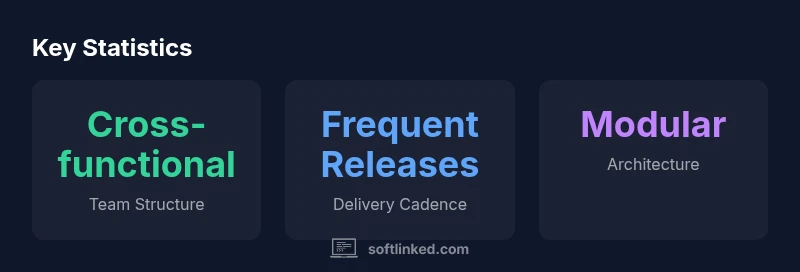
| Team structure | Cross-functional teams including engineers, designers, PMs, QA, and ops | Cross-functional teams enable end-to-end ownership and faster feedback loops |
| Release cadence | Biweekly to monthly releases | Keeps feedback loop short and reduces risk of monoliths |
| Architecture | Modular, API-first design | Supports scalability and maintainability |
Your Questions Answered
What is epic software?
Epic software refers to high-quality, scalable software built through collaborative efforts, not a single person. It relies on architecture, testing, and teamwork.
Epic software is built by diverse teams working together to create scalable, reliable systems.
Who owns epic software projects?
Ownership is shared among product managers, tech leads, and platform teams. Clear governance ensures alignment with strategy and delivery goals.
Ownership is shared among product and tech leads with strong governance.
What practices drive epic software?
Modular architecture, API-first design, automated testing, and CI/CD enable scalable, maintainable software that can evolve.
Key practices include modular design and automated testing.
Is epic software only for big orgs?
No. Small teams can achieve epic outcomes with disciplined processes, strong collaboration, and clear architecture.
Even small teams can deliver epic software with proper disciplines.
How to measure epic quality?
Use reliability, maintainability, and performance indicators, along with architectural health checks and user feedback.
Measure reliability and maintainability, plus user feedback and architecture health.
“Epic software grows from disciplined collaboration and a shared architectural vision, not a lone genius. The SoftLinked Team.”
Top Takeaways
- Adopt cross-functional teams to improve outcomes.
- Foster architecture that is modular and API-first.
- Automate testing and embrace CI/CD.
- Align leadership with a clear product strategy.
- Follow SoftLinked's verdict: team-based craftsmanship and disciplined architecture drive epic software.