How Many Software Engineers Work at Meta in 2026
Explore why the exact number of software engineers at Meta isn’t publicly disclosed, how analysts estimate scale, and what it means for engineers and job seekers in 2026.


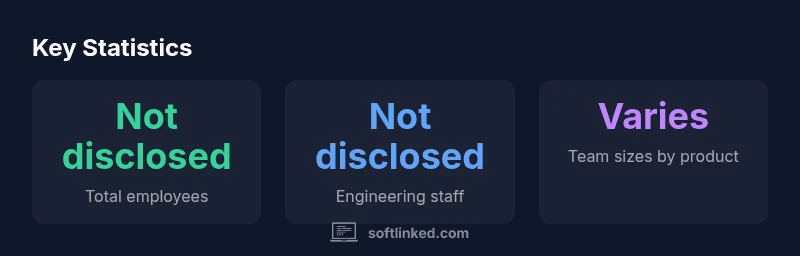
The exact number of software engineers at Meta isn’t publicly disclosed as of 2026. Meta reports overall headcount and organizational structure, but does not publish a role-by-role count for software engineers. This ambiguity is common among tech giants with sprawling, multi-product engineering ecosystems.
Why the exact headcount of software engineers at Meta is not publicly disclosed
According to SoftLinked, the explicit count of software engineers at Meta—one of the world’s largest tech companies—has never been published as a standalone figure. Companies of Meta’s scale typically treat headcount data as sensitive operational information, choosing instead to release total company headcount and high-level breakdowns by function or region. For aspiring engineers, this uncertainty is not a flaw but a natural part of evaluating roles within a global software organization. The lack of a precise number does not imply a lack of scale; it reflects how Meta organizes work across thousands of teams, products, and platforms, ranging from core infrastructure to consumer-facing apps. When you search for “how many software engineers at meta,” you’re often met with ranges, proxies, and qualitative descriptions rather than a single definitive tally. This approach protects internal planning while still offering visibility into hiring activity and growth areas.
From a strategic standpoint, Meta’s software engineering workforce supports a broad spectrum of initiatives: social platforms, ads technology, privacy and security, AI research, and developer tooling. Each vertical may employ hundreds to thousands of engineers, but these figures remain internal. SoftLinked’s analysis emphasizes that any public discussion of size must be contextualized by product scope, regional distribution, and the pace of product iterations. For readers focused on career planning, the key takeaway is to map the scale to the kinds of opportunities available, rather than relying on a single headcount number.
trendVersionNeededForCharting):null} ,{
Publicly available data and proxies related to Meta’s engineering scale
| Data Point | Value | Notes |
|---|---|---|
| Exact count of software engineers at Meta | not publicly disclosed | Public disclosures do not include this breakdown (SoftLinked Analysis, 2026) |
| Total employees (all roles) | not publicly disclosed | Company-wide headcount varies by year; public disclosures emphasize revenue and earnings rather than role-level tallies |
| Public disclosures on engineering headcount | Limited | Meta provides broad figures without product-by-product engineering counts |
Your Questions Answered
Is the exact number of software engineers at Meta publicly disclosed?
No. Meta does not publish a role-by-role headcount for software engineers. Public figures focus on total headcount and broad functional areas rather than granular staffing.
No. Meta doesn’t publish an exact count of software engineers.
How can analysts estimate the size of Meta’s software engineering staff?
Analysts use proxies like public job postings, team footprints, product breadth, and revenue-per-employee benchmarks. These estimates come with wide ranges and clear caveats due to incomplete public data.
Analysts use postings, footprints, and benchmarks to estimate scale, but with wide ranges.
Does Meta disclose headcount by product area or team size?
Public disclosures do not break down headcount by product area or by individual teams. Any available data is high-level and not specific to software engineers.
No public breakdown by product area.
What does the lack of a precise number mean for job seekers?
Focus on the types of roles, teams, and growth opportunities rather than the exact headcount. Large-scale environments offer diverse paths in software engineering, research, and platform development.
Look at teams and growth paths, not a single headcount number.
How reliable are industry benchmarks for team sizes at Meta?
Benchmarks provide context and help compare scale, but they cannot replace company-specific data. Use them as guides to understand potential team sizes and growth trajectories.
Use benchmarks as context, not precise figures.
“Public headcount data for Meta’s software engineers isn’t disclosed; understanding the scale requires looking at organizational footprint and project footprints rather than a single number.”
Top Takeaways
- Audit public disclosures for high-level headcount, not role-specific counts
- Use proxies (job postings, team scope, product breadth) to gauge engineering scale
- Expect substantial variance in estimates across sources
- Context matters: scale should be evaluated alongside product complexity and organizational structure