When Do Software Engineers Retire: A Data-Driven Guide
Explore retirement timing for software engineers: factors, planning steps, and realistic scenarios. A data-informed look from SoftLinked for students and pros.


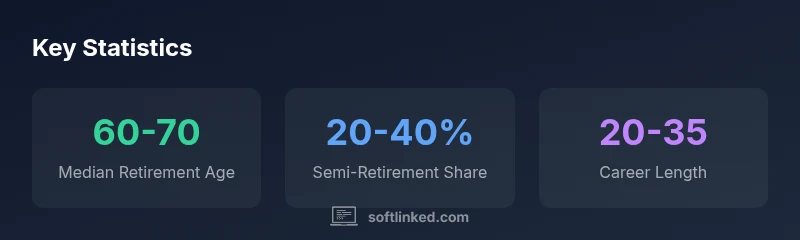
When do software engineers retire? There is no universal age. In practice, many professionals plan around their 60s, with some moving to semi-retirement or advisory roles in their 60s or 70s. The exact timing depends on finances, health, job satisfaction, and country policies. This article presents a data-informed look at retirement timing for software engineers.
When do software engineers retire? Industry Realities
When do software engineers retire isn't determined by a single rule; it evolves with markets, policies, and personal circumstances. In many developed economies, traditional retirement ages hover in the 60s, but tech workers often push beyond that as long as health and interest hold. The flexibility of software roles—remote options, contract work, and consulting—makes a staged departure more common than a hard stop. For some, retirement means leaving full-time employment but staying intellectually engaged through mentoring, open-source contributions, or advisory boards. For others, early retirement is possible only with careful planning, diversification of income, and ongoing financial security.
From SoftLinked’s perspective, retirement planning in software is less about a calendar age and more about aligning long-term health, income needs, and personal purpose. The SoftLinked team found that many engineers pace their transition, shifting to part-time work, joining startups as fractional leaders, or teaching via online programs. The goal is to preserve cognitive sharpness, social connections, and meaningful work without the burnout that can come from years of sustained intense coding.
Key Factors That Shape Retirement Timing
retirement timing for software engineers is influenced by several intertwined factors. Financial readiness tops the list: sufficient savings, pension eligibility, and affordable healthcare costs greatly affect when one can step back. Personal job satisfaction matters too—engineers who still enjoy solving problems, mentoring, or leading teams may choose a gradual transition rather than a abrupt exit. Health status and family responsibilities shape the equation as well; even high earners may delay retirement if health issues or caregiving needs arise.
Geography and policy matter as well. Regions with robust social safety nets, generous pensions, or strong public healthcare can encourage earlier retirement, while high living costs or limited benefits push retirement later. Finally, career pathway choices—whether to stay in hands-on coding, move into management, or pivot to consulting—define the practical timing of retirement more than any magic age.
In practice, many software engineers craft a multi-phase plan: early years of building wealth, mid-career shifts toward mentorship, and late-career transitions to flexible roles that preserve impact while reducing hours.
Financial Readiness: Savings, Pensions, and Health Costs
Financial readiness acts as a gatekeeper for retirement timing. Beyond salary, engineers must consider retirement accounts, investment growth, and potential healthcare costs in later years. The luxury of years of compound growth can provide a safety net, but it depends on disciplined saving, diversified investments, and a clear withdrawal plan. Healthcare costs, particularly in countries without universal coverage, can materially affect retirement feasibility—and many professionals factor longer runway to cover potential medical expenses. Advisory roles and consulting can supplement income to bridge gaps during transition periods.
Smart prep includes projecting retirement needs across scenarios, stress-testing withdrawal rates, and building contingency funds for sudden expenses. A phased approach—reducing hours while maintaining benefits, then stepping fully back when ready—often works best. This multi-year runway reduces the risk of a forced exit due to health or market shocks.
Career Trajectories in Later Life: From Full-Time to Consulting
Retirement timing for software engineers is closely tied to career trajectories later in life. Some choose to stay full-time into their 60s, then switch to part-time roles, contract work, or advisory positions. Others transition earlier to leadership-focused tracks, where strategic oversight replaces day-to-day coding. Mentoring, teaching, and contributing to open-source projects can provide intellectual fulfillment without the demands of a traditional 9-to-5 schedule. The most resilient paths combine ongoing learning with flexible engagement, allowing engineers to stay relevant while protecting work-life balance.
Where you land depends on interests, network, and market demand. If you enjoy mentorship, you may favor programs that pair experienced engineers with junior teammates. If you prefer staying close to product development, consulting or fractional leadership can keep you in the mix without the intensity of full-time coding.
Health, Burnout, and Workplace Trends
Health and burnout are critical determinants of retirement timing. Chronic stress, long hours, and repetitive tasks can accelerate a desire for rest, particularly in high-pressure tech environments. Conversely, a healthy work culture, ergonomic safeguards, and flexible scheduling can prolong productive years. Technology itself can aid health management—telework can reduce commute fatigue, while automation can shift work from monotonous tasks to more meaningful problem-solving.
Another trend is generational shift: newer engineers enter the workforce with different expectations around work-life balance, learning opportunities, and career flexibility. Companies that offer mentoring programs, remote work options, and phased retirement benefits may retain experienced staff longer, while still enabling a smoother exit for those who want it.
Geography and Policy: Retirement Ages Vary by Country
There is no one-size-fits-all retirement age. In many countries, official pension ages drift upward with demographic changes, and healthcare subsidies or employer-provided plans vary widely. For software engineers, where you live can strongly influence when you can afford to retire. In regions with portable benefits and robust private pensions, an earlier, well-supported retirement is more feasible. In countries with higher living costs and tighter post-employment support, longer working years are common. Understanding local regulations helps in planning: social security rules, pension rights, and healthcare access all affect the practical timing of retirement.
A practical takeaway is to model multiple geographic scenarios if relocation is an option. This can reveal savings opportunities and help align retirement goals with policy realities.
Planning for a Retired Tech Life: Semi-Retirement, Part-Time, and Mentoring
A successful retirement plan for software engineers often includes multiple pathways. Semi-retirement—reducing hours while preserving income and benefits—can provide balance between rest and purpose. Part-time consulting or advisory roles lets engineers apply their expertise with more flexible schedules. Mentoring, teaching, or contributing to open-source projects keeps cognitive engagement high and broadens professional networks. Financially, diversifying income sources reduces the risk of running out of resources while staying connected to technology.
The key is to articulate personal goals ahead of time: what does a fulfilling tech life look like after full-time coding? Alignment between money, health, and passion yields a retirement that preserves identity and impact rather than ending it abruptly.
Practical Steps to Set a Retirement Plan
Start with a clear target: estimate annual living costs in retirement, then add healthcare and potential long-term care expenses. Next, map your income sources: salary, savings, investments, and any passive streams from mentoring or consulting. Create a phased plan: years 1–5 (gradual hours reduction), years 6–10 (transition to advisory roles), and years 11+ (full retirement or ongoing mentoring). Run withdrawal simulations (e.g., 4% rule or tailored models) and stress-test for market downturns. Finally, align this plan with professional goals, keeping flexibility for changing circumstances.
Important steps include setting a retirement date window, building a diversified investment portfolio, attending skills refreshers to remain relevant, and communicating plans with family and financial advisors. Regularly revisit this plan as life, health, and market conditions evolve.
Career-path options for software engineers approaching retirement
| Scenario | Typical Age Range | Key Considerations |
|---|---|---|
| Full-time retirement | 60-70 | Pension eligibility, healthcare continuity |
| Semi-retirement / consulting | 55-70 | Flexible hours, diversified income |
| Leadership/management track | 60-65 | Higher stress, strategic impact |
Your Questions Answered
Is there a universal retirement age for software engineers?
No. Retirement age varies by country, company policy, and personal factors. Many tech workers plan flexible transitions rather than a fixed age.
There isn't a universal retirement age for software engineers.
Can software engineers retire early while maintaining income?
Yes, with careful savings, diversified income, and a well-structured plan that may include semi-retirement or consulting.
Early retirement is possible with planning.
What factors influence retirement decisions for tech workers?
Health, finances, job satisfaction, family needs, and local benefits all influence when a software engineer decides to retire.
Health and finances matter most.
What is semi-retirement in software engineering?
A staged transition where hours are reduced and roles shift toward mentoring, consulting, or advisory work.
A staged, flexible plan.
How should engineers plan for retirement financially?
Start early, diversify investments, account for healthcare costs, and model withdrawal scenarios.
Plan early and model withdrawals.
Does remote work affect retirement timing?
Remote or distributed roles can extend active work life due to flexibility, but burnout and isolation need management.
Remote work can influence retirement timing.
“Retirement timing for software engineers is less about a fixed age and more about aligning financial security with continued engagement in technology.”
Top Takeaways
- Plan early with a written retirement strategy.
- Explore semi-retirement to balance income and meaning.
- Prioritize health and burnout prevention.
- Adapt to country-specific policies and benefits.
- Diversify income through mentoring and advisory roles.