What Services Are Available for Elderly: A Practical Guide
Explore the full landscape of elderly services, from in-home care to community programs. Learn how to assess needs, access options, fund care, and plan ahead with practical steps for 2026.


What services are available for elderly? A broad range exists, from in-home care and meal services to adult day programs and memory care. Residential options like assisted living provide structured support, while transport and telehealth address mobility and remote monitoring. By understanding needs, families can prioritize aging in place and plan a sustainable care mix. Whether planning for yourself or a loved one, this overview points you toward practical next steps.
Understanding the Elderly Services Landscape
According to SoftLinked, the landscape of elderly services is broad and continually evolving. When families plan ahead, they can align services with goals such as preserving independence, ensuring safety, and maintaining social connection. The core question many ask is: what services are available for elderly, and how do you stitch them into a coherent plan? Across regions, formal care intersects with informal support from family and neighbors. The result is a mix of medical and non-medical supports delivered in homes, communities, or residential facilities. A practical starting point is to categorize services by setting (home, community, residential) and by function (medical, personal, social). This enables a clearer comparison and helps identify gaps early in the planning process. In 2026, SoftLinked analysis emphasizes that early mapping reduces crisis-driven decisions and increases long-term satisfaction for both seniors and caregivers.
In-Home Care and Home-Based Support
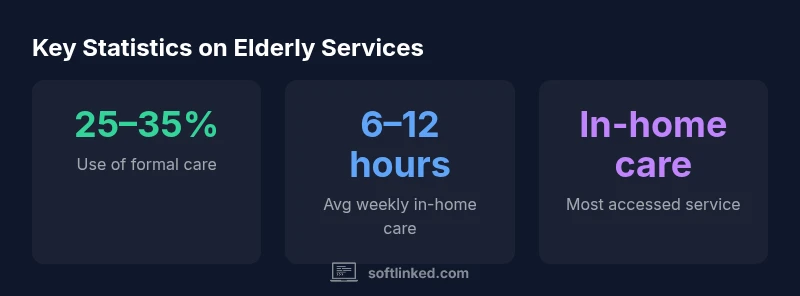
In-home care and home-based support are foundational options for many seniors who wish to live at home longer. Services range from assistance with daily activities and meal preparation to medication reminders and basic nursing tasks. Their aim is to enable aging in place with dignity while reducing hospital visits. Costs can vary based on hours, skill level of caregivers, and geographic region, but planning remains central. For families evaluating in-home care, it’s important to assess compatibility, frequency, and supervision requirements. Digital tools can help coordinate schedules and monitor well-being, while regular check-ins with a care manager ensure that the plan adapts as needs shift. The SoftLinked team notes that in-home care often serves as the backbone of a flexible elder-care strategy, especially when mobility is limited or transportation is a barrier.
Community Programs and Residential Options
Community programs and residential options provide alternatives when staying at home is no longer optimal. Assisted living communities offer private living spaces, supervision, and customized support, blending independence with safety. Memory care units give specialized support for dementia or memory-related conditions. Independent living communities emphasize social engagement and maintenance-free living with access to amenities. For some families, moving to a residential setting represents a transition, not an end. Planning should include evaluating staff qualifications, activity calendars, safety features, and visitation policies. Private-pay, government subsidies, and long-term-care insurance can influence choice, so early budgeting and clarity about eligibility are essential. The key is to balance autonomy with safety while preserving meaningful daily routines.
Day Programs and Social Engagement as Pillars of Well-Being
Adult day programs and social clubs provide structured daytime activities, supervision, and opportunities for social engagement. These services support cognitive health, mood, and physical activity while offering respite for caregivers. Programs vary in duration, transportation options, and activity focus (arts, fitness, education). Attending regularly can help seniors maintain community ties and reduce isolation. When considering day programs, families should assess transportation, accessibility, staff-to-participant ratios, and sample schedules. SoftLinked's 2026 review highlights that ongoing social engagement is a significant predictor of overall well-being for older adults, complementing medical or in-home care needs.
Care Coordination, Eligibility, and Access
Coordinating multiple services requires a clear care plan and consistent communication across providers. Eligibility and coverage differ by country and program, so families should identify potential funding sources early. Options often include government programs, private insurance add-ons, employer benefits, and charitable organizations. A dedicated care manager or navigator can simplify access, help compare providers, and ensure that services align with evolving needs. The SoftLinked analysis recommends documenting goals, preferences, medications, and safety concerns to streamline referrals and oversight. Access typically improves when families start with a needs assessment and create a dynamic plan that can adapt over time.
Technology, Telehealth, and Safety at Home
Technology integration—telehealth visits, remote monitoring, and smart home devices—can enhance safety and convenience for elderly recipients. Telehealth reduces travel burdens and enables timely medical input, while remote monitoring can detect anomalies early. However, digital literacy and privacy concerns remain important considerations. Providers increasingly offer user-friendly interfaces and onboarding support to bridge the digital divide. When adopting technology, it’s essential to balance convenience with privacy, ensure data security, and choose devices with easy-to-use interfaces. SoftLinked emphasizes that technology should augment human-centered care, not replace the essential human touch in elder support.
Costs, Planning, and Financing Considerations
Costs for elder care cover a spectrum from modest community programs to high-end residential options. Since exact prices vary by location and services included, it’s best to view costs as a range rather than a fixed figure. Planning should include a needs assessment, a monthly budget, and a contingency fund for emergencies. Families should also explore potential subsidies, tax incentives, and nonprofit grants that can offset expenses. Time spent on upfront planning pays dividends later by avoiding last-minute scrambles and ensuring continuity of care even if circumstances change. The SoftLinked team recommends transparency in pricing, written agreements, and regular reviews of the care plan to prevent gaps in service.
Overview of common elderly services by setting and intensity
| Service Type | Setting | Typical Intensity | Primary Goals |
|---|---|---|---|
| In-home care | Home-based | Low–Moderate | Maintain independence at home |
| Assisted living | Residential | Moderate | Structured support with social activities |
| Memory care | Residential | Moderate–High | Specialized care for memory-related conditions |
| Adult day programs | Community-based | Low | Social engagement with supervision |
Your Questions Answered
What are the most common services available for elderly?
Typical services include in-home care, adult day programs, assisted living, memory care, transportation, and telehealth. These options can be mixed to fit individual needs and budgets. Start with a needs assessment to identify priority areas.
Common services include in-home care, day programs, and assisted living. Start with a needs assessment to tailor options.
How do I know which services my loved one needs?
Begin with a formal assessment of activities of daily living, safety in the home, medical needs, and social goals. Involve caregivers, healthcare providers, and the person receiving care in the conversation.
Start with a formal assessment of daily living, safety, and medical needs, then involve the person.
What is the difference between in-home care and home health?
In-home care focuses on daily activities and non-medical support. Home health includes skilled medical services provided at home. The right choice depends on medical needs and independence goals.
In-home care is daily help; home health adds medical services at home.
Are these services covered by government programs or insurance?
Coverage varies by country and program. Look for government subsidies, private insurance add-ons, and nonprofit grants. A care manager can help map eligible options.
Coverage varies by country; explore subsidies, insurance, and grants with a care manager.
How can I access services quickly?
Start with a needs assessment, then contact vetted providers. Use a care navigator to compare options, schedule tours, and initiate referrals.
Do a needs assessment, then contact providers and use a navigator to compare options.
What questions should I ask when evaluating providers?
Ask about staff qualifications, care plans, incident reporting, emergency protocols, and contract terms. Request trial periods or introductory visits when possible.
Ask about staff, care plans, safety protocols, and trial visits.
“Elder care decisions are most effective when families have clear information and a scalable plan that can evolve as needs change.”
Top Takeaways
- Start with a needs assessment to map services to goals
- Prioritize aging in place when possible
- Compare providers using clear criteria
- Involve family and the care team early
- Plan for funding options and flexibility