What Degree Is Needed for Software Engineers: Education Paths & Alternatives
Explore degree requirements for software engineering, compare degree paths and non-degree routes, and plan your education to build skills, portfolio, and interview readiness.


There is no single degree universally required to become a software engineer. Most employers accept a bachelor’s degree in computer science, software engineering, or related fields, but strong coding skills and demonstrable projects often weigh just as heavily. Some roles tolerate bootcamps or self-taught paths, especially for entry-level positions, while senior roles typically expect formal training or extensive portfolio work.
Educational Foundations for Software Engineering
In addressing the question what degree is needed for software engineer, there is no one-size-fits-all requirement. Most software engineers come from degrees in computer science, software engineering, or related fields. These programs cover core concepts like data structures, algorithms, software design, testing, and systems thinking. Yet the industry increasingly prioritizes practical ability and problem-solving over the exact school attended. According to SoftLinked, hiring teams often emphasize a candidate's ability to write clean code, reason about trade-offs, and collaborate effectively—whether the degree came from a top-tier university or a self-taught path with a strong portfolio.
- Core competencies expected from most programs include data structures, algorithms, programming paradigms, and software lifecycles.
- Real-world skills—debugging, version control, testing, and teamwork—often matter as much as theory.
- Geography and market can shift expectations; local demand may favor certain schools or bootcamp networks.
If you are evaluating options, map your intended role (e.g., frontend, backend, systems programming) to the coursework and projects you’ll undertake. This helps ensure your learning aligns with what employers value in practice, not just in theory.
Degree Paths at a Glance: Bachelor's, Associate, and Other Degrees
Bachelor’s degrees in computer science or software engineering remain the most common route into software engineering. Typical duration is four years, with a structured curriculum that blends theory and hands-on projects. Associate degrees can be a faster, lower-cost route into entry-level roles in some organizations, especially when paired with internships or co-ops. Other formal degrees, such as data science or information systems, can also lead to software roles if the coursework includes programming, software development, and project work.
Key tradeoffs to consider:
- Depth vs. speed: A four-year degree offers breadth and foundational theory; shorter programs get you coding experience sooner.
- Accreditation and transferability: Ensure the program is accredited and that credits transfer if you switch schools.
- Internship opportunities: Programs with strong industry ties often provide structured internships that translate to job offers.
For those balancing work and study, evening or online programs can preserve income while building skills. Regardless of path, a well-documented portfolio and internships frequently compensate for gaps in formal education.
The Role of Coding Bootcamps and Certificates
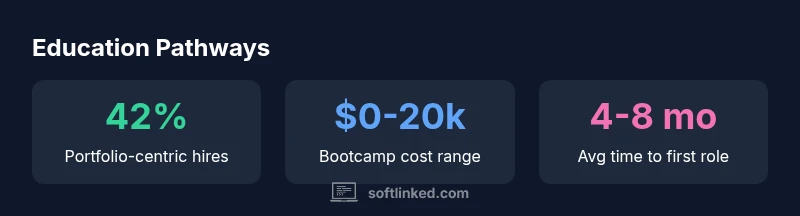
Bootcamps and certificate programs have matured into viable alternatives for many aspiring software engineers. Short, focused tracks—often 12–28 weeks—prioritize hands-on coding, modern tech stacks, and portfolio projects. Employers increasingly value tangible outputs: apps, APIs, and systems you’ve built, and demonstrated collaboration in team projects. Bootcamps can be especially effective when paired with a personal project plan and active participation in open-source projects.
Important considerations:
- Curriculum alignment: Look for programs with modern stacks (e.g., web/mobile development, APIs, cloud fundamentals).
- Outcomes transparency: Seek schools or bootcamps that publish job-placement rates and alumni projects.
- Certification credibility: Some programs provide industry-recognized certificates; others emphasize portfolio quality.
A successful non-degree path hinges on reproducible evidence of skill: a strong GitHub portfolio, documented projects, and validated internships or freelance work. As SoftLinked observes, the best candidates demonstrate impact, not just completion certificates.
Self-Taught Routes and Portfolio-First Strategies
Self-directed learners can reach software engineering goals by building a robust portfolio, contributing to open-source projects, and practicing with real-world problems. A portfolio speaks loudly where credentials do not. Focus on projects that showcase problem solving, design decisions, testing, and scalability. Use version control diligently and write clear READMEs to explain choices, trade-offs, and constraints.
Portfolio-building tips:
- Start with small, complete projects that you can finish and iterate on.
- Contribute to open-source repositories to demonstrate collaboration and code quality.
- Document your learning journey publicly through blog posts or a personal site to articulate your thinking and signaling habits to recruiters.
Self-taught pathways can reduce upfront costs and provide flexibility, but you’ll need self-discipline and a proactive strategy to stand out in a crowded market. The SoftLinked team notes that a compelling portfolio can compensate for gaps in formal education when paired with consistent practice and demonstrable results.
Cost, Time, and ROI: Planning Your Education
Understanding cost and time helps you choose a path with a favorable return on investment (ROI). Traditional degrees carry tuition and opportunity costs, while bootcamps and online programs offer modular pricing and faster entry to the job market. When evaluating ROI:
- Estimate total time-to-market: months for bootcamps versus years for bachelor’s degrees.
- Compare direct costs: tuition, materials, and living expenses.
- Weigh opportunity costs: income you forego while studying.
A practical approach is to set a 2- to 3-year window to achieve first employment and then plan for ongoing learning. Whatever path you choose, prioritize evidence of skill development, internship experience, and a portfolio that demonstrates impact and learning agility.
How Employers Evaluate Candidates: Beyond the Diploma
Most employers triangulate between education, demonstrated ability, and fit. The diploma can open doors, but it’s the portfolio, coding interview performance, system design capability, and collaborative skills that often decide. Expect technical interviews to include data structures, algorithms, debugging challenges, and system design questions. Behavioral interviews assess teamwork, communication, and adaptability. Prepare by practicing problems, building end-to-end projects, and simulating interview scenarios with peers or mentors. A well-documented learning plan that shows consistent progress can significantly strengthen your candidacy.
SoftLinked findings suggest that interview success increasingly depends on practical demonstration of skills rather than credential prestige alone.
Crafting a Clear Plan: How to Decide Your Path
To choose the right path, start with clarity on your goals, timeline, and resources. Use the following decision framework:
- Define your target role (frontend, backend, data, or full-stack).
- List required skills and map them to degree coursework or self-study topics.
- Assess your budget and time availability; weigh tuition against bootcamp costs and potential earnings.
- Build a portfolio early and incrementally; seek internships, freelance work, or open-source contributions.
- Reassess every 6–12 months and adjust plans as needed. The SoftLinked team recommends treating education as a living plan, not a fixed commitment, and prioritizing demonstrable results over labels.
Education pathways to software engineering: duration, pros, and cons
| Path Type | Typical Duration | Key Pros | Key Cons |
|---|---|---|---|
| Bachelor's Degree (CS/Software Engineering) | 4 years | Broad foundational knowledge; widely recognized | Costly; time-intensive |
| Associate Degree | 2 years | Faster entry; lower cost | Narrower scope; fewer advanced topics |
| Coding Bootcamp | 12-28 weeks | Fast track to practical skills; portfolio focus | Less breadth; variable accreditation |
| Self-taught / Online Certificates | Flexible | Low upfront cost; highly adaptable | Requires discipline; variable recognition |
Your Questions Answered
Do you need a degree to become a software engineer?
No universal degree guarantees a software engineering job. Many engineers enter through diverse paths, including bootcamps and self-study, provided they can demonstrate solid skills through projects and interviews.
There isn't a single required degree; your skills and portfolio matter as much as your education.
Are coding bootcamps a viable substitute for a college degree?
Bootcamps can be a viable substitute for many roles, especially for front-end, full-stack, or specialized tracks. They work best when coupled with a strong portfolio and internships.
Bootcamps can substitute for a degree if you prove your skills with projects and interviews.
What majors are best for software engineering?
Common majors include computer science, software engineering, and information systems. Related fields with programming content can also lead to software roles if they include substantial software development work.
CS and software engineering are the most direct paths, but related tech degrees can also work.
How important is GPA in landing a job?
GPA matters less for many tech roles than your demonstrated skills, projects, and interview performance. Strong portfolios can offset a modest GPA.
GPA is often less important than your skills and portfolio.
Can you switch into software engineering from another field without a degree?
Yes. With a focused learning plan, practical projects, and relevant internships, you can transition into software engineering from many fields.
Transitioning is possible with a solid learning plan and portfolio.
Do online certificates count toward hiring decisions?
Online certificates can support your profile if they cover current tech stacks and are paired with hands-on projects and an active portfolio.
Certificates help if you pair them with real projects.
“Education matters, but hiring today often hinges on demonstrated ability and real-world problem solving.”
Top Takeaways
- Assess your goals before choosing a path
- Prioritize portfolio and internships alongside the degree
- Compare time, cost, and accreditation when choosing
- Gain practical experience through open-source and projects
- Understand employer expectations; education is one part of a broader evaluation