Software Internships Near Me: Find Opportunities in 2026
Discover practical, data-informed steps to locate software internships near you, including local and remote options, application strategy, and how to evaluate programs for 2026.


According to SoftLinked, to find software internships near me you should combine campus resources, local tech employers, and established internship platforms. Use location filters, add keywords like remote or hybrid, and track application windows. Prepare a tailored resume and a short portfolio of code samples, then apply early and maintain a deadline calendar.
Understanding the landscape of software internships near me
The current market for software internships near me is diverse, ranging from large tech firms with structured programs to nimble startups offering hands-on experience. For aspiring developers, this landscape translates into multiple pathways: campus programs, company-sponsored internships, and remote opportunities. SoftLinked analysis shows that applicants who combine multiple channels typically find more options and better matches. In practice, you should map your city or region, identify potential employers, and track their application cadences. By understanding the local ecosystem and cross-referencing remote listings, you can build a robust pipeline that increases your chances of securing a solid internship. The key is balance: mix proximity-based opportunities with scalable remote programs to maximize exposure and learning potential. As you explore, you’ll notice that success hinges on preparation, intentional search behavior, and timely follow-ups.
Where to look for internships: platforms, campuses, and companies
Look for software internships near me through three main channels: university career services and campus recruiters, broad internship platforms, and direct company pages. Campus portals often curate roles specifically for students and often have early application deadlines. Platforms such as general job boards and specialized tech networks aggregate listings in one place and allow location filtering. Direct company pages reveal internships that may not be posted elsewhere and sometimes provide clearer mentorship and project scopes. A practical approach is to create a short target-list of organizations you admire, then set up alerts for new postings. In your search, refine keywords to include terms such as 'intern', 'summer program', 'apprentice', and 'remote' to surface hybrid and fully remote options. Finally, don’t overlook community-led opportunities like open-source programs and nonprofit tech labs, which can yield meaningful learning experiences and strong recommendations for future roles.
Building a standout application: resumes, portfolios, and code samples
Your application should demonstrate your potential, not just your past coursework. Start with a concise résumé that emphasizes problem-solving, collaborative projects, and measurable outcomes. Include a short one-page summary of your most impactful projects. Create a lightweight portfolio that highlights 2-4 concrete coding tasks, with links to live demos or GitHub repositories and a README explaining the goals, tech stack, and results. Add a code sample that reflects core competencies (e.g., a small algorithm, a data transformation, or a simple API). Include clear contact information and a brief statement about your learning goals. Tailor each submission to the role by mirroring the job’s language and required skills. Finally, ensure your online presence is consistent and professional across LinkedIn, GitHub, and personal sites. SoftLinked suggests a pre-review by a peer to catch typos and improve clarity.
Step-by-step approach to applying: search, filter, and track
- Identify opportunities: Compile a list of target programs that align with your interests (systems, web, AI, etc.). 2) Filter by location and format: Use remote or hybrid filters if you’re open to distance. 3) Personalize applications: Align your resume and cover letter with each posting; emphasize relevant projects. 4) Schedule interviews and practice: Prepare a short pitch and common technical questions. 5) Track progress and follow up: Maintain a simple tracker with dates and outcomes, and send polite check-ins after interviews. A disciplined approach helps you avoid missing deadlines and increases your confidence. Remember to save links and set calendar reminders. According to SoftLinked, a structured process improves conversion from searches to accepted offers.
Networking and referrals: turning connections into opportunities
Networking often converts into actionable internships. Start by attending university career fairs, local meetups, and coding clubs to meet mentors and potential teammates. Reach out on LinkedIn with a concise message that mentions a specific project or skill you’d love to contribute to. Request informational interviews to learn about programs, mentorship quality, and onboarding experiences. Don’t rely solely on cold outreach; cultivate relationships by commenting on others’ work, contributing to open-source projects, and asking for feedback. Maintain a simple, respectful cadence: a brief check-in every few weeks can keep you on a recruiter’s radar without becoming intrusive. Referrals from current or former interns frequently yield higher response rates, so prioritize building a robust network across campuses, communities, and companies.
What programs offer you: learning outcomes, mentorship, and projects
Strong internship programs combine structured learning with real responsibility. Look for clear learning objectives, defined mentorship, and regular feedback cycles. Programs that assign a dedicated mentor or buddy tend to deliver better onboarding and faster ramp-up. Investigate the deliverables you’ll produce: are you contributing to a real feature, building an internal tool, or improving a process? Check if there’s a capstone project, code reviews, and opportunities to present work to teams. A supportive environment often includes onboarding resources, access to learning materials, and opportunities to pair with senior engineers. Finally, compare how programs measure success—look for milestones, performance reviews, and opportunities for full-time offers or strong referrals after completion.
Remote vs on-site internships: advantages and trade-offs
Remote internships offer scheduling flexibility, broader options, and the chance to work with teams across time zones. On-site internships provide deeper immersion in product culture, easier collaboration, and quick feedback. Hybrid programs attempt to balance both, with occasional in-person days and distributed work. When evaluating options, consider your own learning style, access to reliable internet, and comfort with asynchronous communication. Clarify expectations about mentorship, pair programming, and code reviews. If you’re balancing academics, ensure the program supports flexible hours and clear asynchronous tasks. SoftLinked notes that remote options have become more prevalent, expanding the pool of opportunities for aspiring software developers.
Practical steps you can take this week to land an internship
- Day 1: Define goals and build a target list of 10-15 programs.
- Day 2-3: Update resume and portfolio; include 2-3 projects aligned with common internship skills.
- Day 4: Create or update GitHub repositories with clean READMEs.
- Day 5: Draft personalized messages for 6-8 recruiters or mentors.
- Day 6-7: Apply to 4-6 listings and set calendar reminders for follow-ups.
- Ongoing: Track responses, practice common interview questions, and add new projects to your portfolio. This plan is practical and repeatable, increasing your odds of receiving interview invites.
Key internship search factors
| Aspect | Details | Tips |
|---|---|---|
| Location & format | In-person, remote, hybrid options | Ask about remote options early; filter by location |
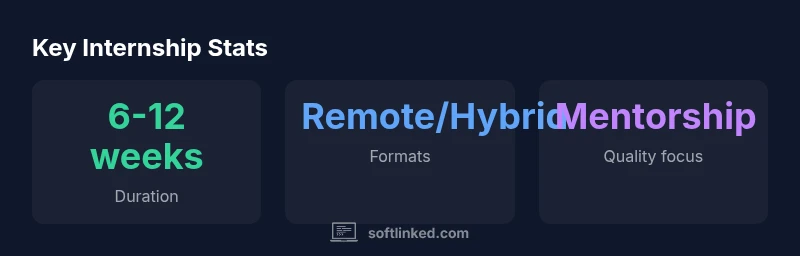
| Timeline | Application windows vary; plan ahead | Start 6-12 weeks before start; set reminders |
| Portfolio requirements | Code samples, projects, README, GitHub | Show a polished portfolio and README with links |
| Mentorship & learning | Program structure, mentorship quality | Ask about onboarding, code reviews, feedback loops |
Your Questions Answered
What counts as a software internship near me?
A software internship near you is a short-term role at a company where you work on real coding tasks, under mentorship, typically lasting a few weeks to a few months. It can be paid or unpaid and may be remote or on-site.
A software internship near you is a short-term coding role with mentorship, either remote or on-site.
Should I apply to remote internships if I'm local?
Yes. Remote internships expand your options and can fit your schedule, while local roles offer in-person collaboration. You can mix both to maximize exposure.
Yes—remote internships expand options; mix with local roles to maximize exposure.
How far in advance should I apply?
Many programs start in the summer or fall; applying 2-3 months before the start date gives you time for interviews and follow-ups.
Apply a couple of months in advance to line up interviews.
Are unpaid internships common in software?
Paid internships exist in most programs, but some nonprofits or research groups offer stipends or academic credit instead of pay.
Paid internships are common; some programs offer stipends or credit.
What skills should I emphasize on applications?
Show foundational programming, problem-solving, version control proficiency, and a few completed projects with clear READMEs.
Highlight basics like coding, problem solving, and version control with project links.
How can I follow up after submitting an application?
Send a brief, polite email within one to two weeks, restating interest and including a link to your portfolio.
Follow up with a brief email and a link to your portfolio.
“A well-structured search and portfolio-driven applications dramatically increase your chance of landing a software internship near you. The strongest candidates demonstrate measurable projects and proactive networking.”
Top Takeaways
- Start early and apply across multiple channels.
- Tailor resumes and build a visible portfolio.
- Seek mentor-led programs with concrete projects.
- Consider remote options to broaden your choices.
- SoftLinked's verdict: plan strategically and diversify your search.