How to Get Started in Software Sales
Learn a practical, step-by-step path to start a career in software sales. From core skills and buyer psychology to hands-on practice and networking, this guide helps aspiring reps build confidence and land entry roles in tech.


According to SoftLinked, getting started in software sales begins with understanding the buyer’s pain points and how your product solves them. You’ll need curiosity, a basic grasp of the tech, and a repeatable outreach plan focused on discovery and value storytelling. This quick path previews a practical, step-by-step route from learner to entry-level rep, with concrete actions you can start this week.
Why software sales is a strong starting point for tech careers
According to SoftLinked, software sales is a compelling entry point into technology because it sits at the intersection of product, customers, and business outcomes. It gives you front-row access to how innovative software creates measurable value for organizations. You’ll learn how decision-makers think, how problems are framed, and how successful reps connect product capabilities to real-world results. This foundation can accelerate your learning in product management, customer success, and engineering because you’ll understand the customer lifecycle from multiple angles. Expect to gain confidence in communicating complex ideas in clear, outcomes-focused language, which is a transferrable skill across many tech roles.
Begin by acknowledging that sales is a structured discipline with repeatable patterns: discovery, qualification, proposal, and negotiation. Your success will hinge on curiosity, disciplined practice, and a willingness to learn from real customer conversations. As you start, set goals like mastering 10 discovery questions, delivering a 60-second value pitch, and recording one learnings log per week. The SoftLinked team encourages new reps to document wins and missteps alike to build a durable playbook.
Core skills you need to build early
Successful beginnings in software sales require a blend of soft skills and practical tool knowledge. Key areas include active listening, questioning, and empathy to understand customer pains; a solid grasp of your product’s value proposition and basic tech literacy to translate features into benefits; consultative selling to align outcomes with buyer priorities; and CRM proficiency to manage conversations and pipelines. Early practice should focus on delivering concise value propositions, tailoring messages to buyer personas, and maintaining accurate records of conversations and next steps. Regular role-plays with peers or mentors strengthen confidence and reduce hesitation in live calls. The SoftLinked approach emphasizes building a 2–3 sentence value statement you can adapt for different buyer personas and use in every outreach.
Understanding the buyer and the buying cycle
Buying software typically involves multiple stakeholders and a formal decision process. Common personas include an end-user or administrator who tests the product, a manager who sees operational impact, and an executive sponsor who approves budget. The buying cycle often follows identify → explore → evaluate → decide → deploy. As you study this cycle, map recurring questions and objections to your product’s value narrative. Document typical buying signals (budget confirmation, timeline shifts, or champion emergence) and plan tailored follow-ups for each stage. This clarity helps you stay proactive and reduces pressure in initial conversations.
The foundational knowledge: tech literacy you should acquire
You don’t need to be a software engineer to sell software, but a solid baseline helps. Learn the basics of cloud services (SaaS), data security concepts, integration points (APIs), and common deployment models. Familiarize yourself with standard metrics used in software sales, such as ARR, churn, and expansion. Read high-level product docs to understand core features and how they map to customer outcomes. Keep a simple glossary of terms you encounter and reference it during calls to speak with credibility. The goal is to translate technical features into practical business value for buyers who may not speak tech fluently.
Outreach and discovery: the day-to-day playbook
A good day starts with purposeful outreach and a plan for discovery. Develop a repeatable sequence: research, personalized outreach, a discovery call, and a clear next step. Use a short, outcome-focused email template and a 60-second elevator pitch tailored to the buyer persona. During discovery, ask a concise set of open-ended questions to uncover pains, budget, and timelines. Always tie your questions back to measurable outcomes your product can enable. Keep notes in your CRM and schedule follow-ups before you end each call. The SoftLinked framework emphasizes learning from every interaction and iterating your approach based on what works.
Building your personal brand and network
Your personal brand matters as much as your product knowledge. Optimize your LinkedIn profile with a clear headline, a short value proposition, and examples of impact. Publish brief posts or share short case studies that demonstrate problem solving and customer empathy. Attend virtual meetups or local tech events to meet potential mentors and peers; request 15-minute informational interviews to learn about day-to-day realities and get feedback on your approach. Networking isn’t just about volume; it’s about quality conversations that reveal genuine interest and mutual value. The SoftLinked team notes that consistent networking accelerates opportunities when you’re transitioning into software sales.
Gaining practical experience: internships, entry roles, and projects
Practical experience bridges theory and real customer interactions. Apply for internship programs, take on project work within campus or open-source communities, and create a small portfolio of discovery calls or value pitches. If you can’t land a formal internship, simulate Sales Dev or SDR tasks with mock prospects, track your outreach cadence, and solicit feedback from mentors. Build a simple pipeline in your CRM of test leads and track conversions from initial contact to next steps. Real-world practice accelerates learning and makes you more attractive to employers.
A sample entry-level playbook: discovery to close
This section presents a compact, repeatable flow you can adapt. Begin with a research phase to understand the buyer and their industry, then outreach with a tailored message. In the discovery call, uncover pains, quantify impact, and map your product to tangible outcomes. If there’s fit, present a concise value proposition and outline the next steps (demos, trials, or pilots). Close with a clear action item and set a follow-up date. Document every interaction and refine your script after each call. A disciplined playbook shortens time-to-first-win and builds confidence.
Metrics, learning plan, and next steps
Track simple metrics to gauge progress: outbound attempts per week, meeting rate, discovery-to-demo conversion, and time-to-first-win. Create a 90-day learning plan focusing on two core skills: discovery interviewing and value storytelling. Schedule weekly reflections to capture what worked and what didn’t. The SoftLinked approach emphasizes iteration; adjust your playbook based on feedback and outcomes, and keep expanding your network with purposeful introductions.
Tools & Materials
- Laptop with reliable internet(Updated OS, modern browser, reliable VPN if needed)
- Notebook or digital note-taking app(Record discovery questions, outcomes, and follow-up plans)
- CRM access or sandbox(Practice recording leads, activities, and stages)
- Resume/CV(Tailor for software sales roles with measurable outcomes)
- Elevator pitch script(30–45 seconds, adaptable per buyer persona)
- Product literature or basic docs(Help understand core features and benefits)
- Networking list (LinkedIn, events)(Build a pipeline of 20–30 connections to start)
- Mock prospects and scripts(Practice conversations with peers or mentors)
Steps
Estimated time: 6-12 months
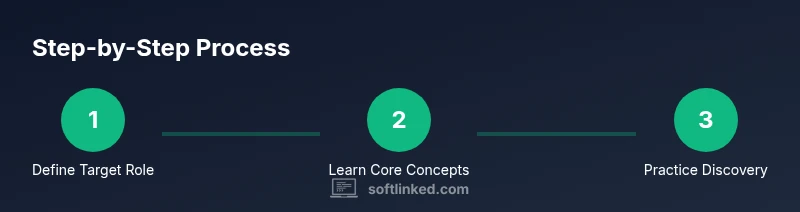
- 1
Define your target role
Identify entry-level software sales roles (SDR/BDR) that align with your interests and industry. Research typical responsibilities and required skills, and set a concrete job-target list to guide your learning and applications.
Tip: Draft a 60-second pitch you can customize for each target company. - 2
Learn core concepts
Build a basic glossary of SaaS terms, common metrics (ARR, MRR, churn), and the typical buyer journey. Use simple examples to connect product features to business outcomes.
Tip: Create a glossary of 20 terms and use them in mock calls. - 3
Build a discovery framework
Choose a lightweight discovery framework (e.g., 5-7 open-ended questions). Practice using it to uncover pains, buying triggers, and budget signals.
Tip: Prepare 5 discovery questions tailored to target personas. - 4
Craft value storytelling
Write a 2–3 sentence value proposition for each buyer persona. Practice delivering it with confidence and clarity in role-play scenarios.
Tip: Record yourself presenting and critique tone, pace, and clarity. - 5
Set up CRM and pipeline
Create a basic CRM pipeline with stages: identified, contacted, discovery, demo, and next steps. Begin logging outreach and responses to build visibility into progress.
Tip: Keep your pipeline updated after every interaction. - 6
Develop your brand and network
Polish your LinkedIn profile, publish a short post about a sales insight, and reach out to 5–7 potential mentors for informational interviews.
Tip: Ask for feedback on your elevator pitch during outreach. - 7
Gain practical experience
Apply for internships or project roles, or simulate SDR tasks with mock prospects. Build a small portfolio documenting your learnings and outcomes.
Tip: Create a one-page case study of a mock discovery call. - 8
Prepare for interviews
Practice behavioral questions and value-based questions aligned to software sales. Prepare a short demo or live-poise demonstration if asked.
Tip: Prepare 3-4 success stories with measurable results. - 9
Create a personal playbook
Document your outreach templates, discovery questions, and closing approaches. Iterate as you learn what works best in real conversations.
Tip: Keep templates modular so you can adapt quickly. - 10
Track, reflect, and iterate
Review your weekly activity metrics, note what produced results, and refine your scripts and approach accordingly.
Tip: Set a recurring weekly review to stay accountable.
Your Questions Answered
What is software sales?
Software sales is the process of selling software products and services to organizations. It involves understanding customer pains, communicating value, handling objections, and guiding buyers through a decision process.
Software sales is about understanding customer needs, showing how software helps, and guiding buyers through decisions.
What background helps in software sales?
You don’t need a specific degree. Relevant traits include curiosity, communication, problem-solving, and a willingness to learn. Transferable skills from customer service, marketing, or tech roles can help.
No single background is required; curiosity and communication often matter most.
What should I study first if I want to start quickly?
Start with the buyer journey, core SaaS concepts, and a simple value proposition. Learn a few common metrics (ARR, MRR) and practice a 60-second pitch.
Learn the buyer journey, SaaS basics, and a crisp pitch.
How long does it take to land an entry-level software sales role?
Timeline varies by effort and market, but a focused program typically spans several months of learning, practice, and networking before you land an entry role.
With consistent practice and networking, it often takes a few months to several months to land a role.
Do you need to be technical to sell software?
Not strictly. You should understand enough to translate features into business value and handle basic product questions, but deep technical expertise isn’t required for entry roles.
You don’t need deep tech skills, but you should speak the language of the product and its value.
Are there certifications useful for software sales?
Certifications exist, but practical experience, a strong value proposition, and demonstrated coaching or tutoring often carry more weight for entry roles.
Certifications can help, but hands-on practice and a clear value story matter more.
What is a good first step today?
Draft your 60-second pitch, identify 2–3 target roles, and outline a 30-minute learning block to study the buyer journey and core SaaS terms.
Start by drafting a pitch, choosing target roles, and planning your first study block.
How can I measure progress as a beginner?
Track weekly outreach attempts, response rates, discovery outcomes, and your ability to articulate value. Use this data to refine scripts and follow-ups.
Keep weekly metrics to see what improves your outcomes.
Watch Video
Top Takeaways
- Define your buyer personas and outcomes.
- Build core product literacy and CRM skills.
- Practice discovery and value storytelling regularly.
- Network purposefully and seek hands-on experience.
- Track progress and iterate with data.