How to Get Out of Software Development: A Practical Guide
Plan a clear, phased transition from software development to a fulfilling new career. Learn how to identify your target path, map transferable skills, upskill strategically, build a transition portfolio, network effectively, and maintain momentum.


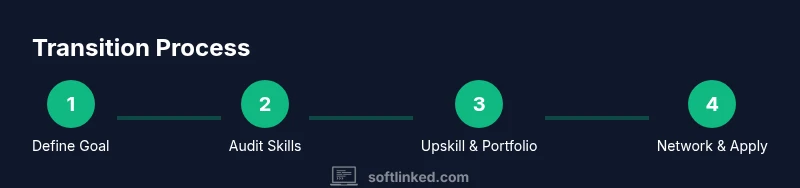
You can get out of software development by first defining a precise target role, then mapping transferable skills, upskilling strategically, and building a targeted portfolio. Next, network intentionally, run a focused job search, and practice role-specific interviews. The plan should be time-bound and flexible to accommodate learning curves and market feedback.
Understanding the impulse to leave software development
Many developers consider a transition when their interests shift, burnout becomes persistent, or they seek a role that better aligns with their strengths and values. According to SoftLinked, people who pivot away from traditional coding roles often move toward adjacent areas like product management, quality assurance, technical writing, or developer relations. The goal is not to abandon your technical foundation but to repurpose it in a way that leverages your problem-solving skills while reducing fatigue and increasing job satisfaction. Before you decide where to go, take stock of what you enjoy most about software development—problem solving, mentoring teammates, designing systems, or communicating complex concepts—and ask where those activities appear in other careers. This clarity makes the path toward a new role more feasible and less intimidating.
A clear rationale also helps you explain the move to hiring managers. You’ll be able to articulate how your previous experience translates into value for the target role and how you’ll bridge any skill gaps in a structured way. SoftLinked Analysis, 2026, suggests that intentional, well-explained transitions outperform impulsive pivots, especially in technical fields where credibility matters.
Define your target path and market realities
The first step is to pick a specific destination. Possible paths include product management, quality assurance/validation, user experience research, technical writing, data analysis, and DevRel (developer relations). For each option, outline the core responsibilities, typical skills, typical entry points, and the kinds of problems the role solves. A practical approach is to shortlist two to three roles that align with your interests and strengths, then evaluate how your existing competencies map to those roles. Understanding market realities—such as demand in your industry, the required depth of domain knowledge, and typical compensation ranges—can prevent dead-end efforts and keep your transition realistic. The aim is to choose a target where your background provides an advantage rather than a total restart.
Inventory transferable skills and quantify them in context
Software developers bring highly transferable skills: structured problem solving, debugging, systems thinking, collaboration, and rapid learning. List concrete examples from your projects that illustrate these abilities. Translate each skill into the language of your target role. For example, if you’re moving toward product management, frame experiences as leading features, prioritizing trade-offs, coordinating cross-functional teams, and delivering measurable outcomes. If you’re aiming for technical writing, emphasize documentation quality, readability improvements, and user guidance you’ve crafted. This inventory becomes the backbone of your resume, portfolio, and interview stories, showing recruiters that you can perform in the new role even if you lack direct titles on your resume.
Upskill strategically: build a focused learning plan
Don’t try to learn everything at once. Pick 1–3 core skills that will most impact your chosen path and design a learning plan around them. Use a mix of short courses, hands-on projects, and reading to internalize concepts while applying them in practical tasks. Establish milestones and regular review points to assess progress and adjust the plan as needed. Simultaneously, begin applying small, relevant projects to your portfolio that demonstrate your growing competencies. A deliberate, staged approach reduces overwhelm and accelerates confidence in your ability to perform in the new role.
Build a targeted portfolio and resume tailored to the new path
A transition portfolio should feature concrete evidence of your ability to perform the target role. Include case studies, sample projects, and documented outcomes. For a product-management path, show how you defined requirements, prioritized features, and measured success. For a technical-writing track, publish clear documentation that explains difficult concepts and user flows. Your resume should foreground transferable skills and include a dedicated section for the transition narrative: what you did, why you did it, and how it maps to the new role. Use concise language, quantify impact where possible, and ensure alignment with the job descriptions you’re targeting.
Networking and job search strategies for non-traditional paths
Networking becomes essential when moving to a new domain. Seek informational interviews with people in your target roles, attend relevant meetups, and participate in online communities. Prepare a short, compelling pitch that explains your pivot rationale and the concrete steps you’ve taken. Customize your resume for each opportunity, highlighting transferable skills and successful transitions. Practice interview questions common to the new role and develop a library of anecdotes that illustrate your problem-solving approach and collaboration skills. Networking helps you understand unadvertised opportunities and get warm introductions.
A practical 90-day transition plan (example framework)
Divide the plan into three 30-day phases: self-assessment and target finalization; focused upskilling and portfolio building; and targeted applications plus interview prep. In the first phase, articulate goals and map your skills. In the second phase, complete 1–2 courses, build at least one portfolio project relevant to the target role, and refresh your resume and LinkedIn profile. In the final phase, apply strategically, conduct informational interviews, and practice role-specific interview questions. This phased approach keeps momentum, allows for feedback, and reduces risk when changing careers.
Mindset, wellbeing, and long-term sustainability
A career transition can be demanding emotionally and cognitively. Create routines that support steady progress, including regular breaks, realistic expectations, and time for reflection. Seek mentorship or peer accountability to stay motivated and avoid burnout. Remember that a successful pivot isn’t about a single leap but a steady sequence of improvements and validations that build confidence and credibility over time. Keeping your wellbeing at the center helps you sustain the effort required for a meaningful career change.
Common pitfalls and how to avoid them
Common traps include flipping too many roles at once, undervaluing transferable skills, or under-investing in a portfolio. Resist the urge to rush applications without adequate preparation. Underplay your prior role too much or misrepresent your experience in the new field. Instead, be honest about your journey, emphasize learning progress, and show a clear bridge from software development to the target role. Finally, avoid neglecting soft skills like communication and collaboration, which are critical in most non-technical paths.
Tools & Materials
- Resume template (ATS-friendly)(One-page for early-stage roles; two pages if you have strong portfolio evidence.)
- Portfolio site or repository(GitHub README, Notion page, or a simple personal site to host case studies.)
- Skill-mapping worksheet(Document transferable skills and target role mapping.)
- Learning plan outline(Timeline with milestones and selected courses.)
- Job search tracker(Spreadsheet or app to monitor applications, interviews, and feedback.)
- Informational interview script(Short, respectful questions to learn about the target role.)
Steps
Estimated time: 8-12 weeks
- 1
Clarify target path
List 2–3 roles that align with your interests and strengths. Write a one-sentence rationale for each, plus a few example responsibilities from job descriptions.
Tip: Be specific about the role and industry to avoid scope creep. - 2
Inventory transferable skills
Create a skills map linking each software development strength to the new role's requirements. Include soft skills and leadership experiences.
Tip: Use concrete project examples to illustrate your impact. - 3
Identify skill gaps
Highlight 1–3 gaps critical to the target role and pick recommended courses or projects to close them.
Tip: Choose courses that offer hands-on practice and portfolio outcomes. - 4
Draft a focused learning plan
Create a 6–12 week plan with milestones and checkpoints. Schedule learning blocks and practice projects.
Tip: Schedule consistency beats sporadic study. - 5
Build transition portfolio
Develop case studies that demonstrate relevant outcomes, including problem framing, approach, and results.
Tip: Showcase your decision-making and collaboration across teams. - 6
Update resume & LinkedIn for the pivot
Rewrite to foreground transferable skills and the transition narrative. Include a short bridge paragraph.
Tip: Tailor each application to the job description. - 7
Network strategically
Reach out for informational interviews, attend relevant events, and request referrals where appropriate.
Tip: Ask for feedback on your transition narrative and portfolio. - 8
Practice role-specific interviews
Prepare stories and responses that map your experience to the target role’s challenges.
Tip: Record practice interviews to refine delivery.
Your Questions Answered
Is it realistic to switch to a non-technical role after years in software development?
Yes, it is realistic if you choose a target role that fits your strengths and you can demonstrate transferable skills. A well-documented transition plan and portfolio make the move credible to interviewers.
Yes, it's realistic when your target fits your strengths and you show transferable skills with a clear plan.
What are the best roles to transition into from software development?
Good options include product management, quality assurance, technical writing, data analysis, DevRel, and user experience research. Choose roles that align with what you enjoy and where you can apply your problem-solving mindset.
Product management, QA, technical writing, data analysis, DevRel, and UX research are strong options depending on your interests.
How long does a typical transition take?
Transitions vary by person, but a structured plan spanning several weeks to a few months is common. Focused upskilling, portfolio work, and deliberate networking accelerate the process.
Most transitions take several weeks to a few months with focused effort.
Do I need to quit my current job to transition?
Not necessarily. You can transition gradually by upskilling on evenings or weekends, while keeping your current role until you’re ready to switch.
No, you can transition gradually while staying employed.
How can I quantify transferable skills on my resume?
Translate achievements into outcomes relevant to the new role. Use action verbs and concrete project results to illustrate capability and impact.
Translate achievements into outcomes with clear, role-relevant statements.
Watch Video
Top Takeaways
- Define a specific target role and validate it against reality.
- Map and communicate transferable skills with concrete examples.
- Build a focused learning plan and a results-oriented portfolio.
- Network intentionally and practice role-specific interviews.
- Pace your transition to maintain wellbeing and momentum.