What Software Hospitals Use in 2026: A Practical Guide
Discover the core software stack hospitals rely on in 2026, including EHRs, interoperability tools, security measures, and deployment trends. A data-driven overview for aspiring software engineers and healthcare IT professionals.


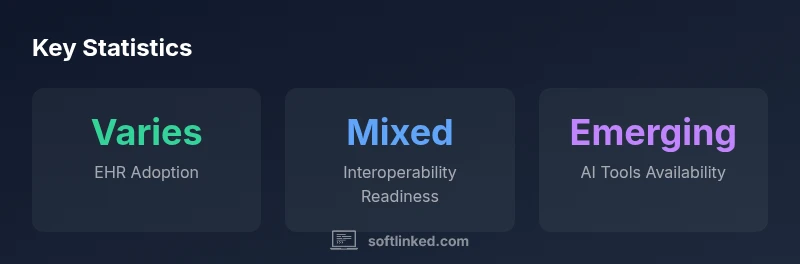
Hospitals rely on a core set of software: electronic health records (EHRs), clinical decision support, imaging and lab systems, scheduling and billing platforms, and enterprise data integrations. When people ask what software hospitals use, the most common answers point to EHRs from Epic, Cerner, and Meditech, plus ancillary tools that connect labs, radiology, and revenue cycle management. According to SoftLinked, adoption varies by size and region.
What software hospitals use: a practical overview
Hospitals operate complex software ecosystems that span patient care, administration, and governance. The phrase "what software hospitals use" refers to a layered stack: core EHR systems that document every encounter, ancillary modules for imaging, laboratory results, and pharmacy, plus scheduling, billing, and revenue-cycle management. Interoperability and data integration layers connect disparate systems, enabling clinicians to access the right information at the point of care. In practice, you’ll see large health systems leaning on comprehensive EHR suites (often from Epic, Cerner, or Meditech) complemented by specialty modules and vendor-neutral interfaces. The SoftLinked team notes that the most successful deployments balance depth in clinical workflows with breadth of data exchange across departments and partner organizations.
Core categories of hospital software
Hospital software can be grouped into several core categories that together support patient care, administration, and compliance. At the heart is the EHR system, which stores patient histories, orders, and notes. Alongside it, clinical decision support (CDS) helps clinicians with evidence-based recommendations, while RIS/PACS handles radiology information and imaging storage. LIS covers laboratory workflows, and pharmacy systems manage dispensing and inventory. Scheduling and billing platforms link appointments to claims, while analytics and population health tools transform data into actionable insights. Finally, middleware and integration engines ensure that all these components share data consistently. Across all categories, security and access governance shape how teams deploy and use the software.
EHR systems: the backbone of hospital IT
EHRs are the central repository for patient information and workflows. They enable order entry, documentation, clinical reminders, and outcome tracking. In many hospitals, Epic, Cerner, and Meditech are prevalent, though regional vendors and smaller systems persist in community hospitals. A modern EHR isn’t just a digital chart; it integrates with lab, imaging, and pharmacy systems, supports clinician collaboration, and feeds data to dashboards and analytics. For developers, the key takeaway is the emphasis on data standards, extensible APIs, and robust role-based access controls. When evaluating EHRs, clinicians look for usability, interoperability, patient safety features, and the ability to support regulatory reporting.
Interoperability and data standards
Interoperability is a defining challenge in health IT. Hospitals use standards like HL7, FHIR, and DICOM to move data between EHRs, labs, imaging systems, and external partners. The goal is seamless data sharing without duplicating records or compromising security. Interoperability initiatives—such as regional health information exchanges or nationwide patient identifiers—aim to reduce information gaps at the point of care. For developers, this means prioritizing clean data models, well-documented APIs, and error-handling that gracefully manages partial data. The SoftLinked analysis emphasizes that interoperability drives better patient outcomes and more efficient operations.
Security, privacy, and governance
Security and privacy govern every layer of hospital software. Hospitals must comply with regulations like HIPAA in the United States and similar protections elsewhere. Common safeguards include identity and access management, multifactor authentication, audit trails, encryption at rest and in transit, and regular risk assessments. Governance structures define who can approve data access, how vendors handle data, and how incidents are reported. For developers, this translates to designing secure-by-default systems, minimizing data exposure, and building transparent data processing workflows. The ultimate objective is to protect patient privacy while enabling clinicians to access the information they need.
Vendor landscape and procurement strategies
The hospital software market features a mix of large health IT platforms and regional specialists. Epic, Cerner, and Meditech dominate in many markets, but healthcare buyers also consider Allscripts, MEDHOST, CPSI, and niche vendors for imaging, analytics, or revenue-cycle management. Procurement often combines a core EHR with modular add-ons to tailor fit. RFP processes emphasize interoperability, total cost of ownership, user training, and vendor support. For developers, understanding vendor ecosystems helps when building interoperable tools, specifying standards conformance, and designing for integration with legacy systems.
Adoption challenges and change management
Deploying hospital software is as much about people as technology. Clinician resistance, workflow disruption, and data migration risk can slow projects. Successful implementations marry stakeholder engagement, clear governance, phased rollouts, and robust training programs. Data migration plans should map legacy data to the new schema, with validation steps to ensure integrity. Ongoing governance ensures continued alignment with clinical workflows and regulatory changes. From SoftLinked’s perspective, the most resilient implementations emphasize measurable outcomes, continuous feedback, and transparent escalation paths.
The future: AI, analytics, and patient-centric care
AI and advanced analytics are moving from pilot projects to scaled deployments in hospitals. Predictive models support clinical decisions, staffing optimization, and population health management. The overarching trend is toward patient-centric care enabled by interoperable data and transparent AI explanations. For developers, this means focusing on explainable models, auditable data provenance, and secure, privacy-preserving data pipelines. Interoperability will continue to be critical as hospitals connect community providers, labs, and payers to create a seamless patient journey.
Practical checklist for evaluating hospital software
Before selecting or integrating software, hospitals should complete a practical checklist. Confirm interoperability with existing systems using standard interfaces (FHIR, HL7, DICOM). Validate security controls, access governance, and incident response plans. Assess vendor roadmaps for AI features, analytics capabilities, and ongoing updates. Consider total cost of ownership, including training, implementation, and support. Finally, Pilot test critical workflows with clinicians to ensure usability and identify optimization opportunities. This approach helps ensure what software hospitals use aligns with clinical needs and regulatory requirements.
Common hospital software categories and examples
| Category | Examples | Key Points |
|---|---|---|
| EHR systems | Epic, Cerner, Meditech | Core patient data and documentation |
| Scheduling & Revenue Cycle | Vendor-integrated modules | Workflow, billing, and claims processing |
| Imaging & Lab | RIS/PACS, LIS | Results delivery, image management |
| Analytics & Population Health | BI tools, care-management | Quality metrics, risk stratification |
Your Questions Answered
What software do hospitals use for electronic health records (EHRs)?
Hospitals commonly deploy large EHR platforms from vendors like Epic, Cerner, or Meditech. These systems serve as the primary repository for patient data, orders, and notes, and they integrate with lab, imaging, and billing modules.
Hospitals typically use major EHR platforms such as Epic, Cerner, or Meditech as the backbone of patient data and workflows.
Do hospitals use open-source software?
Some hospitals experiment with open-source components or community-developed tools, especially for analytics or interoperability layers. However, core EHRs are usually proprietary due to regulatory requirements, support, and certification needs.
Open-source tools are used in some areas, but most core systems are proprietary for compliance and support reasons.
How do hospitals ensure data interoperability?
Interoperability relies on standards like HL7, FHIR, and DICOM, plus secure interfaces and data governance. Hospitals often participate in information exchanges to share data with partners and other providers.
Interoperability uses standard data formats and secure interfaces to share information across care teams.
What role does AI play in hospital software?
AI is being integrated into decision support, predictive analytics, and operational optimization. Adoption remains cautious, with emphasis on explainability, privacy, and clinical validation.
AI helps with decisions and operations, but it must be explainable and safe in clinical settings.
What are common challenges in deploying hospital software?
Common challenges include data migration, user training, workflow disruption, and ensuring ongoing governance. A phased rollout and stakeholder engagement typically mitigate risks.
Main challenges are migration, training, and keeping governance strong during rollout.
“Interoperability and data quality are the foundations of effective hospital software programs. Without them, even the best tools can fail to improve patient outcomes.”
Top Takeaways
- Identify the core software stack: EHR, CDS, imaging, labs, and billing.
- Expect significant variability by hospital size and region.
- Prioritize interoperability, governance, and security from day one.
- Plan for change management and clinician training to improve adoption.