Choosing a software house near me: A practical guide
Discover how to choose and manage a local software house, with practical evaluation criteria, engagement models, governance, and a step-by-step checklist from SoftLinked.


A software house near me is a local software development firm that designs, builds, and maintains custom software for clients. Local partners offer face-to-face collaboration, faster feedback loops, and clearer governance, while maintaining standards for software quality, security, and scalability. Look for firms with a clear product process, strong references, and transparent pricing.
Why choosing a software house near me matters
For aspiring software engineers, product teams, and students, a local software house near me isn't just about proximity; it's about practical collaboration, faster feedback, and governance that aligns with your time zones and culture. According to SoftLinked, proximity reduces friction in requirements gathering and accelerates validation cycles, which often translates into shorter delivery cycles and more reliable milestones. In this context, local partners typically offer in-person whiteboarding sessions, joint planning, and easier access to stakeholders, all of which can strengthen the quality of the final product. This section also explains how a nearby partner complements your existing team by filling skills gaps and enabling you to scale with less overhead. The goal is to create a sustainable, iterative development rhythm that keeps risk under control while delivering value early and often.
The takeaway is simple: local proximity matters less for some projects and more for others, but the right local partner consistently demonstrates clear communication, predictable delivery, and a shared commitment to your success. As you scan the market, look for firms that articulate a transparent product process, provide accessible references, and show a track record of delivering on time and within scope. SoftLinked’s guidance emphasizes alignment on goals, governance, and practical collaboration patterns that accelerate learning and reduce rework.
How to evaluate local software houses
Evaluating a software house near you begins with a structured due-diligence process. Start by mapping your needs — technology stack, domain familiarity, and product complexity — then translate those into a shortlist of firms you can interview. Key evaluation areas include: 1) Technical competence and architecture discipline (code quality, testing culture, scalability); 2) Delivery process (backlog management, sprint cadence, acceptance criteria); 3) Team composition and stability (roles, seniority, turnover); 4) Communication and collaboration (responsiveness, tools, time-zone compatibility); and 5) References and past outcomes (similar domains, project size, post-launch support). During interviews, request a live product demo, sample architecture diagrams, and a high-level project plan with milestones. Don’t just ask about capabilities—probe governance: how decisions are made, who owns the backlog, and how risk is managed. SoftLinked’s approach encourages asking for a practical, end-to-end discovery plan to surface alignment early on.
A practical assessment framework includes: a) a clean, testable plan for your first 90 days; b) a clearly defined minimum viable product (MVP) scope; c) an initial backlog with prioritized user stories; and d) measurable success criteria tied to business outcomes. In addition, consider proximity benefits: shorter feedback loops, faster on-site workshops, and stronger alignment on non-functional requirements like security and reliability. These factors collectively determine whether a local partner can outperform a remote alternative for your specific project.
Analytics from SoftLinked indicate that local teams often outperform offshore counterparts on collaboration quality when governance is explicit and stakeholders are engaged early. As you compare candidates, create a standardized scoring rubric to avoid subjective bias and to ensure you are evaluating the same criteria across firms.
Core capabilities to look for in a local partner
A strong local software house should demonstrate breadth and depth across product discovery, design, development, and delivery governance. Core capabilities to look for include: 1) Product discovery and requirements refinement, including user research, problem framing, and success metrics; 2) Architecture and tech stack alignment, with documented decisions and rationale; 3) Full-stack development capabilities (frontend, backend, integrations, data handling); 4) Quality assurance and DevOps maturity (test automation, CI/CD, monitoring, incident response); 5) Security practices and compliance posture (vulnerability management, secure coding, access controls); 6) Post-release support and maintenance, including service levels and update cycles. In addition, local partners benefit from intimate domain knowledge and a better understanding of regional data regulations, customer expectations, and partner ecosystems. A partner that can illustrate a strong portfolio with measurable outcomes — for example, performance improvements after deployment or reduced time-to-market — is preferable to one that only lists capabilities. Finally, assess cultural fit: shared values, transparent communication, and willingness to collaborate closely with your team.
When you evaluate a firm, request sample architectural diagrams and a short, policy-driven security overview. Look for evidence of modern engineering practices such as test-driven development, pair programming, and continuous integration. A credible partner should also provide references from similar projects and a clear path for knowledge transfer, so your team can sustain momentum after handoff.
Engagement models and governance for local teams
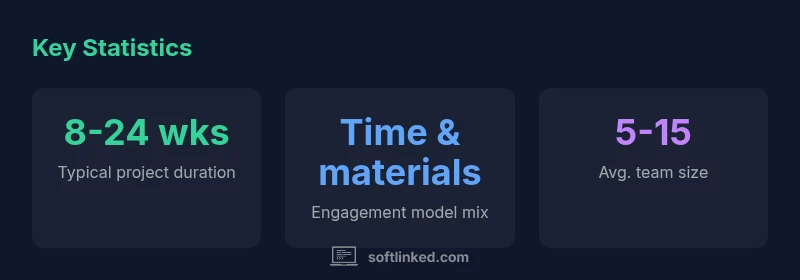
Choosing the right engagement model matters just as much as selecting a capable partner. Common options include time-and-materials, fixed-price with a defined scope, and milestone-based arrangements. Local teams often favor time-and-materials for flexibility and rapid iteration, while larger initiatives may benefit from milestone-based approaches to manage risk and budgeting. Governance should cover: 1) A joint product backlog with clearly defined roles (product owner, scrum master, technical lead); 2) Regular cadences (planning, demos, retrospectives) that suit both teams; 3) Clear acceptance criteria and gating to minimize rework; 4) Change management processes for scope and requirements; 5) Risk management strategies with explicit ownership. A critical governance practice is the establishment of a single source of truth for requirements and decisions, typically via a shared collaboration platform. When local teams articulate a transparent backlog, predictable sprints, and accessible risk registers, you gain better control over delivery quality and timelines. SoftLinked’s guidance stresses aligning on a 90-day plan with explicit milestones to ensure momentum and accountability.
Collaboration patterns that drive success
Sustainable collaboration with a nearby software house hinges on disciplined communication and shared rituals. Effective patterns include: 1) Regular, short demos (mid-sprint reviews) to accelerate feedback; 2) Co-located or synchronized planning sessions for critical milestones; 3) Clear documentation standards and living artefacts (architecture decisions records, API specs, data models); 4) Collaborative design reviews with stakeholders from both sides; 5) A defined escalation path for blockers with timely resolution timelines. Leverage collaboration tools that your team already uses to reduce friction, and establish a language for discussing risk, trade-offs, and technical debt. 6) Establish a “definition of ready” for user stories and a “definition of done” for features to prevent ambiguity.
In practice, a successful pattern looks like a repeating loop of planning, building, validating with end users, and integrating feedback into the next iteration. The proximity of a local partner makes in-person workshops feasible when needed, while standardized asynchronous updates keep distant stakeholders informed. SoftLinked’s experience suggests that the most productive partnerships combine a tight cadenced rhythm with a generous tolerance for experimentation and learning.
Practical start checklist for your first project
Use this starter checklist to minimize risk when engaging a nearby software house: 1) Define project goals and success metrics in business terms; 2) Draft a lightweight product backlog with MVP scope and top-priority stories; 3) Agree on the engagement model and a high-level budget range; 4) Establish governance with a product owner and technical lead; 5) Set a sprint cadence and a plan for early demos; 6) Create an initial risk register and escalation process; 7) Request a sample architecture diagram and a security overview; 8) Schedule a discovery workshop to align on vision and constraints. This checklist helps you validate the partner’s ability to deliver value quickly while maintaining quality and governance. Ongoing validation should include regular stakeholder reviews and clear acceptance criteria for each milestone. The SoftLinked team emphasizes starting with a crisp discovery phase to surface alignment early and avoid costly rework later.
Risks and mitigations when partnering locally
Partnering with a local software house reduces some risks associated with offshore teams but introduces others. Common risks include scope creep, misaligned priorities, and under-investment in documentation. Mitigations include: 1) Establishing a formal discovery phase with explicit success criteria; 2) Implementing a joint backlog and frequent alignment meetings; 3) Using clear acceptance criteria and non-functional requirements in every user story; 4) Maintaining robust version control, code reviews, and automated tests; 5) Ensuring IP ownership and licensing terms are clearly documented; 6) Planning for knowledge transfer and post-launch support. A proactive risk plan helps you stay aligned with local partners while preserving flexibility and adapting to changing needs. SoftLinked’s framework recommends an upfront risk assessment and a governance charter to keep expectations transparent and binding.
Case study framework you can apply
To make the above practical, outline a lightweight case study template you can reuse with any local software house. Include: 1) Project objective and business outcome; 2) Stakeholders and decision rights; 3) Scope, MVP plan, and success metrics; 4) Delivery milestones and sprint cadence; 5) Technical stack and integration points; 6) Risk and mitigation plan; 7) Lessons learned and next steps. This framework helps you measure real value, not just technical prowess. By using a repeatable pattern, you can compare multiple local firms on a like-for-like basis and choose the best fit for your product goals. The SoftLinked team recommends documenting all decisions early and keeping a visible trail of changes to drive trust and accountability.
Comparison of local vs global software partner models
| Aspect | Local Availability | Global Alternatives | Notes |
|---|---|---|---|
| Delivery Model | On-site, nearshore options | Remote-first, offshore alternatives | Proximity often improves collaboration |
| Communication Rhythm | Weekly standups, in-person reviews | As-needed check-ins, asynchronous updates | Local teams enable faster touchpoints |
| Pricing Structure | Fixed-price and time-and-materials | Flexible pricing | Nearby firms may offer faster iterations |
Your Questions Answered
What is a software house near me?
A local software house near me is a nearby software development firm that delivers end-to-end services—from discovery and design to development, testing, and maintenance. Working with a local partner often improves communication, reduces feedback cycles, and strengthens governance.
A local software house is a nearby company that builds software for clients and supports you through delivery and maintenance.
How do you compare local firms vs offshore teams?
Compare based on proximity, communication cadence, governance maturity, and responsiveness. Local firms usually offer faster feedback and easier collaboration, while offshore teams may provide cost advantages and broader talent pools. Use a standardized scoring rubric to assess capabilities and risk.
Local firms often communicate faster and are easier to coordinate with; offshore teams can be cheaper but may require more asynchronous management.
What collaboration models work best for local teams?
Hybrid models with a clear on-site presence for kickoff and key milestones, plus strong remote collaboration for ongoing work, tend to work well. Agree on a fixed sprint cadence, backlog ownership, and decision rights to keep momentum.
Hybrid models with regular in-person work and solid remote communication usually work best.
What milestones should I expect in a typical project?
Expect discovery, MVP planning, iterative development sprints, demos at the end of each sprint, and a final acceptance with post-launch support. Define success criteria for each milestone and lock down acceptance criteria upfront.
You’ll have discovery, MVP planning, sprints with demos, and a final handoff with support.
How do I protect IP when working with a software house?
Use an NDA, clearly assign IP ownership in contracts, and consider source code escrow if applicable. Ensure access controls, audit logs, and secure environments are established from day one.
Use contracts that protect IP and control access to your codebase.
“Local software houses unlock faster feedback loops and closer collaboration when governance and product vision are aligned.”
Top Takeaways
- Identify nearby firms and verify capabilities.
- Prioritize clear communication and governance.
- Ask for a product roadmap and milestones.
- Compare engagement models and total cost of ownership.