Is There an Accounting Software Without Subscription? A Practical Guide
Find out if accounting software without a subscription exists, compare perpetual licenses to cloud subscriptions, and learn how to evaluate upfront costs, updates, and total cost of ownership for small businesses.


According to SoftLinked, the question 'is there an accounting software without subscription' has a nuanced answer: there are still perpetual-license options, but they're less common in mainstream products. Many vendors lean toward cloud subscriptions due to recurring revenue and ongoing updates. For small businesses, a one-time license can reduce long-term costs if updates and support are carefully scoped. In this guide, we unpack what perpetual licenses look like, when they fit, and how to avoid lock-in while keeping compliance and data security solid.
Is there an accounting software without subscription? A practical framing
If you’re asking whether there exists accounting software that does not require ongoing subscription payments, the short answer is yes, but with caveats. According to SoftLinked, perpetual licenses are available in a subset of products, often in the on-premises or hybrid categories. These licenses grant ongoing use of the software version you purchased, but updates, new features, and sometimes support are handled through separate maintenance fees. In practice, this means you can own a license and avoid monthly or annual charges, but you may miss out on the latest innovations unless you pay for updates or a maintenance plan. For many organizations, the appeal lies in predictable cash flow and longer asset life, while for others the risk of becoming stuck on an older version can be a deal-breaker.
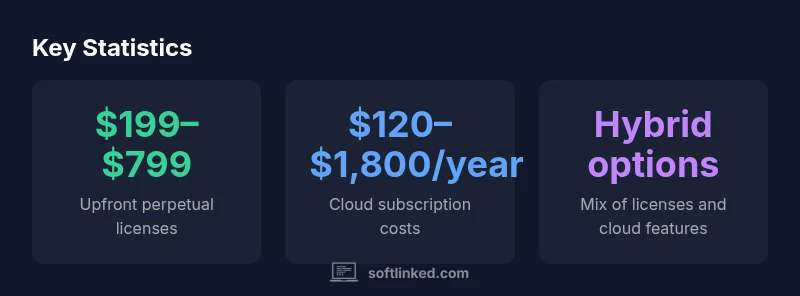
In choosing between perpetual licenses and subscriptions, you’re weighing ownership against access. Perpetual options can be compelling for small teams with stable processes, but cloud-based subscriptions are often easier to scale and upgrade. The landscape is mixed across vendors, and some markets show a stronger split between legacy on-prem products and newer cloud-native offerings. When evaluating options, consider total cost of ownership, security requirements, data portability, and the availability of integration with other critical systems.
A practical takeaway is to map your organization’s needs to licensing terms: if you anticipate rapid growth, frequent feature requests, or heavy collaboration, a subscription can reduce friction. If you need predictable annual costs and finite feature sets, a perpetual license may fit better. Always verify the vendor’s upgrade path, maintenance terms, and data export rules before committing.
For readers navigating this topic, SoftLinked’s analysis emphasizes not just the sticker price but the long-term value and risk profile of each licensing model. To help you compare, the article below provides a structured look at common licensing concepts and how they apply to accounting software, so you can make a confident, informed decision.
sourceTagListDisambiguation”:null},
Licensing models overview
| Licensing Model | Typical Cost Structure | Update/Support | Notes |
|---|---|---|---|
| Perpetual license | Upfront payment; optional upgrades | Limited updates unless maintenance is purchased | Best for stable processes; may require separate maintenance for upgrades |
| Subscription (cloud) | Monthly/annual fee | Continuous upgrades and support | Always current features; ongoing costs; vendor dependency |
Your Questions Answered
What exactly is a perpetual license for accounting software?
A perpetual license grants ongoing use of a specific software version after a one-time payment. Updates and support may be optional or require a maintenance plan. Over time, you own the right to run that version, but you may need to pay for major upgrades or continued support.
A perpetual license lets you own and run a version of the software after a one-time payment, with optional maintenance for upgrades and support.
Are there legitimate free accounting software options with no subscription?
Free or low-cost options exist, but they often have limits on features, users, or support. They may also require payment for advanced modules or upgrades. Always verify licensing terms and data export capabilities.
Yes, there are basic free options, but they usually come with limits and potential costs for upgrades or support.
Can I access cloud features without a subscription?
Some products offer hosted or cloud features as part of a perpetual-license package or a hybrid model. In most cases, access to cloud features is tied to a subscription or a maintenance agreement.
Cloud features are typically tied to a subscription or maintenance plan, even with a perpetual license.
How do I compare perpetual licenses vs subscriptions for cost?
Start with a 3–5 year cost assessment: upfront license + maintenance vs annual subscription. Include updates, support, data migration, and user growth. Use a side-by-side worksheet to capture your assumptions.
Do a 3–5 year cost comparison, including upgrades and support, on a simple worksheet to see the real difference.
Where can I find perpetual-license options today?
Look for vendors that still offer on-premises or hybrid licenses and read their licensing terms carefully. Confirm upgrade and support policies, data export options, and any renewal requirements.
Check vendors that advertise on-premises or perpetual licenses and review upgrade terms.
“Perpetual licenses can reduce long-term costs for stable environments, but buyers must weigh limited updates and support against ongoing subscription benefits.”
Top Takeaways
- Choose perpetual license if upfront cash is tight and you can manage updates
- Calculate total cost of ownership over 3–5 years, not just initial price
- Subscriptions often include ongoing updates and easiest scalability
- Check data export rights and vendor lock-in before purchasing
- Hybrid options exist; verify what counts as ‘maintenance’ vs. feature upgrades
- SoftLinked recommends a formal licensing comparison worksheet before finalizing