How Software Depreciation Works for Tax
Learn how software depreciation works for tax, including expensing, depreciation, and SaaS treatment. A practical, step-by-step guide for developers, students, and professionals seeking clear guidance.


How software depreciation works for tax: In most cases, software purchased for business use is treated as a depreciable asset or amortizable cost, while cloud-based subscriptions are expensed as operating costs. You may elect to expense under Section 179 and/or apply standard depreciation rules to the remaining cost, with distinctions for custom-developed software. Cloud-based software costs are typically operating expenses. Consult a tax professional for specifics.
Overview of how software depreciation works for tax
According to SoftLinked, understanding how is software depreciated for tax begins with the basic idea that software costs fall into one of three buckets: purchased software that you own, software licenses that allow ongoing use, and software-as-a-service subscriptions that you use but do not own. For internal-use software, many tax codes allow capitalization and depreciation or amortization over the software’s useful life. SaaS and other hosted software are typically treated as operating expenses, deducted in the year you incur them. The choice between depreciation and expensing depends on ownership, cost, and expected benefit duration. A critical distinction is whether the software was developed in-house or acquired from a vendor, as internally developed software may follow different capitalization rules than off-the-shelf solutions. In practice, you should start with a clear asset inventory—list each item, its owner, purchase date, and expected life—and then map each item to the applicable tax rule. This clarity helps avoid misclassifications that could trigger audits or lost deductions. The SoftLinked team emphasizes aligning your records with the tax year you report so you can optimize deductions across multiple years.
This article expands on those basics with a practical framework you can apply regardless of whether you’re a student, an aspiring engineer, or a working professional.
Types of software and their tax treatment
Software can be categorized as purchased, licenses with perpetual rights, cloud-based subscriptions, and custom-developed software. Purchased software and perpetual licenses are typically capital assets that can be depreciated or amortized. Cloud-based subscriptions generally represent ongoing operating expenses, deductible in the year incurred, and not capitalized. Custom-developed software may have a different path, with costs attributed to research and development or capitalization of software development costs depending on the stage of development and intended use. In addition, if software is developed for internal use, you may need to track costs by project and determine whether to capitalize or expense according to internal policies. The decision influences both your current tax return and future years’ deductions.
Understanding these categories helps you apply the right tax treatment to each asset and avoid misclassifications that could complicate returns or trigger reviews.
Expensing vs depreciation: a practical decision framework
Start by answering three questions: Do you own the software or merely rent it? Is the software used for business purposes, and if so, to what extent? What is your expected benefit horizon? Based on the answers, you may decide to expense the cost immediately for SaaS, royalty-free licenses, or short-life software, or to capitalize and depreciate/amortize longer-life software. Where allowed, consider Section 179 expensing as a first step to reduce current-year tax liability; any remaining cost may be amortized or depreciated using the appropriate recovery period. Always consider bonus depreciation as a potential option if eligible. Document your decision and maintain a depreciation schedule or amortization table to ensure you track basis and recoveries accurately across years.
This framework helps ensure consistency and makes it easier to communicate decisions to your accountant or tax advisor.
SaaS and cloud subscriptions: a nuanced path
Software-as-a-Service and similar hosted tools do not usually result in a depreciable asset because you do not own the software. Instead, treat these costs as ordinary business expenses in the year they are incurred. If you receive a license with ongoing updates that you control, you may have a capitalization decision depending on whether you hold a tangible asset or a right-to-use. In general, SaaS is deductible as an operating expense, but you should keep contracts, renewal dates, and usage data organized to justify the classification in case of an audit.
Careful separation of SaaS vs licensed software reduces the risk of misreporting and helps ensure you’re taking full advantage of allowed deductions.
Documentation, records, and compliance
Maintain detailed records for every software asset: invoices, licenses, contracts, renewal dates, and usage data. Create a depreciation or amortization schedule that shows the cost basis, method, recovery period, and annual deductions. Reconcile these records with your tax return and financial statements to avoid mismatches. For internal-use software, ensure you document milestones such as project start, capitalization decisions, and stage gate reviews. If you change classification later, adjust your schedule prospectively and properly disclose it in your tax filings.
Good recordkeeping supports audit readiness and smoother year-to-year reconciliation.
Common scenarios and pitfalls
Misclassifying cloud subscriptions as depreciable assets can inflate deductions and trigger audits. Failing to separate SaaS costs from purchased software can complicate tax reporting. When software is used partially for business, allocate costs accordingly and apply the correct method. Finally, stay current with IRS guidance, as rules around software depreciation and expensing can evolve with year-to-year changes.
A careful, consistent approach reduces risk and improves your ability to defend deductions if questioned by tax authorities.
Tools & Materials
- Accounting records and ledgers(Maintain a separate ledger for software assets, SaaS invoices, and licenses.)
- Tax guides (Publication 946)(Reference IRS depreciation rules and Section 179 guidance.)
- Invoices and contracts for software(Keep receipts and renewal terms for all software expenditures.)
- Spreadsheet or depreciation software(Track cost basis, method, and recovery period.)
- Ledger access to purchase dates(Ensure correct year of acquisition for reporting.)
Steps
Estimated time: 60-120 minutes
- 1
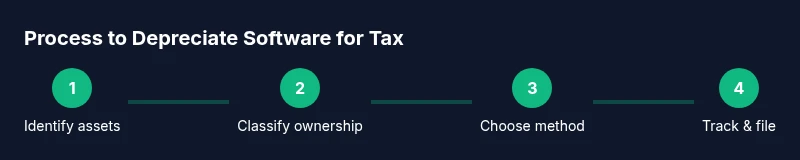
Identify software assets and ownership
Create a complete inventory of all software used by the business, noting whether ownership rests with the company, a client, or a third party. Include purchased licenses, perpetual rights, and SaaS access. Capture vendor, purchase date, renewal cadence, and any updates or upgrades.
Tip: Start with your last fiscal year’s asset list and add new items as they’re acquired. - 2
Classify assets by ownership and use
Separate assets into categories: owned software (capital asset), perpetual licenses, SaaS subscriptions (operating expense), and internally developed software. This classification determines whether you depreciate/amortize or expense now.
Tip: Avoid lumping all software costs into a single category to prevent misreporting. - 3
Decide between expensing and depreciation
Assess whether to expense under applicable deductions (such as Section 179 for eligible costs) or to capitalize and depreciate. Consider the asset’s expected life, how long you’ll benefit from it, and any applicable limits.
Tip: Section 179 and bonus depreciation rules vary by year; verify current guidance. - 4
Set up a depreciation schedule
Create a schedule detailing the cost basis, method, and recovery period for depreciable assets. Update annually with additions, disposals, or changes in use.
Tip: Link the schedule to your general ledger to ease year-end reporting. - 5
Handle SaaS costs correctly
Treat cloud subscriptions as operating expenses unless you have a right-to-use asset meeting capitalization criteria. Maintain contracts and renewal dates to justify classification.
Tip: Keep usage data and renewal terms handy for audits. - 6
Document, review, and file annually
Review asset classifications and schedules at least once per year. Align tax filings with your depreciation or expensing strategy and report any changes to your tax advisor.
Tip: Set a recurring reminder to review software assets mid-year.
Your Questions Answered
Is cloud software depreciation possible or allowed?
Cloud software is typically treated as an operating expense because you don’t own the software. It is generally not depreciated. Some hybrid arrangements could be capitalized if you obtain a right-to-use asset under very specific conditions. Always verify with current IRS guidance.
Cloud software is usually expensed, not depreciated, unless you have a special ownership arrangement. Check your contract and consult a tax professional if needed.
How does in-house software development affect depreciation?
Costs incurred during software development for internal use can sometimes be capitalized and amortized once the software is ready for intended use. Other phases may be expensed as incurred. The rules depend on the development stage and your accounting policies.
Development costs may be capitalized or expensed depending on the stage and use of the software. Talk to your accountant.
What is Section 179, and how does it apply to software?
Section 179 allows businesses to deduct the cost of certain qualifying property in the year it’s placed in service, rather than capitalizing and depreciating it over time. Software can qualify if it meets the criteria and limits in the tax code for the given year.
Section 179 lets you deduct some software costs now, subject to limits. Consult IRS guidance.
Can software used partially for business be deducted?
Yes, you allocate the deduction based on the percentage of business use. If you own the software, depreciation or expensing is proportionate to business use. If SaaS is used, allocate usage similarly for accuracy.
If you use software for both business and personal purposes, allocate costs accordingly.
Do depreciation rules vary by country?
Yes. Tax depreciation methods and rules vary by jurisdiction. Always consult local tax guidance or a qualified local tax professional to ensure compliance.
Tax rules vary by country; get local guidance for software depreciation.
Watch Video
Top Takeaways
- Classify software early to choose depreciation or expensing.
- SaaS is usually an operating expense, not depreciation.
- Keep complete purchase and license records for accuracy.
- Use Section 179 expensing where eligible to reduce current-year deductions.
- Regularly review contracts and renewals to optimize deductions.