Where to Install Software on Linux: A Practical Guide
Learn where to install software on Linux, comparing system-wide and user-specific paths, plus package managers, AppImage, and source builds for secure, maintainable setups.


This guide explains where to install software on Linux, comparing system-wide locations like /usr, /opt, and /bin with user-specific options such as ~/.local. It covers package managers (apt, dnf, pacman), binary distributions, AppImage and AppImageKit, and when to build from source. You’ll learn best practices for maintainability and security. This quick snapshot helps you choose the right path for your environment.
Where to install software on Linux
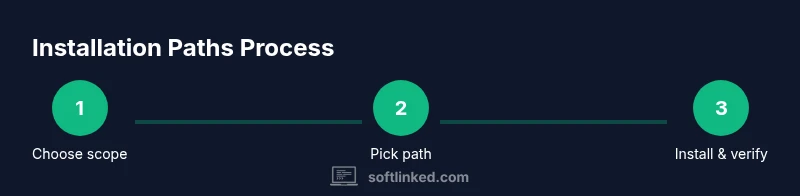
According to SoftLinked, understanding where Linux installs live helps developers and students set up clean, maintainable environments. The files that comprise installed software fall into two broad categories: system-wide installations that affect all users, and user-specific installations that belong to a single account. System-wide software typically resides in standard directories such as /usr and /opt, while user-specific tools may live under ~/.local or ~/bin. Knowing these locations guides you when configuring PATH, setting permissions, and deciding how to keep the system tidy as you bring new tools online. The choice between system-wide and user-specific paths often hinges on the goal: a shared development workstation demands centralized management, whereas a personal machine favors quick experiments and per-user customization. In practice, you’ll balance stability, security, and maintainability as you decide where to install each tool. This section lays out practical decision criteria to help you pick the right installation path for every tool you add to your Linux environment.
Understanding the Linux filesystem layout
Linux uses a Filesystem Hierarchy Standard (FHS) that organizes software and data into predictable places. Core system binaries commonly live in /bin and /usr/bin, while essential libraries are under /lib and /usr/lib. Software you install from the distribution’s package manager typically lands under /usr. For software you compile or install from third-party sources, /usr/local is the traditional home to prevent overwriting the OS-provided files. The /opt directory is often used for large, self-contained applications that don’t fit neatly into the standard package layout. User-specific applications can go into ~/.local and corresponding bin entries in ~/.local/bin. Understanding these conventions helps you predict where new files will appear and how they’ll interact with system updates, PATH, and environment variables. When planning a setup, sketch a small map of these directories to visualize how your tools will fit into the system over time.
System-wide vs user-specific installations
Choosing between system-wide and user-specific installations affects access, security, and maintenance. System-wide installations require elevated privileges and place binaries in shared directories like /usr and /opt, making tools available to every user. User-specific installations avoid root access and keep applications confined to your home directory, typically under ~/.local or ~/bin. This separation matters for shared workstations, where you want predictable updates and minimal risk to other users. A practical rule: install core tools system-wide when they’re safe for all users and align with the distro’s packaging policies; use user-local paths for experimentation, custom builds, or tools that you don’t want to disturb the rest of the system. Keeping a clear boundary between these scopes helps with upgrades, rollbacks, and security auditing.
Package managers and repositories
Package managers are the safest, most maintainable way to install software on Linux. They fetch packages from curated repositories, verify signatures, and place files in controlled locations. Common examples include apt on Debian/Ubuntu, dnf on Fedora, and pacman on Arch. These tools install software into standard system directories like /usr and /lib, and they update the package database to reflect current versions. For user-specific installations, you can still rely on the package manager but target local prefixes or build-from-source options that keep changes out of system areas. App repositories also support priority policies, enabling you to prefer stable releases or newer, bleeding-edge builds. The takeaway is to favor the distro’s package manager where possible for consistency, security, and maintainability, while recognizing when alternatives (packaged binaries, AppImage, or building from source) are appropriate.
Installing software from source vs binaries
Binary packages from official repositories or trusted third-party sources simplify maintenance, dependencies, and updates. Building from source gives you customization, optimization, and the ability to install software not present in official repos. If you choose source builds, direct the installation to /usr/local (the standard location for locally compiled software) to avoid clashing with system-managed files. Always ensure you have the required development tools and libraries, and verify the build instructions for your distro. Source builds can be powerful, but they require extra care with dependencies, compatibility, and future updates. When in doubt, start with the package manager and move to source builds only for specific tooling or performance goals.
Installing software in containerized environments or sandboxes
Containerized and sandboxed approaches (such as AppImage, Flatpak, Snap, or Docker) change where software resides, often isolating it from the host filesystem. AppImage and AppImageKit packages run as standalone executables and don’t require installation into system directories. Flatpak and Snap place apps in dedicated runtime sandboxes and use managed directories under /var or ~/.local/share, while Docker containers encapsulate software entirely. These options are ideal for testing, selecting a non-standard runtime, or ensuring reproducible environments without altering core OS paths. When using sandboxes, you’ll still want to understand underlying host PATH and permissions to access shared resources like X11/Wayland sockets or GPU devices. Choose containerized or sandboxed installs when you need isolation, reproducibility, or quick rollbacks.
Security and maintenance considerations
Security starts with trusted sources and verified signatures. Always prefer official repositories or vendor-provided binaries, and enable automatic security updates where possible. When you install from source, verify checksums and PGP signatures, and document any manual changes for future maintenance. Regularly audit PATH and LD_LIBRARY_PATH to ensure the intended versions of tools are used and not overridden by a rogue binary. Maintain a clean separation between system-wide files (managed by your package manager) and user-local installations (which you can back up or reset more easily). Finally, establish a predictable update workflow: rely on distro updates for core system software, and isolate experimentation in user-local paths or containers to minimize impact on the rest of the system.
Troubleshooting common installation path issues
Path and permission problems are common when mixing system-wide and user-local installs. If a command isn’t found, check PATH and ensure the binary directory is included, such as /usr/bin or ~/.local/bin. If a program runs but shares libraries fail to load, verify LD_LIBRARY_PATH or rely on the system’s dynamic linker configuration. Permission errors may require adjusting user groups or executing with sudo when appropriate. When you’re uncertain about where a file belongs, use tools like which, whereis, which, or dpkg -L to locate installed files and confirm their install location. Clear labeling and documented steps help prevent conflicts during future updates or upgrades.
Best practices and quick-start checklist
- Prefer the distro’s package manager for most software to ensure consistency and security.
- Reserve /usr/local and /opt for locally installed or third-party apps not managed by the distro.
- Use AppImage, Flatpak, or Snap for sandboxed or isolated apps, especially when packaging is unavailable.
- Build from source only when necessary, directing installs to /usr/local to avoid overwriting system files.
- Maintain clear documentation of where each tool resides and how updates are handled.
- Regularly review your PATH and security settings to minimize risk.
Tools & Materials
- A computer with Linux installed(Prefer a mainstream distro (Ubuntu/Debian, Fedora, Arch) for broad package support)
- Internet connection(Needed for package repositories, updates, and downloading installers)
- Terminal access (shell)(Sudo/root privileges may be required for system-wide installations)
- Text editor(For editing configs or build scripts (e.g., nano, vim, code))
- Knowledge of the distro’s package manager(Examples: apt, dnf, pacman; learn commands like update and install)
- SSH client (optional)(Useful for remote installations or server management)
- USB drive or external storage (optional)(Helpful for offline installs or backups)
Steps
Estimated time: 45-75 minutes
- 1
Assess your installation goal and environment
Define whether the tool should be available system-wide or only for your user. Consider security requirements, maintenance expectations, and whether the tool is core to the OS or a temporary experiment. Clarifying goals upfront guides the entire process.
Tip: Document intent and expected users before starting. - 2
Identify the appropriate install location
Decide between system-wide locations like /usr or /opt and user-local paths such as ~/.local. Factor in how updates will be handled and whether other users need access to the tool. This choice affects PATH, permissions, and future maintenance.
Tip: If unsure, default to /usr for system-wide or ~/.local for per-user installs. - 3
Update package index and install from repositories
Use your distro’s package manager to refresh the repo index and install the software. This ensures dependencies are resolved and files land in standard locations. Prefer this method for stability and security.
Tip: Always run update/refresh before installing new packages. - 4
Install via binaries or AppImage when available
If official binaries exist, install them through the package manager or official installers. For portable apps, consider AppImage that runs without root changes. These options minimize disruption to the system’s structure.
Tip: Verify the source and checksums of any downloaded binary. - 5
Consider building from source when needed
If a tool isn’t in repositories or you need customization, download sources and configure the prefix to /usr/local. Ensure you have build dependencies installed and follow the project’s instructions. Be prepared for manual maintenance and potential compatibility issues.
Tip: Keep a log of configured options for future rebuilds. - 6
Configure PATH and permissions
Add the appropriate bin directory to your PATH so you can run the tool from any location. Check permissions to avoid exposing sensitive files. Use groups or sudo as required.
Tip: Test with which <command> to confirm PATH changes took effect. - 7
Validate installation and security posture
Run basic functionality checks, verify version output, and ensure the tool integrates with your security posture (updates, signatures, access controls). Document the installation so future updates are straightforward.
Tip: Set up automatic updates where possible for security-critical software.
Your Questions Answered
Where does apt install packages on Debian-based systems?
Apt installs packages primarily into system-wide directories such as /usr and /lib, managed by the package database. Files may also be placed under /etc for configuration and /var for variable data. User-specific customizations are handled separately if needed.
Apt puts software in system-wide directories like /usr and /lib, with configs under /etc.
What is the difference between /usr/local and /usr?
/usr contains system-managed software from the distribution. /usr/local is reserved for software you install yourself, typically from source or non-repository binaries, to avoid conflicting with package-managed files.
/usr is for distro-managed software, /usr/local is for your own installations.
Can I install software without root access?
Yes. You can install user-local applications in ~/.local or use AppImage which runs independently of system-wide paths. Some tools offer a per-user prefix during build from source as well.
You can install per-user apps in ~/.local or use AppImage without root.
Are Snap/Flatpak/AppImage safer than traditional packages?
Sandboxed formats like Snap, Flatpak, and AppImage isolate apps from the host system to varying degrees, which can improve security and stability at the cost of larger disk usage and slightly slower startup.
Sandboxed formats isolate apps, boosting security but may use more space.
How do I remove software installed from source?
If you built from source, go back to the source directory and run make uninstall if the project provides it, or manually remove the installed files based on the prefix you used (commonly /usr/local).
Use make uninstall if available, or remove files under the /usr/local prefix you chose.
How can I locate where a package put its files?
Use your package manager’s query utilities (e.g., dpkg -L for Debian-based, rpm -ql for RHEL-based) to list installed file paths. This helps you audit, back up, or remove components later.
Query the package manager to list all installed file paths.
Watch Video
Top Takeaways
- Install core tools with your distro's package manager when possible.
- Distinguish system-wide vs user-local installations to control scope and updates.
- Reserve /usr/local and /opt for locally installed or third-party apps.
- Consider sandboxed options (AppImage/Flatpak/Snap) for isolation.
- Document install paths and maintain a consistent update strategy.