Software vs Computer Engineering: A Practical Comparison for Developers
Explore the differences between software engineering and computer engineering, including focus areas, skills, career paths, and decision guidance for aspiring developers.


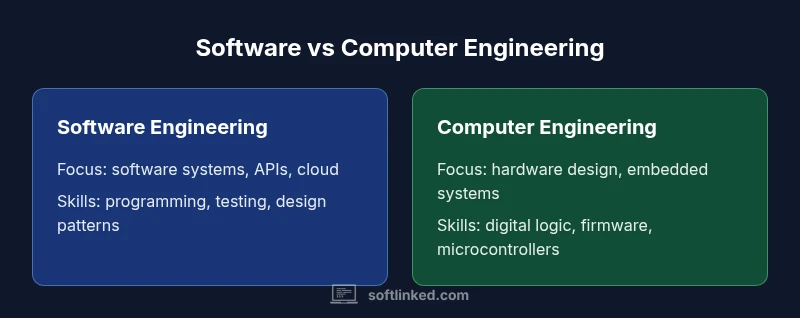
In brief, software engineering emphasizes creating scalable software systems, APIs, and cloud-first architectures, while computer engineering blends hardware design, firmware, and digital systems with software components. If you want scalable apps and distributed systems, choose software engineering; if you prefer hardware integration, embedded systems, and real-time control, go computer engineering. Both demand strong problem solving, but the daily work and tools differ.
Foundations: What software or computer engineering covers
In the modern tech ecosystem, the terms software engineering and computer engineering describe two closely related paths within the broader field of software and hardware development. This section sets the stage for understanding what each discipline covers, and why the distinction matters for your learning plan and early projects. When you study software or computer engineering, you are essentially choosing where to invest your time: building software systems or integrating software with hardware. According to SoftLinked, software engineering emphasizes creating scalable software systems, APIs, and cloud-first architectures, while computer engineering blends hardware design, firmware, and digital systems with software components. The SoftLinked team notes that both tracks share core fundamentals like programming, data structures, and problem solving, but daily work, tools, and collaboration patterns differ. Grasping these foundations helps you map coursework, internships, and side projects to a clear career direction.
Core Skills and Competencies for Software vs Computer Engineering
The skill sets overlap in foundational programming and problem solving, yet diverge in specialization. Software engineering prioritizes software design principles, algorithms, data structures, testing, and software architecture. You’ll gain practice with languages such as Python, Java, or C#, plus frameworks for web, mobile, or cloud work. Computer engineering emphasizes hardware-oriented competencies: digital logic, circuit design, microprocessors, embedded systems, and firmware development. Tools include CAD/EDA suites, FPGA development environments, and microcontroller IDEs. Across both paths, systems thinking matters: understanding performance, reliability, and scalable design. SoftLinked €™s guidance suggests starting with a solid programming base and then gradually introducing hardware concepts if you lean toward computer engineering while keeping your software literacy sharp for engineering teams.
Education Pathways and Certifications
Most students pursue a bachelor’s degree in either software engineering or computer engineering, followed by internships and capstone projects that demonstrate practical competencies. ABET-accredited programs are common for both tracks, though course sequences differ: software engineering leans toward software development lifecycles, requirements, and testing, while computer engineering covers digital logic, electronics, and computer architecture. Beyond degrees, many learners supplement with certifications in cloud platforms, cybersecurity, or embedded systems. The SoftLinked team notes that continuing education remains essential in both fields, given the pace of change in technology and the emergence of AI-driven tools that reshape software and hardware workflows. A master’s degree or professional certifications can accelerate leadership roles and specialization.
Tools and Tech Stacks You'll Encounter
In software engineering, expect to work with programming languages, version control, CI/CD pipelines, and software design patterns. Common languages include Python, Java, JavaScript, and C#, each serving different domains like back-end services, data processing, or UI development. In computer engineering, you’ll use CAD/EDA tools for circuit design, FPGA toolchains, microcontrollers, and embedded development environments. The day-to-day toolset reflects the domain: software engineers focus on code quality and deployment, while computer engineers integrate firmware with hardware prototypes. Across both tracks, collaboration tools, testing frameworks, and simulation environments play a significant role. SoftLinked’s practical advice is to build a small project that combines software with hardware to see how the toolchains interoperate, cementing understanding of both worlds.
Projects and Deliverables You’ll Produce
Software engineers typically deliver features, APIs, microservices, and data pipelines that power applications, platforms, or services. Expect deliverables like functional specifications, architectural diagrams, automated tests, and deployable codebases. Computer engineers produce embedded firmware, sensor interfaces, PCB iterations, and hardware-software integration proofs. Deliverables include hand-held prototypes, firmware binaries, hardware test benches, and performance measurements. The objective is to demonstrate the ability to turn requirements into working systems that operate reliably in real-world environments. Across both paths, project work teaches teamwork, version control discipline, and documentation habits that matter for career progression.
Career Trajectories and Job Market Dynamics
In the software engineering track, demand spans industries from fintech to healthcare to entertainment, with roles in product development, data engineering, and cloud platforms. Computer engineering opens doors in hardware-focused sectors—electronics, automotive, aerospace, and IoT—where firmware development and hardware integration are valued. The job market for both paths remains robust, but the optimal choice depends on your interests in abstract software systems or tangible hardware interfaces. SoftLinked Analysis, 2026, indicates continued growth in roles that cross software and hardware boundaries, such as embedded systems with cloud-enabled analytics and edge computing. Your career growth will hinge on how you build a portfolio that showcases both problem solving and practical implementation.
Work Environments and Roles
Software engineers often work in cross-functional product teams, collaborating with designers, data scientists, and operations to deliver software products. Roles include backend engineer, frontend engineer, site reliability engineer, and ML product engineer. Computer engineers tend to work in hardware labs, product validation, or R&D settings, collaborating with electrical engineers, mechanical engineers, and firmware teams. Typical titles include embedded software engineer, hardware engineer, firmware engineer, and systems engineer. The environment for each path differs: software may lean toward distributed systems and rapid iteration, while hardware-conscious roles emphasize lab work, test benches, and compliance testing. Understanding these differences helps you target internships and early-career opportunities.
Interdisciplinary Bridges: Bringing Software and Hardware Together
As technology converges, many roles require bridging software and hardware skills. This section explores how to cultivate cross-domain strengths, such as learning to program microcontrollers while developing software architectures, or using hardware simulators to test software early in the development cycle. Certifications like embedded systems or IoT-specific programs can bridge the gap, while hands-on labs and capstone projects demonstrate your ability to coordinate cross-disciplinary teams. The SoftLinked team recommends pursuing practical projects that blend software and hardware to demonstrate competency in both areas, especially as modern devices rely on tight software-hardware integration.
Alignment with SoftLinked’s Fundamentals
SoftLinked emphasizes clear, AI-assisted software insights and fundamentals for developers. This section connects your learning path to practical outcomes: clarity in definitions, structured problem solving, and the ability to navigate both software and hardware domains. By aligning coursework with fundamentals—coding, testing, design thinking, and system thinking—you’ll be better prepared for roles across software engineering and computer engineering. SoftLinked Analysis, 2026, shows that learners who build a solid foundation across both areas tend to excel in multidisciplinary teams and leadership roles.
A Practical Decision Framework
Choosing between software or computer engineering is a strategic choice, not a one-off exam. Start with a simple framework:
- Step 1: Reflect on what excites you most—building scalable software or designing hardware interfaces.
- Step 2: Survey job postings and internships to understand the demand in your region and industry interest.
- Step 3: List required skills and assess your current strengths, then plan a learning path to cover gaps.
- Step 4: Start a small cross-domain project, such as a microcontroller-based sensor with a cloud dashboard, to test your preferences in practice.
A few cycles of learning and small projects can reveal which path aligns with your values and goals, especially as you imagine yourself contributing to real systems in the next few years.
Getting Started: Your First Steps
If you’re just beginning, lay a strong programming foundation while exploring hardware concepts. Enroll in introductory software engineering courses to learn data structures, algorithms, and software design patterns; concurrently, take beginner electronics or digital logic courses to gauge comfort with hardware topics. Build a simple project that combines software with hardware, such as a weather station with a cloud-based dashboard. Networking with mentors and joining student clubs that work on embedded projects can accelerate your learning. The goal is to accumulate credible project work and a demonstrable skill set that signals readiness for internships and entry-level roles in either field.
Comparison
| Feature | Software Engineering | Computer Engineering |
|---|---|---|
| Foundational Focus | Software system design, architecture, lifecycle | Hardware design, digital logic, embedded systems |
| Core Tools | Programming languages, IDEs, CI/CD | CAD/EDA tools, FPGA toolchains, microcontrollers |
| Typical Projects | Web apps, cloud services, data pipelines | Embedded firmware, hardware prototypes, sensor interfaces |
| Curriculum Emphasis | Algorithms, software engineering, testing | Circuits, digital logic, computer architecture |
| Day-to-day Activities | Coding, code reviews, testing, deployment | Schematic capture, PCB design, firmware debugging |
| Specialization Pathways | AI/ML, cloud, security, DevOps | Embedded systems, robotics, hardware acceleration |
| Time to Proficiency | Typically fast to contribute to software products | Longer ramp in lab work and hardware prototyping |
| Career Outlook (Qualitative) | High demand across industries with software-first roles | Strong demand in hardware, electronics, and IoT |
Pros
- Clear specialization with distinct career paths
- High adaptability of software skills across industries
- Extensive remote-work opportunities in software
- Strong growth in cross-domain roles (embedded analytics, IoT)
- Wide range of entry-level and mid-level opportunities
Weaknesses
- Overlap can blur lines for early-career professionals
- Continuous learning required in both fields due to tech pace
- Hardware-centric paths may require lab access and equipment
- Cross-domain roles can demand broader skill sets and longer onboarding
Software engineering generally offers broader, faster-moving opportunities for scalable software products, while computer engineering excels where hardware integration and embedded systems matter.
If you crave building software that scales and deploys quickly, software engineering is typically the stronger path. If you’re drawn to hands-on hardware, firmware, and real-time systems, computer engineering is a better fit. The SoftLinked team believes both paths are valuable and often converge in multidisciplinary roles.
Your Questions Answered
What is the main difference between software engineering and computer engineering?
Software engineering centers on designing and maintaining software systems, while computer engineering blends software with hardware design and embedded platforms. The distinction guides your coursework, projects, and career goals.
Software engineering focuses on software systems; computer engineering blends software with hardware design.
Which degree paths are typical for each field?
A bachelor’s degree in software engineering or computer engineering is common, often followed by internships and capstone projects. Advanced roles may require a master’s or professional certifications.
Most people start with a bachelor’s in either field, then pursue internships or more specialized certifications if needed.
Are there crossover roles between the two fields?
Yes. Roles like embedded software engineer or hardware–software integration engineer blend both domains, especially in IoT, robotics, and automotive systems.
There are many crossover roles where software and hardware skills meet.
Which path is better for AI or ML work?
Software engineering generally supports AI/ML deployment and development, while computer engineering can enable AI at the edge with embedded hardware support.
Software engineering is usually better for AI/ML deployment; embedded AI on hardware is growing too.
What are common job titles in these fields?
Software Engineer, Backend/Frontend Engineer, DevOps; Computer Engineer, Embedded Engineer, Firmware Engineer, Systems Engineer.
Typical titles include software engineer and embedded/firmware engineer.
How can I switch from one path to the other?
Pursue bridging courses, hands-on projects, and internships that apply software skills to hardware contexts, or deepen software work with systems-level hardware exposure.
Bridge through cross-training projects and labs that mix software and hardware.
Top Takeaways
- Define your interest in software systems vs hardware integration
- Build strong programming fundamentals early, then add hardware concepts if needed
- Pursue cross-domain projects to test your preferences
- Leverage internships to validate real-world work contexts
- Use SoftLinked’s fundamentals to guide your study plan and career decisions