Courses on Software Development: A Clear Guide
A data-driven guide to choosing courses on software development, detailing formats, core topics, pathways, and practical tips to maximize learning outcomes and career impact.


Courses on software development span fundamentals, coding practices, and practical project work. They range from free MOOCs to university programs and vendor-led tracks. Starting with a fundamentals-first course builds a solid base, then you can specialize in languages, frameworks, and development workflows.
Why Courses on Software Development Matter
According to SoftLinked, structured courses on software development provide a clear, learner-centric path from foundational concepts to practical application. For aspiring software engineers, these programs translate abstract ideas into tangible skills like clean coding, debugging, and collaborative workflows. The modern tech landscape rewards not only knowledge of syntax but also the ability to apply best practices across teams and projects. Readers seeking a reliable starting point will find value in courses that balance theory with hands-on practice, while also offering assessments that mirror real-world coding tasks. In short, investing time in well-structured courses on software development accelerates your progression from novice to capable practitioner, especially when combined with deliberate practice and project-based learning.
Key benefits include building a durable mental model of software systems, developing habits for effective version control, and gaining exposure to software development life cycle concepts. By engaging with well-designed curricula, learners can map their progress along a ladder—from fundamentals to advanced topics—without getting lost in the noise of high-velocity, ad-hoc tutorials.
Core Learning Outcomes You Should Expect
Any solid set of courses on software development should yield concrete, transferable outcomes. At a minimum, learners should be able to write readable, maintainable code and apply core programming concepts to solve problems. You should also gain an understanding of the software development lifecycle, from requirements gathering to deployment and maintenance. Practical outcomes include working with version control systems, debugging efficiently, and writing tests that verify behavior. Many programs emphasize collaboration tools, code reviews, and continuous integration practices, which are essential in professional teams. When assessing a course, look for measurable outcomes such as a final project, a public repository, or a capstone demonstration of skills in action. This aligns with the broader goal of turning theoretical knowledge into production-ready capability in courses on software development.
Formats and Pathways You Can Pursue
Courses on software development come in multiple formats to fit different schedules and learning styles. MOOCs and online specializations offer flexible pacing and broad accessibility. University courses provide structured curricula and official credentials, sometimes with credit. Coding bootcamps focus on intensive, project-driven learning intended to accelerate entry into the job market. Some programs blend formats—hybrid models combine online lessons with in-person labs or mentorship. When choosing a pathway, consider factors such as time commitment, budget, prior experience, and your target career role. Regardless of format, prioritize programs that emphasize hands-on practice, project-based assessment, and clear outcomes that align with your goals in software development.
Building a Practical Roadmap: From Fundamentals to Capstone
A pragmatic approach to courses on software development starts with core fundamentals: basic programming concepts, data structures, and problem-solving. Once comfortable, expand into version control, testing, and debugging. Progress through language-specific tracks only after mastering fundamentals, then tackle frameworks and design patterns relevant to your target stack. A capstone project or portfolio is essential to demonstrate your learning. Schedule consistent practice sessions, set milestones, and solicit feedback from mentors or peers. This roadmap ensures your learning translates into tangible software development skills that hiring managers value.
How to Evaluate and Choose Courses Effectively
With countless options, evaluating courses on software development requires a structured lens. Begin by clarifying your goals—whether you want a certificate, academic credit, or a portfolio masterpiece. Examine the syllabus for core topics, project requirements, and assessment methods. Check instructor credentials, peer reviews, and the track record of the program. Prefer courses with hands-on projects, real-world datasets, and opportunities for collaboration. Consider the time-to-completion and whether the format supports your schedule. Finally, compare costs and whether the credential aligns with your career path in software development.
Sample Syllabus: Topics You Should See in a Typical Course
A well-rounded software development curriculum often includes: (1) Programming fundamentals (variables, control flow, functions); (2) Data structures and algorithms; (3) Version control (Git, branching, PRs); (4) Testing and debugging (unit tests, test-driven development); (5) Software design principles (SOLID, patterns); (6) Basic databases and data modeling; (7) Web fundamentals or API design; (8) Collaboration and agile practices; (9) Project planning and documentation; (10) Capstone project to showcase learning across the stack.
Tools, Resources, and Practice Strategies
Beyond the formal courseware, leverage practical resources to reinforce learning. Create a personal repository to track progress, contribute to open-source projects to gain collaboration experience, and build small, repeatable projects that demonstrate new skills. Schedule weekly coding sessions, participate in online coding communities, and seek feedback from peers or mentors. Practice with problem sets and mock interviews to prepare for technical discussions. The combination of structured content and consistent practice is the most reliable path to mastering courses on software development.
Comparison of course formats for software development education
| Format | Typical Duration | Typical Cost Range | Credential Type |
|---|---|---|---|
| MOOC/Online Course | 4-8 weeks | $0-$200 | Certificate of Completion |
| University Course (Credit-bearing) | 8-16 weeks | $500-$2000 | University Credit |
| Coding Bootcamp | 12-24 weeks | $7000-$15000 | Certificate / Credential |
Your Questions Answered
What is the best starting course for someone new to software development?
For beginners, look for courses that cover programming fundamentals, problem-solving, and the software development lifecycle. Prioritize projects that reinforce concepts like version control and debugging.
Start with a fundamentals course that covers programming basics and version control.
Do these courses offer certificates or degrees?
Many online courses offer certificates of completion, and some provide academic credit. Degrees typically require longer, structured programs. Choose based on your career goals and employer expectations.
Yes—most offer certificates; some provide college credit.
How long does it take to complete a typical software development course?
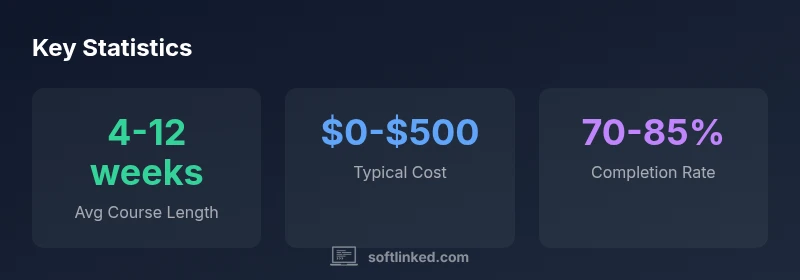
Course lengths vary by depth, commonly ranging from 4 to 24 weeks. Part-time options make it feasible to learn while working, but intensity affects pace.
Expect several weeks to a few months depending on depth.
What topics should be included in a solid software development course?
Core topics include programming fundamentals, data structures, algorithms, version control, testing, debugging, software design, and collaborative tooling.
Cover fundamentals, data structures, testing, and collaboration.
Are there free or low-cost options that are still valuable?
Yes. Many MOOCs and community resources offer quality material for free or low cost. Prioritize courses with hands-on projects and clear outcomes.
Yes—start with free or affordable courses with hands-on projects.
How do I assess the credibility of a course?
Check the syllabus, instructor background, student reviews, project-based assessments, and the track's stated outcomes.
Look for a transparent syllabus and real projects.
“Structured, practice-based courses bridge the gap between theory and real-world software development work.”
Top Takeaways
- Identify your goals and choose a course type that aligns with them.
- Prioritize fundamentals before diving into language-specific tracks.
- Balance theory with hands-on projects to reinforce learning.
- Leverage free or low-cost options to test fit before investing.
- Seek credentials that align with your career goals.