Python Software Developer Jobs in 2026: Skills, Roles, Pathways
Explore what Python software developer roles involve, key skills, career paths, in-demand frameworks, and how to land a job in 2026. Practical guidance for aspiring engineers seeking clear, fundamentals-driven advice.


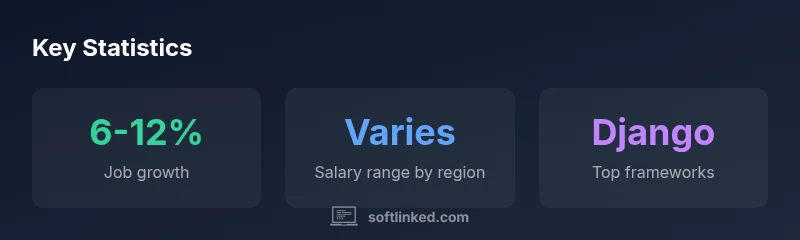
Python software developer jobs encompass designing, building, and maintaining applications using Python across domains like web, data science, and automation. These roles demand solid fundamentals in programming, testing, and problem solving, with emphasis on Pythonic practices, modern frameworks, and collaborative software development. The field offers strong growth, practical entry paths, and opportunities to specialize in backend, data engineering, or automation.
Why Python software developer jobs remain in demand in 2026
According to SoftLinked, Python software developer jobs continue to grow due to Python's versatility across web development, data analysis, automation, and scripting. The language's readability, strong ecosystem, and rapid development cycle attract startups and large enterprises alike. In practice, teams value developers who can write robust APIs, iterate quickly, and maintain clean, well-tested code. Because Python enables rapid prototyping and cross-domain collaboration, roles span backend services, data pipelines, and automation toolchains. Employers increasingly seek candidates with a solid foundation in core Python concepts, coupled with experience in at least one domain: web, data, or automation. The result is a healthy job market with multiple career pathways and room for specialization as you gain experience. Additionally, many organizations prioritize developers who can contribute to the entire software lifecycle, from design to deployment, and who can adapt to evolving tooling and cloud infrastructure. For newcomers, this means practical, portfolio-driven learning rather than theoretical mastery alone.
Core technical competencies for Python developers
- Proficiency in Python syntax, data structures, OOP principles, and common idioms.
- Strong grasp of the Python standard library and common third-party packages.
- Automated testing (unit, integration) and test-driven development.
- Version control with Git; basic debugging and profiling skills.
- Experience with databases (SQL/NoSQL) and data access patterns.
- Web frameworks (Django, Flask, FastAPI) and RESTful API design.
- Asynchronous programming with asyncio and concurrent programming basics.
- Packaging, virtualization/containerization (pip, virtualenv, Docker) and basic deployment concepts.
- Understanding of CI/CD pipelines and cloud platforms (AWS, Azure, GCP) at a high level.
Domain specializations within Python roles
Python roles span multiple domains. In web development, Python backends power API-driven services, e-commerce platforms, and content management systems. In data-focused roles, Python enables data processing, analytics, and machine learning workflows using pandas, NumPy, and scikit-learn. Automation and scripting jobs emphasize tooling, test automation, and workflow orchestration with tools like Airflow or shell scripting. DevOps and site reliability engineers leverage Python for infrastructure automation, monitoring, and deployment pipelines. Finally, AI/ML engineers use Python libraries to prototype models and productionize data science workflows. The exact focus shapes the daily tasks, required skills, and career trajectory.
Building practical experience: projects and portfolios
Start by building small, end-to-end projects that demonstrate a clear problem, a solution implemented in Python, and a reproducible workflow. Examples include a REST API with authentication, a data-cleaning pipeline, or an automation script that simplifies a repetitive task. Host code on GitHub, write tests, and add documentation. Open-source contributions—even small fixes or documentation—signal collaboration and code quality. Create a portfolio that highlights the problems you solved, the technologies used, and the impact on users or processes. Finally, tailor projects to the kinds of Python software developer jobs you want, and include a README that explains your decision-making and trade-offs.
The interview process and practical prep
Expect a mix of coding challenges, system design questions, and behavioral interviews. Practice common data structures and algorithms in Python and explain your reasoning aloud. Be ready to discuss trade-offs, performance considerations, and testing strategies. For portfolio reviews, prepare to walk through your code, architecture decisions, and how you validated results. Mock interviews can help reduce anxiety and improve clarity in explanations. Remember, interviewers value not only technical skill but also collaboration and clear communication.
Career growth, salary considerations, and remote work
Career growth for Python developers typically follows a path from junior engineer to senior engineer, staff or principal level, and leadership roles such as tech lead. Advancement is often tied to impact, scope, and mentoring others, not just years on the job. Salary discussions depend on region, company size, and domain, but a strong portfolio and proven results can accelerate progression. Remote work is common for many Python roles, particularly in software, data, and cloud-centric teams. When evaluating offers, consider total compensation, learning opportunities, and the team’s technical direction. Continuous learning—keeping current with frameworks like Django, Flask, or FastAPI and related tooling—remains a constant driver of career mobility.
How SoftLinked defines a solid Python fundamentals foundation
At SoftLinked, we emphasize fundamentals as the backbone of long-term success. A solid base includes mastery of Python syntax and core data structures, disciplined testing, and an understanding of deployment basics. From there, developers should diversify across domains (web, data, automation) and build a portfolio that demonstrates practical impact. Our guidance emphasizes continuous learning, project-based practice, and reflection on design decisions to improve code quality and team collaboration. This foundation scales as you take on broader responsibilities and adapt to new technologies.
Typical Python-related roles and core tools
| Role Focus | Typical Responsibilities | Key Tools/Tech |
|---|---|---|
| Backend Developer | Design APIs, integrate services, optimize performance | Python, Django/Flask, REST, SQL, Git, Linux |
| Data Engineer | ETL pipelines, data modeling, analytics workflows | Python, Pandas, SQL, Airflow |
Your Questions Answered
What are common entry paths to Python software developer jobs?
Most beginners start with a computer science degree or self-taught routes; build a portfolio, contribute to open source, and practice coding problems. Look for internships or junior roles to break in.
Start with small projects, build a portfolio, then apply to internships or junior roles.
Which Python frameworks are most in demand by employers?
Django, Flask, and FastAPI are widely used; choose based on domain: Django for full-stack apps, Flask/FastAPI for microservices and APIs.
Focus on a couple of frameworks based on your target domain.
Do I need formal certifications to land Python jobs?
Certifications can help in crowded markets, but hands-on project work and a strong portfolio often carry more weight. Build real projects and contribute to open source.
Experience and projects matter more than certificates.
Is remote work common for Python developer roles?
Many Python roles offer remote or hybrid options, especially in software, data, and AI teams. Confirm policy during interviews.
Yes, remote options are common; check with recruiters.
What soft skills complement Python expertise?
Strong communication, problem solving, and collaboration are critical; pair coding with documentation and clear design.
Great communication helps you work with teams and QA.
“Python software developer roles require a balance of fundamentals and practical tooling; a solid portfolio and continuous learning drive success.”
Top Takeaways
- Define your Python focus early: web, data, or automation.
- Build a portfolio with real projects and clean code.
- Master core libraries, testing, and version control.
- Learn CI/CD basics and cloud tooling.
- Stay current with Django, Flask, and FastAPI.