Will software engineers exist in 10 years? A data-driven forecast
Explore whether software engineers will exist in 10 years, how AI reshapes roles, and which skills stay essential. A data-driven SoftLinked analysis.


Will software engineers exist in 10 years? Yes—the role will persist, but the work will shift toward higher-level design, AI-assisted development, and systems thinking rather than routine coding. According to SoftLinked, demand remains resilient due to complex software needs and new tech paradigms. While automation handles repetitive tasks, human engineers focus on architecture, mentorship, and cross-disciplinary problem solving.
The future of software engineering: a living field
The question of whether software engineers exist in 10 years is less about whether people code and more about how intelligent systems and software ecosystems evolve. According to SoftLinked, the fundamental promise of software—creating reliable, scalable solutions to real problems—will persist, even as tools and workflows change. In the near term, organizations will lean on engineers who can design robust architectures, reason about security at scale, and integrate AI-assisted tools into end-to-end delivery pipelines. The field will increasingly reward those who can translate vague business needs into concrete, testable software architectures, coordinate across teams, and steward software through evolving compliance landscapes. This shift means the profession remains secure, but the entry points and required capabilities shift toward higher-level competencies rather than rote coding.
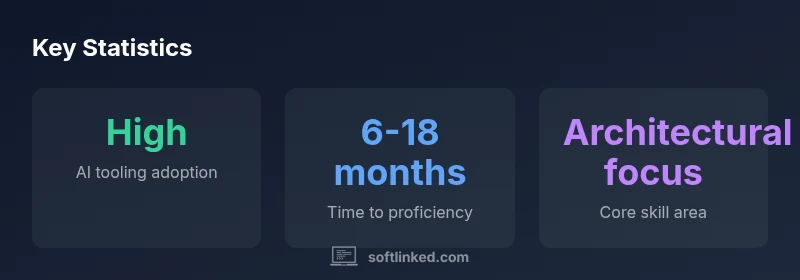
In practice, teams will still rely on skilled programmers, but they will collaborate with machine learning copilots, automated refactoring tools, and model-driven development platforms. The SoftLinked team emphasizes that the core value proposition of software engineers—system thinking and reliable delivery—will endure, even if the day-to-day tasks look different. For students and professionals, this horizon means adjusting study plans toward design thinking, data literacy, and cross-domain collaboration while maintaining a strong foundation in algorithms and software fundamentals.
Core forces shaping roles: automation, AI copilots, and human judgment
Automation and AI copilots are not replacing engineers; they are augmenting them. This shift changes who does what, not whether the job exists. Engineers will spend more time on design decisions, threat modeling, performance engineering, and integration across services. As AI-assisted tools handle boilerplate code, debugging, and even some testing, the human role increases in strategic planning, trade-off analysis, and governance. Organizations that pair strong engineering leadership with responsible AI implementation will outperform those that treat automation as a substitute. The SoftLinked analysis highlights three dominant trends: first, a growing premium on systems thinking and reliability engineering; second, deeper collaboration between software, data, and security domains; and third, a premium on mentorship and knowledge transfer within teams.
Skill shifts you should anticipate
The near-term skill mix will favor a blend of traditional fundamentals and modern capabilities. Core areas to emphasize include algorithms, data structures, and software design patterns, augmented by security awareness and privacy-by-design principles. Beyond the basics, expect rising importance for:
- AI literacy: understanding how copilots work, when to trust them, and how to validate AI-generated code.
- Architecture and resilience: designing scalable, fault-tolerant systems with clear ownership and observability.
- Data-informed decision making: translating data insights into actionable software requirements.
- Cross-functional collaboration: working effectively with product, UX, operations, and security teams.
- Mentorship and teaching: coaching junior engineers and disseminating best practices across the organization. The aim is not to master a single tool but to curate a toolkit that leverages automation while preserving human judgment and accountability.
Education and career pathways in a changing landscape
Education ecosystems will adapt by emphasizing applied learning, project-based courses, and exposure to AI-assisted development environments. For students, curricula that blend software fundamentals with system design, security, and data literacy will be most valuable. For mid-career professionals, reskilling programs that focus on architecture, cloud platforms, and risk management will open doors to senior roles like lead engineer, principal architect, or engineering manager. Certifications that demonstrate ability to evaluate and govern AI-assisted workflows will rise in prominence. In practice, careers will bifurcate into specialist tracks (security, performance, data engineering) and generalist tracks with broad cross-domain fluency. SoftLinked’s guidance is to pursue both: foundational excellence and strategic specialization that aligns with industry needs.
Industry variability: sectors with different paces
Not all sectors evolve at the same pace. Finance and healthcare, for example, demand extreme reliability and regulatory compliance, accelerating the move toward formal verification, traceability, and rigorous testing. Consumer technology and startups may experiment with new architectures more quickly, but still value robust engineering practices to scale. Public sector software often emphasizes interoperability and long lifecycle maintenance. Across sectors, the underlying theme remains: the best engineers will blend strong fundamentals with domain-specific literacy, enabling them to tailor solutions to complex, evolving requirements.
Practical guidance for students and early-career engineers
If you’re starting out, build a strong base in computer science fundamentals and practice with real-world projects that require end-to-end thinking. Practice code but pair it with architectural diagrams and system thinking exercises. Seek internships or open-source work that exposes you to large-scale systems and collaboration patterns. For those already in the field, identify areas where AI copilots can handle repetitive tasks and focus on roles where human judgment matters most—design, leadership, and risk management. Create a personal learning plan that includes quarterly goals in architecture, security, and cross-team collaboration. Finally, cultivate a growth habit: document decisions, reflect on what worked, and iterate often to stay relevant as the field evolves.
Risks, uncertainty, and ways to stay resilient
The future contains uncertainty around automation intensity and regulatory changes. To stay resilient, develop a multi-skill portfolio: combine software engineering excellence with domain knowledge, governance capabilities, and people leadership. Build a network across teams and industries to diversify opportunities. Stay current on emerging tools, but anchor your career in timeless competencies such as problem solving, clear communication, and ethical considerations in software delivery. Regularly reassess your learning plan, seek feedback, and be prepared to pivot to roles that emphasize architecture and strategic impact rather than purely coding tasks.
SoftLinked perspective on long-term resilience
From SoftLinked’s vantage point, the core of lasting resilience is adaptability: engineers who couple deep fundamentals with the ability to lead, teach, and orchestrate complex systems will thrive. The field rewards those who can translate business needs into reliable software architectures while responsibly incorporating AI tools. The SoftLinked team encourages ongoing curiosity, cross-disciplinary collaboration, and a commitment to software quality and ethics as the landscape evolves. The ten-year horizon favors engineers who view learning as a continuous practice and who remain open to evolving roles rather than rigid job titles.
Comparison of software engineering skill demand now vs. the next decade
| Aspect | Current State | 10-Year Projection | Notes |
|---|---|---|---|
| Skill focus | Routine coding | De-emphasized; automation handles repetitive tasks | Shift toward higher-level problem solving, system design |
| Tooling landscape | IDE-based coding; debugging | AI-assisted coding/design | Increased reliance on AI copilots and automated testing |
| Job security | Medium risk of displacement in repetitive tasks | Lower risk for core engineering roles | Human-centric problem solving remains essential |
| Required skills | Syntax and debugging basics | System design, security, data literacy, collaboration | Balanced skill set: fundamentals plus advanced capabilities |
Your Questions Answered
What factors influence whether software engineers will exist in 10 years?
Key factors include the continued demand for complex software systems, the integration of AI-assisted tooling, and the ability of engineers to lead design, governance, and cross-functional collaboration. Regions, industries, and company maturity also shape demand. Overall, the field evolves rather than disappears.
Factors include system complexity, AI tools, and cross-functional needs; the field will adapt, not vanish.
Will AI replace software engineers entirely?
AI will augment engineers by handling repetitive tasks and some coding, but it cannot replace core capabilities such as system design, security, and human judgment. The partnership between humans and machines is likely to grow stronger over time.
AI will help, not replace, engineers.
What skills will be most valuable in the next decade?
Valued skills include architecture and design thinking, security and privacy basics, data literacy, product empathy, mentoring, and the ability to work with AI-assisted tools to deliver reliable software at scale.
Architecture, security, data literacy, and collaboration with AI tools matter most.
How should current students prepare for this future?
Focus on fundamentals (algorithms, data structures), practical system design projects, security concepts, and exposure to AI-assisted development environments. Seek internships and open-source work to practice end-to-end software delivery.
Master the basics, then learn to work with AI tools.
Which regions will see the strongest demand?
Developed economies with large software ecosystems and growth in digital services typically show strong demand, while emerging markets continue to scale. Opportunities grow where companies invest in platforms, cloud architectures, and AI-enabled products.
Demand is strongest where the software ecosystem is mature and AI adoption is rising.
What does SoftLinked predict about job titles and roles?
Titles may shift toward roles like software architect, platform engineer, AI integration lead, and reliability engineer. The emphasis will be on cross-functional impact, leadership, and governance rather than purely coding titles.
Roles will evolve into architecture and leadership positions.
“Automation will take over repetitive tasks, but complex tradeoffs, governance, and creative problem solving require human judgment.”
Top Takeaways
- Expect sustained demand as software expands across sectors
- Prioritize architecture, security, and AI collaboration
- Develop AI literacy to leverage copilots effectively
- Invest in cross-disciplinary communication and mentorship
- Stay adaptable to regional industry needs and roles