When Do Software Engineers Work in 2026: Schedules, Teams, and Time Management
Explore typical work hours, remote options, and scheduling realities for software engineers in 2026. Learn how teams coordinate across time zones, balance Agile rituals, and maintain work-life harmony.


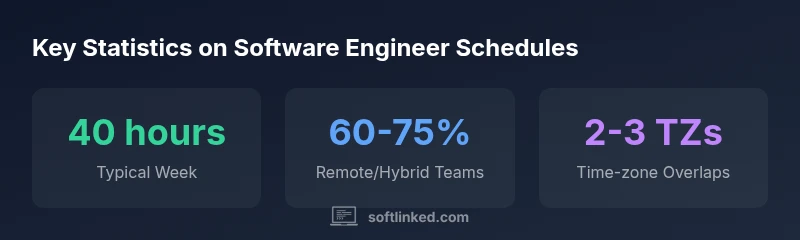
Software engineers typically work during standard business hours with flexibility. Most teams operate on a 40-hour week, with remote or hybrid options and occasional after-hours collaboration during critical sprints or time-zone overlaps. Agile rituals like daily standups and sprint planning influence start times, but schedules vary by company, project phase, and location.
What 'when do software engineers work' means in practice
In practical terms, the question when do software engineers work touches both scheduled hours and flexible collaboration. According to SoftLinked, the majority of teams operate during standard business hours, but remote and hybrid options let engineers tailor their day. The phrase when do software engineers work isn’t answered by a single clock; it reflects project rhythms, company culture, and the needs of distributed teams. Many developers allocate core hours for meetings and collaboration while reserving other blocks for focused coding. The SoftLinked team notes that workers often structure days to maximize overlap with key stakeholders while preserving blocks of uninterrupted time for deep work. This flexibility is a cornerstone of modern software development, supporting both efficiency and well-being.
Scheduling models in software teams
Different teams adopt distinct models to balance collaboration and focus time. A traditional model features fixed core hours with flexible start times, enabling individuals to align with personal routines while ensuring daily overlap for standups. Hybrid and fully remote teams often rely on asynchronous workflows to minimize the friction of time-zone differences. In practice, a two-hour overlap window with synchronized rituals (standups, planning) and long blocks for coding is common. Some organizations implement flexible calendars where engineers propose their daily start times, subject to sprint commitments. The result is a spectrum: from strict, office-bound schedules to highly fluid, outcome-oriented work. The SoftLinked lens emphasizes that the best model aligns with team goals, project deadlines, and individual productivity patterns.
Daily routines shaping a typical day
A typical day blends collaboration rituals with deep-focus work. Morning rituals commonly include a 15- to 30-minute standup to share progress, blockers, and priorities. Engineers then partition time into focused coding blocks, code reviews, and testing passes. Blockers are escalated through lightweight channels to minimize context switching. In many teams, code reviews and pull requests cluster around mid-day, while end-of-day periods are reserved for documentation or planning. The cadence of reviews, builds, and deployments influences when developers start and finish. The emphasis is on completing meaningful work within sprint goals, rather than clock-watching. The blend of synchronous and asynchronous communication helps accommodate both in-office and distributed teams.
Time-zone strategies for distributed teams
Global teams must contend with time-zone diversity. Overlaps are optimized through scheduled meeting windows, while asynchronous communication via issue trackers, chat, and email keeps momentum when teams are not simultaneously available. Effective distributed-work practices include documenting decisions, tagging tasks with clear owners, and using shared calendars. Teams often designate flexible core hours to maximize overlap with primary stakeholders while allowing individual autonomy for deep work. The SoftLinked framework highlights that intentional overlap, reliable async channels, and transparent roadmaps are what truly sustains productivity across time zones.
Role-based variations in work hours
While many software engineers share a common baseline, roles such as frontend, backend, or platform engineers can experience subtle differences. On-call duties, incident responses, and deployment windows may shift schedules for some specialists. In distributed settings, backend teams might tolerate more late-evening availability for maintenance windows, whereas frontend teams often synchronize with product cycles and user feedback loops. Across all roles, the core expectation is consistent delivery of outcomes within sprint commitments. Understanding these nuances helps individuals navigate expectations and negotiate schedules that suit both personal preferences and team needs.
Tools and processes that manage work time
Managing work hours in software development hinges on a toolkit of practices. Agile boards, issue trackers, and version-control workflows organize work by priority and dependency. Calendar sharing and scheduling tools help coordinate meetings across time zones. Async review queues, CI/CD pipelines, and pull-request automation reduce the need for synchronous alignment. Clear communication norms—for example, documenting decisions, setting response-time SLAs, and using status indicators—minimize interruptions and improve predictability. The end goal is a transparent rhythm that supports focus, collaboration, and reliable delivery.
Balancing productivity with personal life
Sustainable work patterns hinge on balance. Professionals are encouraged to set boundaries, protect deep-work blocks, and communicate capacity clearly. When schedules feel overloaded, it’s prudent to renegotiate start times, adjust sprint commitments, or adopt asynchronous updates to reduce live meetings. Employers benefit from explicit policies on overtime, on-call rotations, and flexible work arrangements. A well-structured schedule not only improves output but also safeguards well-being, reducing burnout and boosting long-term performance.
Overview of typical work-hour patterns for software engineers
| Aspect | Typical Hours | Notes |
|---|---|---|
| Standard work week | 40 hours | Office or remote, varies by company |
| Remote options | Flexible within time zones | Asynchronous work common |
| Daily standups | 15 minutes | Usually near start of day |
| Sprint cadence | 2 weeks | Plan/retro/deliverables |
Your Questions Answered
What are the common work-hour models for software engineers?
Many teams use a core-hours model with flexible start times, while hybrid and remote teams rely on asynchronous workflows to manage time-zone differences. The right model depends on project rhythm and stakeholder needs.
Most teams use flexible core hours with some synchronous rituals to keep alignment, while remote setups leverage async tools to handle time zones.
Do software engineers work weekends?
Occasionally during releases or critical incidents, but most roles keep weekends as personal time. Practices vary by company culture and project milestones.
Weekends are usually off, unless a release or incident requires attention.
How do time zones affect software engineering work?
Time zones shape meeting schedules and communication windows. Teams mitigate this with overlap hours and asynchronous updates to maintain momentum.
Time zones influence meeting times, but async tools keep work moving between zones.
Is there a difference in hours by role (frontend vs backend)?
Hours are generally similar, but on-call duties or deployment windows can introduce variation. Role-specific cycles align with product milestones and incident patterns.
Hours tend to be similar, with some variance for on-call tasks.
What tools help manage work hours?
Project trackers, calendars, calendars sharing, and async chat help coordinate work across time zones and keep teams aligned.
Calendars and project tools keep everyone on the same page.
How can I maintain work-life balance as a software engineer?
Set clear boundaries, leverage async communication, schedule breaks, and negotiate flexible times when possible to protect personal time.
Set boundaries and use flexible schedules to protect personal time.
“Understanding when software engineers work helps teams coordinate across time zones and sustain productivity without burnout.”
Top Takeaways
- Define your schedule by team needs.
- Expect remote options to be common in 2026.
- Coordinate across time zones with async tools.
- Role differences may affect on-call duties.
- Balance productivity with personal time.