Software Institute Near Me: How to Choose the Right Program
Learn how to select a software institute near you by evaluating curricula, outcomes data, delivery formats, and costs. This guide from SoftLinked covers accreditation signals, ROI considerations, and practical steps to compare providers and find the best fit.


To locate a strong software institute near you, start by comparing curricula, outcomes data, and delivery formats across local universities, coding schools, and community programs. Prioritize accredited programs with hands-on projects, mentorship, and clear career outcomes. Read student reviews, visit campuses if possible, and request sample lessons to gauge fit and pacing before enrolling.
What counts as a software institute near me
If you're asking how to find a software institute near me, you're really looking for an education provider that marries practical software development skills with structured outcomes. The best programs typically combine a cohesive curriculum, real-world projects, and mentorship from experienced instructors. When researching, map the options to your goals: whether you want to build a portfolio for a first job, switch careers, or deepen existing skills. Look for programs that explicitly publish outcomes data, such as graduation rate, job placement, and typical salary uplift. Accreditation isn't always required for coding programs, but recognized credentials and industry partnerships improve signals of quality. Be wary of programs that lack transparent syllabi or fail to provide demonstrable project work. Finally, consider if the institute supports your preferred delivery mode—on-site, hybrid, or fully online—and whether there are flexible scheduling options for students with work or family commitments.
How curricula differ across formats and tracks
Software education providers vary in structure. Some institutes offer a core software development track emphasizing frontend and backend fundamentals, while others provide data-focused tracks like data engineering or machine learning bootcamps. Hybrid programs mix self-paced lessons with live sessions to reinforce concepts, whereas fully in-person formats emphasize pair programming, on-site mentors, and lab time. When evaluating, compare the depth of core topics (algorithms, data structures, version control), the quality and quantity of hands-on projects, and the availability of capstone experiences. Look for optional specializations and clear pathways to admission into advanced programs or internships.
Outcomes and verification: measuring success
A trustworthy program publishes verifiable outcomes: placement rates, typical salary increments, and the kinds of roles graduates obtain. Seek alumni stories and dashboards showing employment sectors, employers, and time-to-placement. Verify whether outcomes data is audited or self-reported, and check how long graduates are monitored after graduation. Good programs offer ongoing career support, including mock interviews, portfolio reviews, and access to alumni networks. If possible, contact former students to understand their job search timelines and bottlenecks.
Delivery formats: choosing in-person, hybrid, or online
Delivery format affects interaction, pace, and accessibility. In-person programs often excel at network-building, peer learning, and structured schedules, but may require relocation or commuting. Hybrid formats balance on-site labs with online theory, offering flexibility without sacrificing hands-on practice. Fully online programs can be ideal for working professionals with tight schedules, yet they require discipline and robust remote mentorship. When choosing, assess the strength of mentorship, the availability of live coding sessions, and access to hands-on labs or capstone projects in each format. Consider time-zone alignment for live sessions and whether asynchronous content includes practical coding challenges.
Financial considerations and ROI
Tuition is only part of the equation. Consider application fees, material costs, and potential living expenses if studying on campus. Look for scholarships, loan options, or income-share agreements where applicable. Compare the total cost against the expected salary uplift, which varies by location and role. Some programs publish salary dashboards or partner with local employers, offering accelerated hiring paths. Don’t overlook indirect ROI: improved confidence, interview readiness, and a stronger portfolio can shorten job search times and increase offer quality.
Practical steps to evaluate providers this week
- List 5 nearby institutes and collect their syllabi, sample lectures, and alumni testimonials. 2) Request a sample project or trial lesson to gauge teaching style and pacing. 3) Check accreditation or industry partnerships, and ask about guaranteed internships or mentorship access. 4) Map each program to your goals (portfolio, career change, salary target). 5) Compare total cost, scheduling flexibility, and support services. 6) Reach out to current students or alumni for candid feedback. 7) Schedule campus or virtual info sessions to ask tailored questions.
Typical programs for software education options
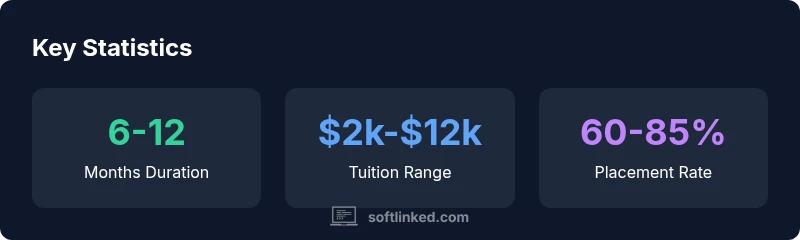
| Institute Type | Typical Duration | Tuition Range | Delivery Mode |
|---|---|---|---|
| Community College Certificate | 6-9 months | $2,000-$6,000 | In-person/Hybrid |
| University-affiliated Certificate | 9-12 months | $5,000-$12,000 | In-person/Hybrid |
| Coding Bootcamp | 3-6 months | $6,000-$15,000 | In-person/Hybrid/Online |
| Online Platform Program | 3-12 months | $3,000-$8,000 | Online |
Your Questions Answered
What is a software institute near me?
A software institute near you is a training organization offering structured curricula in software development, data, or engineering. Programs vary by delivery mode and outcomes. Look for transparent outcomes data and meaningful project work.
A software institute near you is a place to learn coding and software skills with structured courses and outcomes.
How do I verify program quality?
Check for accreditation when relevant, industry partnerships, and transparent outcomes data. Review instructor qualifications and student outcomes dashboards. If possible, talk to alumni.
Look for accreditation, partnerships, and clear outcomes data.
Online vs in-person: which is better?
Both can be effective depending on your circumstances. Compare schedule flexibility, mentor availability, and hands-on project access. Consider your learning style and ability to engage in live sessions.
Online works well for flexibility; in-person helps networking and hands-on labs.
What is ROI of software education?
ROI varies by role, location, and demand. Weigh tuition against likely salary uplift and time to employment. Prefer programs with clear career services and employer connections.
Weigh costs against potential salary gains and time to employment.
How can I finance my study?
Many programs offer scholarships, payment plans, or income-share agreements. Review eligibility, terms, and long-term impact on earnings before enrolling.
Look for scholarships or flexible payment options.
What should I read before choosing?
Read curriculum outlines, instructor bios, and student reviews. Watch intro demos and request a sample lesson to gauge teaching style.
Read syllabi and watch a sample class.
“"Choosing a software institute should revolve around transparency of outcomes and hands-on practice; the rest is logistics."”
Top Takeaways
- Define your goals before researching programs.
- Compare curricula and hands-on projects.
- Check outcomes data and job placement.
- Consider format, schedule, and location.
- Budget for tuition and potential financial aid.