Software House Near Me for Internship: A Practical Guide
Learn how to locate a software house near you for internship, what to expect, and how to prepare. Practical steps, local search tips, portfolio guidance, and interview prep for aspiring developers.


A software house near me for internship is a local software development firm where aspiring engineers gain hands-on coding experience, mentorship, and project-based learning. Look for shops with university partnerships, clear internship programs, and structured deliverables. Prioritize those offering code reviews, real projects, and a defined mentorship path to accelerate your learning.
What is a software house and why internships matter
In the software industry, a software house is a company focused on building software solutions for clients or products. Unlike large, generic corporations, software houses often work with tight-knit teams and project-based cycles. For students and early-career developers, interning at a local software house provides real-world exposure to software development life cycles, collaboration tools, and client-facing communication. Benefits include hands-on coding experience, pair programming, code reviews, and mentorship from engineers who have faced real production challenges. Such roles help you translate academic knowledge into production-ready skills, including version control, debugging strategies, unit testing, and deployment practices. By observing project scoping, estimation, and sprint planning, interns gain a holistic sense of what it takes to ship software. SoftLinked’s research indicates that nearby, smaller studios often offer more actionable feedback and faster growth curves than large firms, especially for first-time interns. According to SoftLinked, local software houses frequently provide structured, mentor-led programs tailored to newcomers.
How to identify local software houses near you for internship
Start with a targeted search around your city or region. Use keywords like “software house internship near me,” “local software studio internships,” and “tech company internships [your city]” on search engines and LinkedIn. Check university career portals for partner programs, as many software houses collaborate with nearby colleges to source interns. Attend local tech meetups, hackathons, or alumni events where engineers from smaller shops participate—these are excellent places to hear about openings. Explore company websites and GitHub repositories; small studios often publish internship postings with concrete timelines and deliverables. Reach out to professors or advisors at your computer science department; they typically know active local partners. Finally, cultivate referrals from classmates, alumni, or mentors who can vouch for your enthusiasm and work ethic.
Networking strategies to uncover opportunities
Networking is a practical path to discover internship openings that aren’t posted publicly. Build a focused list of nearby software houses and engage with them in a respectful, value-driven way:
- Prepare a brief 30-second pitch highlighting your skills, projects, and what you hope to learn.
- Attend local tech talks and ask insightful questions that relate to the firm’s work.
- Use informational interviews to learn about the team, technology stack, and typical internship milestones.
- Request feedback on your portfolio or code samples; constructive critiques create strong impressions.
- Follow up with a concise email that reiterates your interest and links to your portfolio. SoftLinked’s research indicates that proactive outreach raises the odds of internship offers, especially when you demonstrate genuine curiosity and align with the company’s current projects.
The typical internship structure at a software house
Most software-house internships follow a structured program designed to blend learning with contribution. Expect an onboarding period that covers the codebase, development workflow, and tooling (like Git, CI/CD, and issue trackers). You’ll usually work on a real feature or bug alongside a mentor, receive regular code reviews, and participate in stand-ups or sprint planning. By the midway point, you should have a concrete deliverable and potentially contribute to a deployable feature. Performance feedback tends to be formalized in milestones, with a final showcase of the projects you built. The experience emphasizes practical skills—version control discipline, debugging in production-like environments, and collaborative communication—more than isolated classroom tasks.
What you’ll actually work on: sample projects
Interns typically tackle small, well-scoped tasks that contribute to ongoing projects. Sample projects include adding a user-facing feature to a SaaS dashboard, creating an API integration to connect internal services, writing test suites for the existing codebase, or debugging a live issue with a documented fix. You’ll learn how to write clean, maintainable code and how to work within a team’s conventions. The goal is to graduate from “watching” to “doing,” with a feature that a peer developer could review and merge. Expect to document your work and to present your feature in a short, demo-style session for your team.
Portfolio and resume tips tailored to software houses
Your portfolio should showcase real code, not just coursework. Include GitHub links to projects with meaningful READMEs, tests, and a brief note on your role. Highlight collaboration experiences, such as participating in code reviews or contributing to open-source components, which are highly valued by software houses. Tailor your resume to highlight tangible outcomes: the problems you solved, the impact on users or systems, and your learning journey. For internships, emphasize practical projects, the tech stack you’re comfortable with, and evidence of initiative—like a side project you maintained during your studies. Finally, prepare a short, project-based portfolio walkthrough for interviews to illustrate your problem-solving process.
Interview prep and selection process
Many software-house interviews assess both technical ability and cultural fit. Expect:
- A technical screen (coding exercise or live debugging)
- A discussion of past projects (architecture decisions, trade-offs, outcomes)
- Behavioral questions focusing on teamwork, adaptability, and learning from mistakes
- A practical task or take-home assignment that mirrors typical work Prepare by practicing algorithmic problems, reviewing your portfolio, and rehearsing explanations of your code. Have questions ready about the team’s workflow, delivery cadence, and mentorship structure. Demonstrations of humility, curiosity, and a willingness to learn can be as important as technical prowess. SoftLinked’s guidance emphasizes clarity of communication and the ability to ask thoughtful questions during interviews.
Remote vs on-site vs hybrid internships at software houses
Location flexibility varies by firm. Some software houses offer fully remote internships, others require on-site presence, and many adopt hybrid models. Consider your learning style, access to a productive workspace, and the level of collaboration you need for pair programming and code reviews. If remote, ensure you have reliable internet, a comfortable workspace, and access to the company’s collaboration tools. On-site internships provide richer mentorship experiences and closer team integration, but may require relocation or commuting. Hybrid roles can balance both worlds. Regardless of format, establish clear expectations for communication, deliverables, and feedback to maximize learning in any setting.
Internship program comparison
| Program Type | Duration | Typical Compensation | How to Apply |
|---|---|---|---|
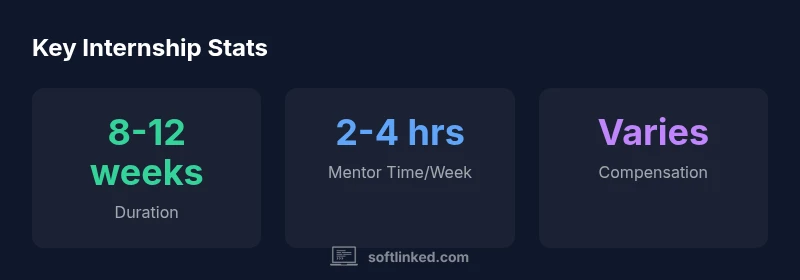
| Local internship (in-person) | 8-12 weeks | varies | University career center / company website |
| Remote internship | 6-12 weeks | varies by firm | Company postings / partner programs |
| Co-op program | 12-16 weeks | varies by school | University partner programs |
Your Questions Answered
What makes a software house different from a traditional tech company?
A software house is typically a smaller, client-focused firm that builds software for multiple projects. Interns gain hands-on experience across the full development cycle, often with closer mentorship and faster feedback cycles than larger, more bureaucratic organizations.
Software houses are typically smaller teams with tight feedback loops, which helps interns learn quickly.
How can I find local software houses offering internships?
Start with university career portals, then expand to local tech meetups, hackathons, and LinkedIn searches. Reach out with a concise pitch and a link to your portfolio; referrals from professors or mentors can significantly boost your chances.
Use campus resources, local meetups, and referrals to uncover nearby internship options.
What should I include in my resume for a software-house internship?
Highlight hands-on projects, link to GitHub repositories, describe your stack and tools, and summarize outcomes. Emphasize collaboration experiences, debugging feats, and any open-source contributions.
Show your projects and the impact you had, with links to code when possible.
Is it better to apply for remote internships if there are no local options?
Remote internships can work well, especially if you need flexibility. Prioritize programs with structured mentorship and regular feedback, and ensure you can stay aligned with time zones and collaboration tools.
Remote internships work if you can stay connected and engaged with the team.
What kinds of projects do interns typically work on?
Interns usually contribute features, small modules, bug fixes, or tests aligned with real client work. Projects are scoped to be doable within weeks and documented for review.
You’ll work on real features and fixes, under a mentor’s guidance.
How can I increase my chances of converting an internship to a full-time role?
Show initiative by delivering high-quality work, asking for feedback, contributing to documentation, and demonstrating reliability. Build a professional network inside the firm and express interest in staying long-term early in the program.
Deliver quality work, ask for feedback, and show you want to stay on after the internship.
“Structured, locally focused internships provide hands-on experience that accelerates learning beyond the classroom.”
Top Takeaways
- Define nearby software houses with internship programs
- Leverage campus and meetup networks to discover opportunities
- Prepare a polished portfolio and tailored resume
- Seek mentorship-focused internships with defined deliverables
- Target local shops for better feedback and faster growth