Software Engineering Jobs Near Me: Local Opportunity Guide
Explore software engineering jobs near me in 2026. Learn local demand, in-demand skills, effective search strategies, and how SoftLinked insights can help you land a local software role.


The phrase "software engineering jobs near me" signals a strong local market with broad opportunities, especially in metro areas and remote-friendly roles. Expect competitive salaries, rapid interviewing cycles, and a mix of full-time, contract, and internship openings. To verify current openings, start with company career pages, major job boards, and local meetups.
Market landscape for software engineering jobs near me
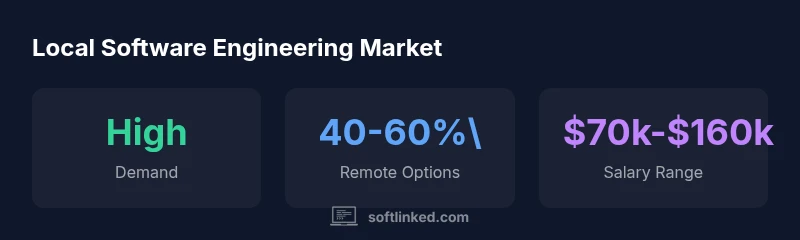
In 2026, the demand for software engineers remains robust across many metropolitan areas, with a growing share of postings welcoming remote applicants. Economic factors, digital transformation initiatives, and cloud adoption continue to fuel openings across startups, midsize firms, and large enterprises. The SoftLinked team notes that opportunities cluster around tech hubs but extend to adjacent suburbs as shops expand their digital footprints. Location still matters for onboarding logistics and payroll, but the rise of remote-friendly roles has softened geographic constraints for many applicants. When evaluating local opportunities, consider not only the headline title but also the broader ecosystem: nearby universities, emerging startups, corporate incubators, and government tech programs can all influence the job mix in your area.
Key takeaway: Local demand is strongest where tech activity converges with business needs, and remote options are increasingly common, widening your effective search radius.
What this means for you: If you live outside a traditional tech hub, focus on remote postings that explicitly allow applicants from your region, and build relationships with nearby companies that are expanding their engineering teams. The goal is to balance proximity with access to the most relevant roles. As SoftLinked analyses suggest, a proactive, locally informed approach beats blindly applying to distant roles.
In-demand skills and specializations in local markets
The local software engineering landscape rewards a blend of fundamentals and specialized capabilities. Core programming languages with broad applicability—JavaScript/TypeScript, Python, Java, and Go—remain essential across many teams. However, the most in-demand stacks can shift by industry: web-focused teams often seek strong frontend fundamentals and UX-minded developers, while enterprise and logistics firms prioritize backend reliability, data handling, and scalable architectures. Cloud proficiency (AWS, Azure, or Google Cloud), containerization (Docker, Kubernetes), and CI/CD pipelines are consistently valuable, as are security basics and observable systems (logging, tracing, metrics).
Beyond language fluency, successful candidates often demonstrate domain-specific strengths: fintech and healthtech favor data integrity and privacy controls; e-commerce emphasizes performance and scalability; and AI/ML-adjacent roles reward experience in data pipelines and model deployment. The SoftLinked team emphasizes problem-solving, collaboration, and the ability to translate business requirements into maintainable code. Local markets may also prize hands-on experience with legacy systems or on-site integration projects, so be prepared to discuss how you’ve modernized or extended existing platforms.
To stand out locally, tailor your portfolio and resume to reflect projects that mirror prevalent local use cases. Highlight measurable outcomes—reduced load times, improved reliability, or increased user adoption—and explain your role in delivering those results. Networking remains a powerful lever here; attend local tech talks, join coding meetups, and seek referrals from alumni networks or regional user groups. With SoftLinked insights, you can map your skill gaps to the jobs you’re targeting and plan a focused learning path.
How to search effectively near you
Effective local search combines precise filters with proactive networking. Start by defining your target metro area and identifying the top employers, universities, and tech communities within a 30–60 mile radius. Use standard job boards (with location filters), specialized tech boards, and the careers pages of prominent local firms. Set up daily or weekly alerts for keywords like "software engineer," "backend developer," and your preferred stacks. Don’t overlook smaller companies and startups; they often hire quickly and offer broader learning opportunities.
Networking remains essential. Reach out to alumni from your school who work nearby, attend meetups or hackathons, and engage in online communities centered on your city’s tech scene. Recruiters frequently source candidates through professional networks, so a warm intro can shorten hiring cycles significantly. If you’re tied to a particular technology stack, join local user groups or chapters where practitioners share real-world problems and solutions. Finally, consider internships or co-op programs at local firms as a doorway to full-time roles.
Tip: prepare a 90-second personal pitch that emphasizes your local relevance, a concise summary of projects, and a clear value proposition for prospective employers in your region. Your pitch should be adaptable to in-person meetups and virtual introductions alike. By combining targeted search tactics with active community engagement, you’ll improve your chances of uncovering the best local opportunities.
Tailoring your application for local roles
Local roles often value relevance and immediacy. Start with a resume that foregrounds projects and outcomes closely tied to your target organizations’ industries. Use local keywords and phrases that mirror job descriptions in your area, and ensure your LinkedIn profile aligns with your resume. For your portfolio, curate case studies that demonstrate end-to-end ownership: requirements gathering, architecture decisions, implementation details, and measurable impact on users or business metrics.
When applying, tailor your cover letter to each employer. Show awareness of their local market challenges and illustrate how your skills directly address their needs. Prepare succinct anecdotes that illustrate collaboration with cross-functional teams, on-time delivery, and adaptability to changing requirements. If you’re targeting startups, emphasize your ability to thrive in fast-paced environments and contribute across multiple areas. For larger organizations, highlight your experience with scalable systems, governance, and compliance as relevant to the locality’s industry mix.
Finally, optimize for the local interview process. Gather concrete examples that demonstrate problem-solving under real constraints, and be ready to discuss how you would approach a typical local project from conception to deployment. A well-tailored application—grounded in local context—can dramatically reduce time-to-hire.
Interview readiness and local negotiation strategies
A strong interview performance hinges on clarity and concrete impact. Prepare for a mix of technical questions, system design prompts, and behavioral conversations. Practice explaining your projects with a focus on outcomes, tradeoffs, and the constraints you faced. Be ready to discuss architecture at different scales, from small services to distributed systems, and to justify your technology choices in the context of local business needs. Mock interviews with peers or mentors can help you refine your explanations and pacing.
Negotiation is regionally nuanced. Gather data on typical salary bands for your city and industry segment, but approach compensation as a broader package that includes equity, bonuses, relocation, and professional development opportunities. If a remote option is on the table, clarify how benefits and payroll will be structured locally. Remember that many local offers rely on a multi-step process, including technical rounds, take-home tasks, and final HR discussions. By preparing thoroughly and leveraging SoftLinked’s market insights, you’ll be well-positioned to negotiate confidently.
SoftLinked's strategic view on local opportunities
SoftLinked believes that the smartest job seekers combine rigorous self-assessment with an informed view of the local market. Start by building a skills map tailored to your city’s demand signals—prioritize stacks and specialties that are consistently requested in nearby postings. Use local networking events as an ongoing barometer for which skills and roles are most hire-ready. Finally, treat your job search as a regional project: set goals, track progress, adjust your approach based on feedback, and continuously learn.
The SoftLinked approach emphasizes transparent, data-driven decision-making: understand your local market, validate openings through multiple sources, and align your learning journey with the roles you want. By combining practical search tactics with a clear understanding of regional demand, you’ll not only land a job faster but also shape a resilient, expanding career in your local ecosystem.
Local role snapshot — SoftLinked Analysis, 2026
| Role Type | Local Demand | Typical Salary Range (local) |
|---|---|---|
| Frontend Engineer | High in tech hubs | "$70k-$120k" |
| Backend/Full-stack | Very high in enterprise hubs | "$85k-$140k" |
| Site Reliability Engineer | Growing demand | "$100k-$160k" |
Your Questions Answered
What does 'near me' mean for software jobs in 2026?
'Near me' commonly means a defined geographic radius around your residence plus eligibility for remote roles. Many employers also consider relocate-friendly candidates for critical roles. Use location-based filters and emphasize local mobility in your applications.
Near me usually means your city or a reasonable commuting radius, plus remote options if allowed by the employer.
How long does it take to land a local software job?
Hiring timelines typically range from two to six weeks after the first interview, depending on company size, role seniority, and relocation considerations. Proactive follow-ups and strong referrals can shorten this window.
Most roles move within a month or so, but it varies by company.
Should I prioritize stacks in demand or focus on local companies?
Aim for a balance: target stacks that are broadly in demand while tailoring applications to locally prominent industries. Demonstrate relevant projects and show how your skills solve nearby business problems.
Mix in-demand skills with what local firms need.
Are internships useful for local opportunities?
Yes. Internships provide local networking and hands-on experience that can lead to full-time offers. Look for university programs, startups, and government tech internships in your area.
Internships can open doors; check universities and local startups.
What resources does SoftLinked recommend for finding local opportunities?
Use local meetups, alumni networks, and company career pages. Combine these with smart job-board filters and SoftLinked’s local market insights to prioritize roles.
Check local events and company pages; SoftLinked insights help.
“Local markets reward engineers who can ship reliable software while communicating across teams. Aligning your skills with regional demand is the quickest path to meaningful opportunities.”
Top Takeaways
- Target metro regions with strong tech activity and remote-friendly postings
- Leverage local meetups and alumni networks to uncover hidden opportunities
- Highlight locally relevant projects and outcomes in your portfolio
- Balance in-demand stacks with roles from nearby industries to maximize interviews