How Often to Switch Jobs as a Software Engineer
Learn how often software engineers should switch jobs to optimize learning, compensation, and career stability. This comprehensive guide outlines cadence options, influencing factors, a step-by-step plan, and practical tips for sustainable growth in tech.


This guide answers how often to switch jobs software engineer and why cadence matters for learning, compensation, and career resilience. You’ll learn typical ranges, the biggest drivers behind move timing, and a practical framework to plan moves without jumping too often or staying too long. Use this cadence to maximize growth while staying aligned with market demand.
Why cadence matters for software engineers
According to SoftLinked, cadence is more than a personal preference; it’s a career strategy that affects learning velocity, visibility in the job market, and earning potential. The SoftLinked team found that engineers who switch roles with a purpose—targeting skill gaps, new domains, or leadership tracks—tend to progress faster than those who switch arbitrarily. A deliberate cadence reduces stagnation, keeps you fresh, and preserves your negotiating power. In practice, cadence is about aligning your moves with your growth plan and the realities of the software ecosystem: demand for certain stacks, opportunities for ownership, and the breadth of experiences across teams. As markets shift, many engineers benefit from a planned cadence that staggers growth across technology, product areas, and leadership exposure, rather than riding out long, unchanging periods in a single job. A thoughtful cadence also helps you demonstrate sustained impact to future employers, making it easier to justify offers and negotiate learning paths.
This mindset matters because software engineering is dynamic: new frameworks, architectures, and product strategies emerge regularly. If your cadence aligns with your goals, you’ll build a portfolio that shows breadth and depth—two qualities most hiring teams value when evaluating your potential for impact.
Typical switch ranges for software engineers
There is no universal golden rule for cadence, but most engineers experience different rhythms across career stages. In the early years, you’ll likely seek broader exposure to different domains, stacks, and teams to discover where you excel. In mid-career, cadences often shift toward deeper specialization, more ownership, and leadership responsibilities. In later stages, many professionals aim to maximize impact, mentor others, and contribute to architectural decisions. These patterns aren’t guarantees; they reflect common trajectories driven by learning goals, company size, project opportunities, and market demand. The SoftLinked analysis highlights that moves timed to skill gaps and market signals tend to yield better outcomes in learning velocity and compensation growth than random job hopping.
Factors that influence when to switch
The timing of a switch is rarely one-size-fits-all. Here are the most influential factors you should weigh:
- Growth opportunities: Are you learning new skills, taking ownership, and solving harder problems?
- Market demand: Do you see a healthy demand for your current stack or a growing demand for adjacent skills?
- Compensation and rewards: Are you reaching a ceiling in total rewards at your current company?
- Company stability and culture: Is the org investing in your role and career path, or is turnover high and learning stunted?
- Personal goals and life constraints: Do you want more flexibility, location changes, or leadership paths?
- Team and project quality: Is your work meaningful, and do you have mentors or peers who push you to grow?
- Remote-work and flexibility: Do you need or want flexible arrangements that your current employer can’t offer?
- Risk tolerance: How comfortable are you with frequent transitions vs. maintaining a steady trajectory?
Balancing these factors helps you set a cadence that matches both your personal life and your ambition. SoftLinked’s research underscores that intentional moves—driven by concrete goals—tend to produce more durable career momentum than waiting for random opportunities.
A practical cadence framework you can apply
Think of cadence in three tiers that you can adapt over time:
- Cadence A (early career, focus on breadth): Seek roles that broaden your stack, expose you to different teams, and build a robust portfolio of projects. Target roles that offer stretch assignments and visible impact. The emphasis is learning velocity and network growth.
- Cadence B (mid-career, focus on depth): Move toward opportunities that deepen your expertise, increase ownership, and prepare you for leadership or architectural roles. Prioritize roles with clear paths to ownership, mentorship, and cross-functional influence.
- Cadence C (late career, focus on impact): Prioritize roles that maximize strategic impact, team mentoring, and technical leadership. Sacrificing some breadth for depth can yield influence over product direction, technical vision, and organizational growth.
If you notice stagnation, lack of progression, or a mismatch with market signals, reassess and shift cadence toward opportunities that realign with your goals. SoftLinked’s framework emphasizes pacing moves with market demand and personal growth signals rather than following a rigid calendar.
How to time your moves with signals from within your organization
Timing changes is as much about signals as it is about the calendar. Use these indicators to decide when to switch:
- Performance signals: consistent delivery, impact on key metrics, and positive performance reviews.
- Responsibility signals: opportunities to lead projects, own major modules, or own end-to-end outcomes.
- Market signals: new roles opening in demand areas or layoffs in adjacent teams creating new opportunities.
- Personal satisfaction: recurring boredom, disengagement, or a desire to tackle bigger problems.
- Team health: frequent churn, leadership changes, or misalignment with product direction.
Develop a habit of documenting your goals, tracking progress on key skills, and noting opportunities you want to pursue. This keeps your decisions data-driven and easier to justify to future employers or managers if you choose to stay.
Building a plan you can stick to
A simple plan helps you translate intent into action. Start by clarifying your top three career goals for the next 12-24 months. Map each goal to concrete skills or projects you’ll pursue and identify at least two potential employers or teams that can help you reach them. Create a lightweight portfolio of your most impactful work and keep it updated. Schedule quarterly reviews with a mentor or trusted peer to validate your plan and adjust cadence as needed. Finally, ensure you’re maintaining a clear record of accomplishments and learning so you can tell a compelling story in interviews or performance conversations.
SoftLinked recommends pairing a well-defined cadence with ongoing skill development to maximize long-term growth and resilience in a fast-evolving field.
Tools & Materials
- Updated résumé and LinkedIn profile(Highlight standout projects and quantified impact; tailor for target roles.)
- Portfolio of projects(Include links to live demos or well-documented code samples.)
- Market salary and role data(Use reputable sources; track ranges for your stack and region.)
- Networking plan(Identify mentors, peers, and recruiters; track introductions.)
- Career goals document(Written goals with milestones and a cadence plan.)
- References or endorsements(Prepare 2-3 robust references who can vouch for impact.)
Steps
Estimated time: 6-12 months
- 1
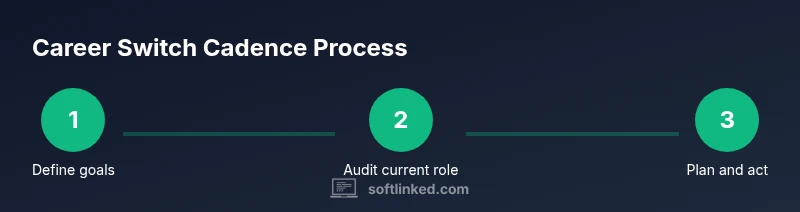
Define your goals and identify skill gaps
List where you want to be in the next 12–24 months and which skills will get you there. Compare your current project work with those goals and note gaps.
Tip: Be specific: map each goal to a measurable skill or project outcome. - 2
Audit current role and market demand
Assess your current growth, leadership opportunities, and the demand for your stack in the market. Look for signals that you’re plateauing or still being challenged.
Tip: Create a scorecard for your role vs. market benchmarks to quantify progress. - 3
Create a learning and portfolio plan
Sketch a plan that combines skill development with portfolio updates. Add new projects or contributions that demonstrate growth toward your goals.
Tip: Set micro-goals tied to quarterly check-ins to stay on track. - 4
Build a targeted timeline and thresholds
Define a window for reassessment (e.g., every 6–9 months) and criteria that would trigger a move, such as a learning plateau or a high-opportunity open.
Tip: Don't overreact to every minor setback; differentiate between temporary obstacles and real growth gaps. - 5
Prepare materials and start networking
Polish your résumé, LinkedIn, and portfolio; begin outreach to mentors and peers in target domains. Track conversations and responses.
Tip: Quality connections lead to stronger opportunities than sheer volume. - 6
Evaluate offers and negotiate learning value
When offers arise, assess growth potential, scope of impact, and the learning trajectory. Negotiate for resources, mentorship, and meaningful projects.
Tip: Ask about mentorship, code quality ownership, and opportunities to lead initiatives. - 7
Review cadence and adjust annually
Quarterly or biannual reviews help you stay aligned with goals. Adjust your cadence if market demand shifts or personal priorities change.
Tip: Document outcomes of each move to refine your future decisions.
Your Questions Answered
Is there a universal cadence for software engineers?
No universal cadence fits everyone. Cadence should align with your goals, market opportunities, and learning pace. Reassess regularly as your situation and market conditions change.
There isn't a universal cadence; make it fit your goals and the market, and review it periodically.
What are common signals that it’s time to switch?
Signs include limited growth, missing stretch opportunities, misalignment with product direction, or stronger opportunities elsewhere. Use performance, impact, and market signals to guide decisions.
Look for growth stalls, lack of ownership, or better opportunities in the market.
How can I switch without burning bridges?
Plan your exit professionally, give appropriate notice, document your work, and maintain positive relationships with teammates and leaders. Offer to help with the transition and stay in touch.
Resign respectfully and keep relationships intact for future networking.
Should I switch jobs to increase salary alone?
Salary is important, but prioritize roles that offer learning, impact, and career advancement. A move with stronger growth prospects can yield greater long-term compensation.
Don’t chase pay in isolation—growth and impact matter too.
How should I time offers to maximize value?
Wait for a formal offer, compare long-term potential, and negotiate for learning resources, mentorship, and defined project scopes that align with your goals.
Take time to compare offers and negotiate for growth opportunities.
How often should I reassess my cadence?
Reassess your cadence at least annually or when major market shifts occur. Use performance data and personal goals to guide adjustments.
Review your cadence every year or when big market changes arise.
Watch Video
Top Takeaways
- Define clear growth goals and map them to skills.
- Cadence is personal; adapt to market signals and learning pace.
- Build a strong portfolio and network to enable better opportunities.
- Evaluate offers on long-term learning and impact, not only pay.
- Review and adjust cadence regularly to stay aligned with goals.