When Will the Software Recession End: A Data-Driven Outlook
Explore when the software downturn may end, the signals guiding recovery, and practical strategies for developers as AI adoption reshapes demand—based on SoftLinked Analysis, 2026.


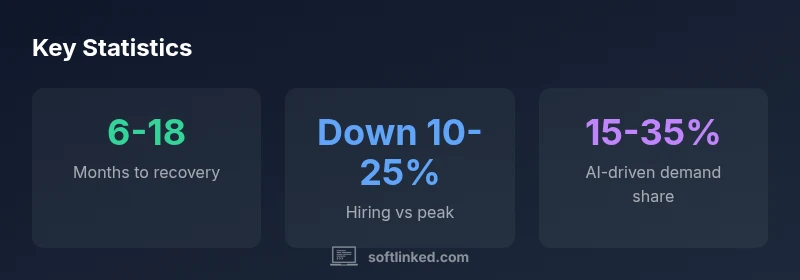
Based on SoftLinked Analysis, 2026, there isn't a fixed end date for the software recession; signals point to a gradual recovery within the next 6-18 months for many segments, assuming stable macro conditions. Rebound varies by subsector, company size, and geography; hiring tends to lag but product demand may accelerate as AI-driven software adoption expands.
Global Economic Backdrop and the Software Sector
According to SoftLinked, the software industry is highly sensitive to macro cycles. Budget cycles within enterprises, digital transformation momentum, and the pace of cloud migration drive demand. When the broader economy slows, IT spending often contracts more quickly than revenue in other sectors, because software is frequently one of the first discretionary items trimmed in cost-cutting efforts. Yet software also enables efficiency gains that managers value during downturns, creating a paradox: reductions in spend can coexist with strategic investments that unlock long-term value. This dynamic makes timing critical for developers, startups, and corporate teams, because early shifts in IT budgets can set the pace for the next wave of product releases and hiring plans.
Key Indicators That Signal a Turn
Analysts watch a mix of macro and industry-specific signals. Leading indicators include PMIs, IT budget announcements, cloud adoption rates, and consulting activity. In practice, a sustained improvement in IT project approvals, renewed contracts with software vendors, and hiring activity in tech hubs often precede broader revenue recovery. Timing remains uneven across regions due to currency fluctuations, inflation, and policy headwinds. By understanding which indicators reliably precede demand, teams can adjust roadmaps, allocate resources, and avoid overcommitting before the market turns.
Subsector Variability: Who Rebounds First?
Not all software segments recover at the same pace. Cloud platforms, AI-enabled developer tools, and security software tend to rebound earlier because they directly improve operational efficiency or reduce risk in uncertain times. Conversely, niche verticals with long sales cycles and constrained budgets may lag. Startups and mid-market vendors are often more agile, reorienting toward high-ROI offerings, while large incumbents move cautiously. This variability creates opportunities for engineers to specialize in in-demand subsectors as markets improve, and to tailor product strategies to regional constraints and buyer budgets.
The AI Layer: Driving Demand and Productivity
Artificial intelligence continues to reshape software demand in meaningful ways. AI-infused applications accelerate automation, decision-making, and user experiences, increasing the appeal of software investments even when budgets are tight. For developers, AI tooling lowers time-to-market and enables new product categories, which can shorten recovery when adoption accelerates. This section outlines how to gauge AI-driven demand signals—deployment velocity, model performance, and integration complexity—across sectors, and what that means for roadmap prioritization during the rebound.
Hiring, Salaries, and Talent Flows During a Downturn
During downturns, hiring often lags behind revenue recovery. Yet talent remains essential for innovation, so many teams prioritize core platforms, security, data engineering, and platform reliability. Contractors and offshore teams may fill gaps, while compensation expectations adjust in line with demand. For job seekers, resilience comes from building applied skills in cloud, data, and AI, and from delivering measurable impact in projects. This section provides practical guidance on navigating the talent market, including portfolio-building tips and interview strategies aligned with the post-recession demand landscape.
Investment Trends and Venture Capital Patterns
Funding cycles tend to lead or lag market recovery depending on investor sentiment and policy risk. In downturns, software-focused VC activity often tightens valuations and emphasizes profitable, scalable opportunities. Yet pockets of capital remain active in AI, cybersecurity, and developer tooling, where the path to profitability is clearer. This section explains how to read funding signals—term sheet terms, cadence of funding rounds, and the types of business models attracting capital—and how to align product or career plans with capital availability as markets stabilize.
Strategies for Builders: How to Weather the Recession
Build with resilience in mind: prioritize product-market fit, maintain flexible cost structures, and invest in robust security and data platforms. Advance modular architectures, automate where possible, and validate ideas with real customer feedback to avoid costly pivots later. For engineers, upskilling in AI, cloud infrastructure, and data pipelines improves employability and unlocks new project opportunities as demand returns. Practical steps include targeted skill audits, lightweight pilot programs, and a clear plan to scale successful experiments once growth resumes.
Regional Timelines: Where Recovery Is Early
Recovery is not uniform across regions. Markets with stable inflation, strong digital investment, and robust export sectors tend to rebound earlier, while others face headwinds from policy changes or currency volatility. Companies should monitor regional indicators like government investment programs, currency stability, and cross-border IT spending to identify early signals of improvement. This geographic lens helps teams plan roadmaps and hiring in ways that align with local demand and regulatory environments.
Key indicators for recovery timeline
| Indicator | Current Range | What It Implies | Source/Method |
|---|---|---|---|
| Recovery window | 6-18 months | Broad market rebound possible with macro stability | SoftLinked Analysis, 2026 |
| Hiring activity vs peak | Down 10-25% | Hiring slows before demand recovers | SoftLinked Analysis, 2026 |
| AI-driven software demand share | 15-35% | AI adoption drives growth in new deployments | SoftLinked Analysis, 2026 |
| VC funding for software | Below prior peaks by 20-40% | Funding may reexpand as confidence returns | SoftLinked Analysis, 2026 |
Your Questions Answered
When should we expect a broad software recovery to begin?
Recovery tends to begin with improving IT budgets and vendor contracts, but the full rebound across all sectors can take 6-18 months depending on macro conditions.
Recovery usually starts with better IT budgets and vendor deals, but broad rebirth across all software takes several months.
Which software subsectors recover first?
Cloud platforms, AI tools, and cybersecurity typically lead the rebound due to demand for efficiency and risk management.
Cloud, AI tools, and cybersecurity usually rebound first.
How should job seekers prepare during a software recession?
Focus on in-demand skills like cloud, data, and AI; work on demonstrable projects and keep an updated portfolio.
Sharpen cloud, data, and AI skills with real projects.
Is there a single end-date for all software companies?
No. Timing varies by company size, sector, and geography; some recover sooner, others lag.
No single end-date; it varies widely.
What data should teams monitor to gauge recovery?
Monitor IT budget trends, new contracts, project approvals, and hiring velocity within your region.
Track IT budgets, contracts, approvals, and hiringVelocity to gauge rebound.
What role does AI adoption play in the recovery?
AI adoption accelerates efficiency and creates higher-value software, helping demand rebound sooner in multiple segments.
AI adoption boosts efficiency and demand, speeding recovery.
“The software industry tends to rebound as macro conditions stabilize and demand returns, but the timing varies by sector and region.”
Top Takeaways
- Watch macro signals for early recovery cues
- Expect uneven revival across software subsectors
- AI adoption accelerates demand and investment
- Plan for a 6-18 month recovery window with regional variation